By Chiara Luz Atoyebi
The Chicago Home For the Friendless, Chicago Illinois, 1858. Image in the Public Domain
The Home for the Friendless: Origins and Mission
In the mid-19th century, Chicago was a city in transition—rapidly growing, bustling with commerce, and attracting immigrants and rural migrants seeking opportunity. Yet, beneath the promise of prosperity lay stark realities: poverty, homelessness, and social isolation. Industrialization and urbanization created a class of vulnerable individuals—particularly women—who lacked family support and financial security. It was in this climate that the Home for the Friendless was founded on March 18, 1858.
The term “friendless” was a poignant descriptor for those without family or social networks. The Home’s mission was clear: to provide shelter, care, and moral guidance to indigent women and children, many of whom were widows, unmarried mothers, or orphans. These women faced harsh judgment in Victorian society, where respectability was tied to marriage and domesticity. Without a husband or family, survival was precarious.
The Home for the Friendless offered more than a roof—it provided hope and dignity. Residents received food, clothing, and spiritual instruction. Children were placed in homes or trained for employment, while women learned practical skills to regain independence. This charitable work reflected the era’s ethos of benevolent reform, driven largely by women’s organizations and religious groups who believed in uplifting the “fallen” through moral and domestic education.
I wrote about the work of social reformers Jane Addams and Victoria Earle Matthews and their houses for women here.
Chicago in the Late 19th Century: A City of Contrasts
By the 1870s, Chicago had become a symbol of American ambition. The Great Fire of 1871 had devastated the city, but reconstruction brought modern architecture and economic dynamism. Yet, the fire also deepened social divides. Thousands were left homeless, and charitable institutions like the Home for the Friendless became lifelines for those who had lost everything.
Victorian ideals dominated social life. Women were expected to embody purity and domestic virtue, but industrialization blurred these boundaries. Many women entered the workforce out of necessity, challenging traditional norms. At the same time, philanthropy became a socially acceptable outlet for women’s public engagement, allowing them to exercise influence while reinforcing domestic values.
It was within this cultural framework that the Home for the Friendless thrived—and innovated.
(A large incentive for this article is based upon the idea of our food and food systems. More specifically, the removal of the highly deadly and dangerous ultra processed foods from our shelves and households.)
The Birth of the Cookbook: “Tried and True Recipes”
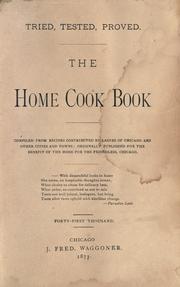
In 1874, the Home for the Friendless launched a bold fundraising initiative: a community cookbook titled “Tried and True Recipes. The Home Cook Book of Chicago.” Published by J.F. Waggoner, this volume compiled recipes contributed by women from Chicago and other towns. Its purpose was twofold: to raise money for the Home and to celebrate the culinary expertise of American women.
Why a cookbook? In Victorian America, cooking was more than sustenance—it was a marker of virtue and refinement. By producing a cookbook, the Home tapped into the domestic pride of middle-class households while creating a practical product that could circulate widely. The title “Tried and True” emphasized reliability, appealing to homemakers seeking tested recipes in an era before standardized measurements.
The book was a collective effort, reflecting the power of women’s networks. Contributors shared family recipes, regional specialties, and household tips. This collaborative spirit mirrored the Home’s mission: community support for those in need. Proceeds from sales funded shelter, food, and vocational training for residents, making the cookbook a tool of both culinary and social reform.
Impact on American Culinary Culture
The Home Cook Book of Chicago was more than a charity project—it was a cultural milestone. It helped popularize the community cookbook model, which became a staple of American life. Churches, schools, and civic groups across the country adopted this format, blending recipes with local identity and philanthropy.
The book also contributed to the standardization of home cooking. By presenting tested recipes, it offered consistency in an era when oral tradition and handwritten notes dominated. Moreover, it preserved a snapshot of 19th-century foodways, from hearty breads to elaborate preserves, shaping the American palate for generations.
Serving the Friendless: How It Helped Women
Funds from the cookbook supported programs that transformed lives. Indigent and unmarried women—often stigmatized as “fallen”—found refuge and purpose. The Home provided industrial training, teaching sewing, laundry, and cooking skills that enabled women to earn wages. For unmarried mothers, it offered a safe haven during pregnancy and assistance in placing children in adoptive homes.
This work was radical in its quiet way. At a time when social safety nets were nonexistent, the Home for the Friendless embodied the principle that charity could restore dignity. It also underscored the gendered nature of reform: women helping women, using domestic arts as instruments of empowerment.
A Taste of History: Iconic Recipes
The cookbook’s pages brimmed with dishes that defined Victorian kitchens. Here are a few that stand out:
1. Corn Bread
A staple of Midwestern tables, corn bread symbolized thrift and abundance. Its simplicity made it accessible to all classes, while its versatility ensured a place in both humble and festive meals.
Before refrigeration, pickling was essential for preservation. Oysters, a delicacy, reflected aspirations of refinement even in inland cities like Chicago.
3. Election Cake
This spiced fruit cake, traditionally baked for civic gatherings, linked food to democracy. Its presence in the cookbook speaks to the communal spirit of the era.
Whole-wheat muffins championed by health reformers signaled the rise of nutritional awareness—a precursor to modern wellness trends.
5. Preserved Fruits and Jellies
From peaches to currants, these recipes showcased domestic ingenuity. Preserving fruit was both practical and symbolic of abundance, reinforcing ideals of household competence.
Conclusion
The story of the Home for the Friendless and its cookbook is a testament to resilience, creativity, and community. In a city rebuilding from disaster, amid shifting social norms, women harnessed the power of domestic culture to address urgent needs. Their efforts fed bodies and souls, leaving a legacy that endures in the pages of American culinary history.
The Home Cook Book of Chicago was more than a collection of recipes—it was a manifesto of care, a bridge between private kitchens and public good. Through corn bread and election cake, through pickled oysters and Graham gems, it told a story of women who turned flour and sugar into instruments of hope.