Posted on Leave a comment

Art Still Is Life

Daily writing prompt
When you were five, what did you want to be when you grew up?

An Artist. Then I went on to pursue writing and drama. I did not know any painters.

I have had moments to live out that dream and anytime I engage it, it goes well.

Posted on Leave a comment

America 250 Bookmark Design Challenge for Kids

By Chiara Luz

If you’re looking for a simple, meaningful activity to get your kids involved in the America 250 celebration, this is one you won’t want to miss. The National Endowment for the Arts has launched a nationwide Bookmark Design Challenge just for kids—and it’s the kind of low-pressure, creative opportunity that’s perfect for busy families.

The contest is open to all students in grades K–8, including homeschoolers, and invites kids to design an original, hand-drawn bookmark showing what America means to them. Whether your child wants to highlight history, family heritage, cultural traditions, or even their hopes for the future, the theme is intentionally flexible so they can make it personal.

Here’s what parents need to know: entries must be completely original and created by hand (no digital or AI-generated artwork allowed), and kids must use the official bookmark template provided by the NEA. Each child can submit one design, and a parent or guardian must upload the final entry along with a simple acknowledgment form—teachers can’t submit on their behalf. Designs should also avoid things like logos, political messages, or personal information to be eligible.

The deadline is March 31, 2026, at 5:00 p.m. ET, so this is a great quick-turn project to squeeze in before spring gets too busy. Winners will be selected in three age groups (K–2, 3–5, and 6–8), and their bookmarks will actually be printed and shared at national events, including the Great American State Fair. Even more exciting, winners will be invited to Washington, D.C. with a parent for a special celebration.

What I love most about this challenge is how doable it is. There’s no long essay, no complicated rules—just a piece of paper, some crayons or markers, and your child’s perspective. It’s a small project that gives kids a chance to feel part of a once-in-a-generation moment, and honestly, those are the kinds of opportunities that stick.

So if you need a creative activity this week, this is your sign—print the template, set out the art supplies, and see what your kids come up with.

Reminder: Deadline is March 31, 2026.

Posted on 2 Comments

Nicole.

Daily writing prompt
What is your middle name? Does it carry any special meaning/significance?

My middle name is Nicole. It doesn’t mean much to me, or at least it didn’t until I went to Egypt. I met a woman there named Nicole and we looked alike. The first thing she said when she saw me was, “wow, my sister how are you?” She told me her name, and I said I was Nicole too. She became our tour guide and took us off the beaten path. I saw where they hide the women. The women were busy working and having a ball. It was a good time. To this day, I have never met a Nicole I did not like. Nicole’s are very cool people.

Posted on Leave a comment

Top Book Picks for Level One Readers

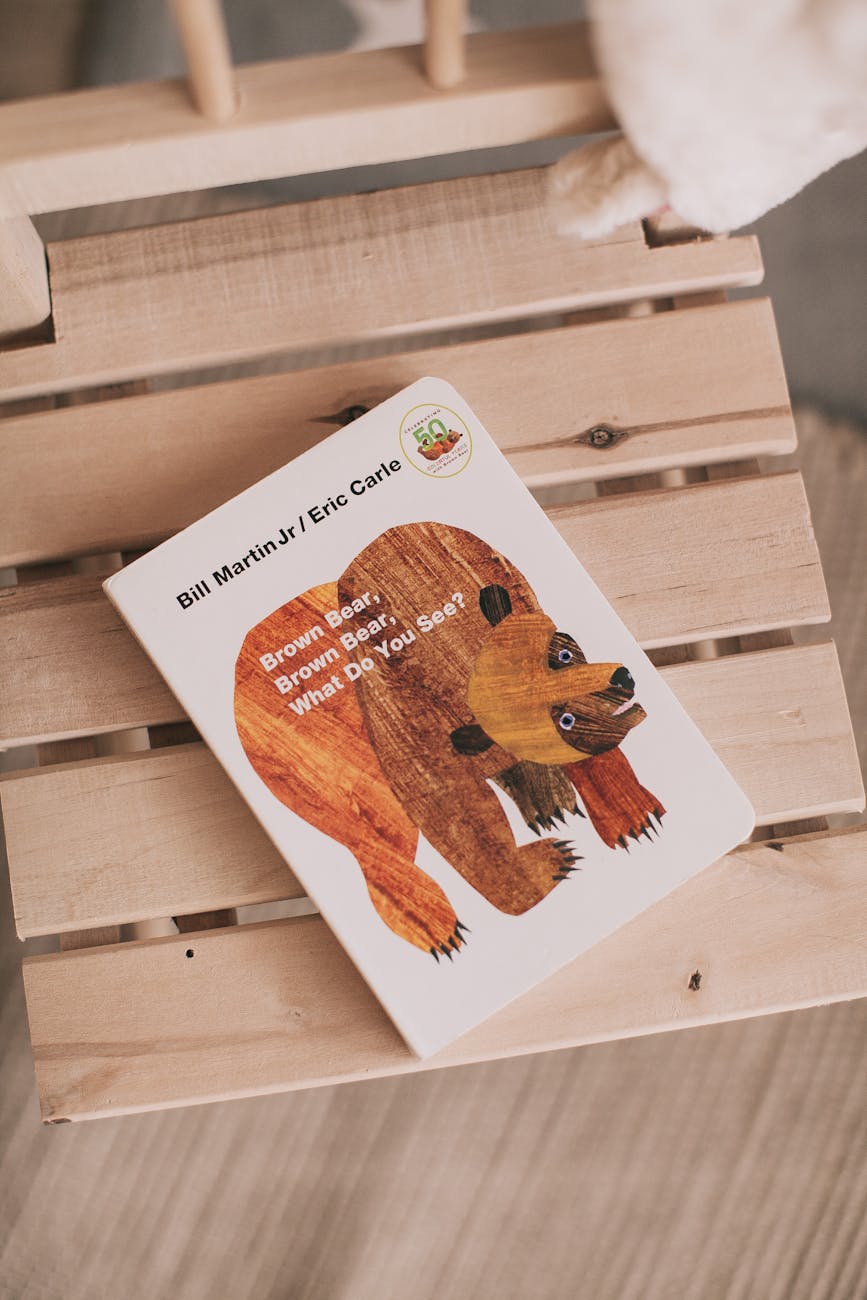
white book on wooden chair

These book recommendations are for level one readers, and they are curated to help your child prepare for the next year and stay on grade level. I used many of these with my own children. Some of these are no longer at the library and you may have to look on Amazon, but it is worth it.

white book on wooden chair
Photo by Lina Kivaka on Pexels.com

Autumn Leaves, by Gail Saunders-Smith

The Berenstein Bears in the House of Mirrors, by Stan and Jan Berenstein

Look What I Can Do, by Jose Aruego

My Book, by Ron Maris

My Class, by Lynn Salem

What Do Insects Do? by Susan Canizares

Reading Matters

As a writer, I believe deeply in literacy. The love of reading begins at a young age, and the ability to travel to different worlds, cities, and even moments in history is what fuels the imagination. I make book pillows for teachers each year, and the thing they’re most excited about is receiving new and interesting books for their classrooms.

A lot of kids simply lack the confidence to read and push past their mistakes. But that’s part of the process. It’s the same reason I push myself to learn other languages — for the challenge. It’s how we grow and get better. If you can read, you can learn just about anything.

More books posting soon.

Posted on Leave a comment

Exciting Changes Ahead: Join Our Journey

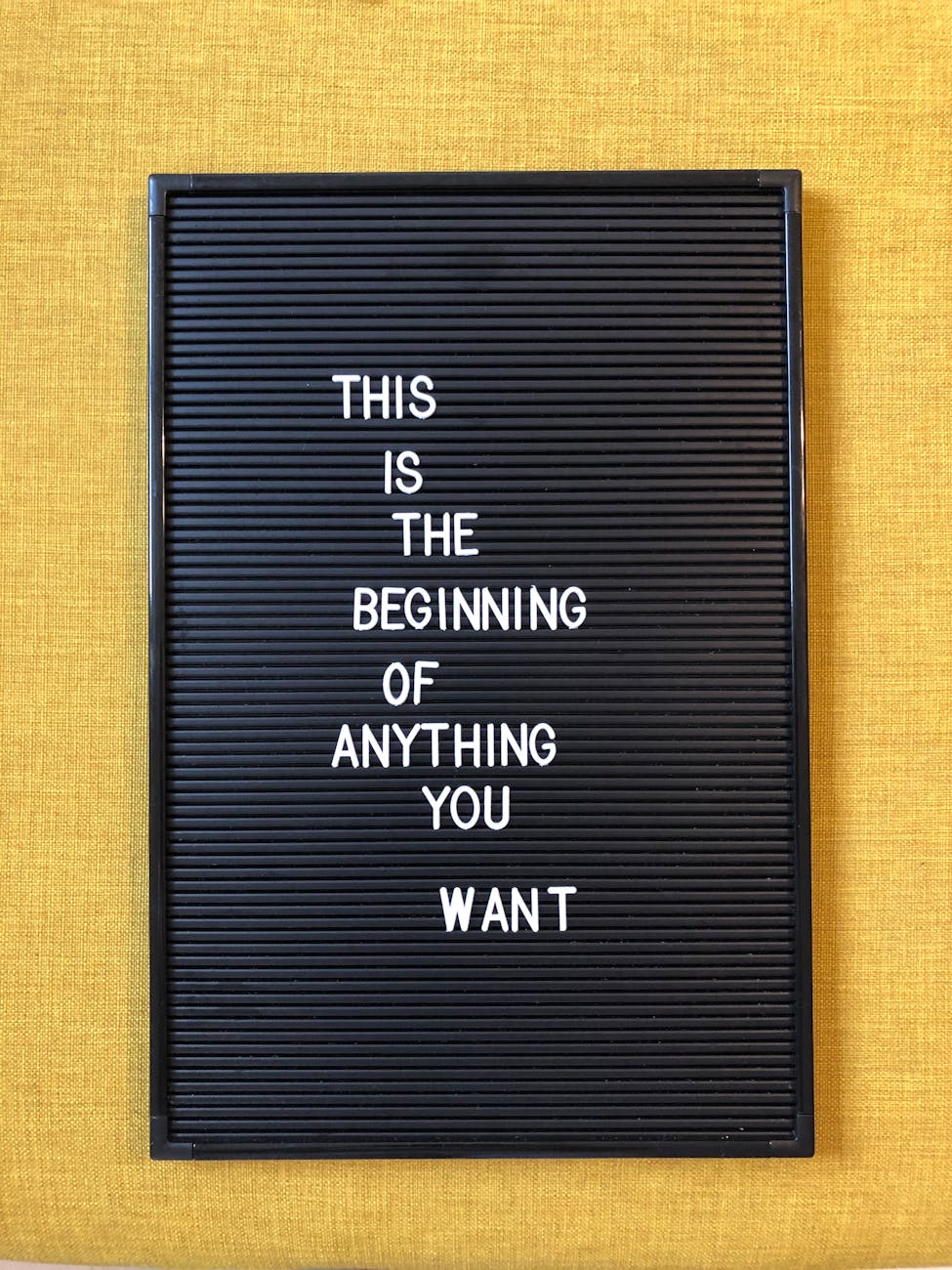
inspirational quote on black letter board

By Chiara Luz

inspirational quote on black letter board
Photo by Ana Miranda on Pexels.com

The site is undergoing a facelift soon and I thank you for being here. I want to add more voices here and revamp the interior a bit and get to some of the fun parts. I will need your help! Get your pens, computer, imagination and creativity ready and stay tuned. The subscription here says, “information is access,” we want that to hold up while we also add in some stories.

Moreover, I want you to find what you want and only what you want. Alot more will be local, because I am back in the studio (which is a separate site) and so many things are happening. Anyone who doesn’t believe that with a little elbow grease life can be ok, hopefully we can show you different. And in a time of stress and strength, a little love and peace is always a nice balance. We are the keepers of our community so why not make it great. I hope you will scroll along the side and click through and find something relevant for you. People respond differently when I tell them in person, but sadly, I can’t be everywhere at once and so you will have to read–I hope you do.

Stay tuned. Thanks for reading.

#America250 #MD250

Posted on Leave a comment

Shhhhh…

Daily writing prompt
What is one question you hate to be asked? Explain.

I would never answer this question. It would guarantee that I would be asked it.

This will have to remain a mystery.

Posted on Leave a comment

International Pancake Day At #IHOP: From Ancient Griddles to Your Local Restaurant

I love pancakes, how about you? International Pancake Day always sneaks up on us, but it shouldn’t. Few foods have traveled through history with as much charm, adaptability, and pure joy as the humble pancake. Today, we get to celebrate that journey with a short stack that’s doing what pancakes have always done best: bringing people together.

Today at your local IHOP, you can grab a free short stack until 8:00 pm if you dine-in. I think you’re supposed to purchase a coffee. This is also a day of fundraising for a good cause. IHOP runs a “Feeding the Hungry” initiative as part of its community giving efforts, partnering with Feeding America to help fight food insecurity across the United States. The campaign is best known during National Pancake Day, when guests receive a free short stack of pancakes and are invited to make a voluntary donation to support hunger relief. Every dollar raised helps provide meals to individuals and families in need through Feeding America’s nationwide network of food banks.

Beyond the one-day event, IHOP also extends its impact through everyday purchases like coffee. In partnership with its suppliers Royal Cup Coffee and Tea and Westrock Coffee Company, a portion of coffee sales contributes to a minimum donation goal benefiting Feeding America. Together, these efforts make it easy for guests to enjoy a meal — or even just a cup of coffee — while helping provide meals to communities facing hunger.

The good thing is, I love coffee and IHOP is pretty good. I am glad to also know that this is money well spent. Additionally, if you aren’t saving part of the “pancoin” club at IHOP, why not? You can get pancakes, merch, kid’s meals and you don’t need thousands of pancoins to get a return. Now that I know this about IHOP and I have participated in the program, I love it. I am glad it’s in my neighborhood. I hope it continues to thrive because the giveback is legitimate. Take your kids to IHOP before 8pm, get your pancoins and buy a cup of coffee –all while knowing you are feeding others as well.

The History of National Pancake Day and Its Roots in Shrove Tuesday

Long before IHOP turned pancakes into a national celebration, the tradition of dedicating a day to batter, flipping, and indulgence began in medieval Europe. Shrove Tuesday—known in many places simply as Pancake Day—falls on the day before Ash Wednesday and marks the final opportunity to enjoy rich foods before the fasting season of Lent. Households needed to use up eggs, milk, sugar, and butter, and the simplest, most satisfying solution was the pancake. The word shrove comes from “shrive,” meaning to confess, a reminder that the day once carried a spiritual seriousness even as it evolved into a joyful, food‑centered ritual.

Over centuries, the day grew into a cultural event. In Britain, where the tradition is especially beloved, Pancake Day became synonymous with friendly chaos: schoolchildren running pancake races, families debating toppings, and supermarkets selling out of lemons and flour. Tens of millions of eggs are cracked each year, and Guinness World Records have been set for everything from the highest pancake toss to the fastest flipping race. Today, both traditions coexist: Shrove Tuesday with its centuries‑old roots in reflection and resourcefulness, and National Pancake Day with its focus on joy, generosity, and gathering people around a warm plate.

Together, they tell a story of how something as humble as a pancake can carry history, culture, and community forward, one flip at a time.

Posted on Leave a comment

A Pueblo of Many Colors: The True Founding Story of Los Angeles

In 1781, Los Angeles was founded as a small farming village—not as a massive European colony, but as a modest agricultural community established by families from what is now Mexico. The settlement, officially named El Pueblo de Nuestra Señora la Reina de Los Ángeles, was organized under the direction of Spanish governor Felipe de Neve. At the time, California was part of the Spanish empire, administered through Mexico (then called New Spain). The founding of Los Angeles was a civilian project: it was meant to grow crops, raise livestock, and supply nearby military presidios and missions not to function as a military conquest site.

Image of Felipe de Neve, 4th Governor of the Californias, 1781, found in Public Domain

The 44 original settlers—11 families—were recruited primarily from the Mexican regions of Sinaloa and Sonora. A significant number came specifically from Sinaloa, bringing experience in farming, ranching, irrigation, and frontier survival. These settlers were not primarily European-born Spaniards. Census records from 1781 clearly list them by racial classifications used in colonial Mexico: Mestizo, Mulato, Negro, and Español.

Only two of the adult settlers were classified as Español (Spanish). The majority were people of mixed ancestry. Mestizos—people of combined Indigenous Mexican and Spanish heritage formed a large portion of the group. Mulato’s who were people of mixed African and Spanish ancestry, were also prominently represented. Several settlers were identified as having African heritage directly.

Among the African-descended settlers were individuals whose ancestry traced to the Asante (Ashanti) people of present-day Ghana in West Africa. The Asante were part of a powerful West African kingdom deeply affected by the transatlantic slave trade. Enslaved Asante people were transported to Mexico during the colonial period, where many later gained freedom, intermarried, and became integrated into Mexican society. By the late 18th century, their descendants were free citizens of Mexico and part of frontier settlement efforts. The documented link between Asante ancestry and some of the Los Angeles settlers highlights a direct West African connection to the city’s founding families.

Casta Paintings in the Public Domain

Understanding the racial terms used at the time helps clarify the makeup of the pueblo. “Mestizo” referred specifically to a person of Spanish and Indigenous ancestry. “Mulato” referred to someone of African and Spanish ancestry. These classifications were part of Mexico’s colonial caste system, yet on the northern frontier—far from Mexico City—social lines were often more fluid. In Los Angeles, families of African, Indigenous, and European ancestry worked side by side to survive.

Life in early Los Angeles revolved around agriculture. The settlers built homes near the Los Angeles River and constructed irrigation ditches (zanjas) to water their crops. The pueblo consisted of a central plaza, modest adobe homes, small fields, and grazing lands. It was rural, tightly knit, and cooperative. Families depended on each other for food production, protection, and trade. Diversity was not a modern development—it was present from the first day.

Comparing Los Angeles then and now reveals both contrast and continuity. In 1781, the entire settlement consisted of fewer than 50 people living in adobe structures surrounded by farmland. Today, Los Angeles is a sprawling metropolis of nearly four million residents, with neighborhoods stretching from Boyle Heights to South Los Angeles, from East L.A. to the San Fernando Valley. Instead of dirt paths and crop fields, the city is defined by freeways, high-rises, ports, and film studios.

Yet the diversity remains strikingly consistent. Modern Los Angeles is known for its Mexican, African American, Central American, Asian, and multiracial communities. Neighborhoods reflect layered migrations over centuries—but the multiracial foundation was present at the beginning. The original pueblo was Indigenous, African, and European at once. Today’s Los Angeles, often described as one of the most diverse cities in the world, mirrors the blended ancestry of its founders.

Los Angeles did not begin as a homogeneous colonial outpost. It began as a humble Mexican farming village built by Mestizo and Mulato families—many from Sinaloa, some with documented Asante roots—whose shared labor and cultural blending shaped the identity of the city long before it became a global metropolis.


References

Castillo, E. D. (1994). The Los Angeles pobladores: The founding families of El Pueblo de la Reina de Los Ángeles, 1781. Los Angeles Historical Society.

Forbes, J. D. (1993). Africans and Native Americans: The language of race and the evolution of Red-Black peoples. University of Illinois Press.

Posted on 1 Comment

The Advice I Needed Back Then

Daily writing prompt
What advice would you give to your teenage self?

If I had to give my teenage self some advice, it would be to slow down. To be more selective. To be braver with my feelings and thoughts in person. Don’t keep everything bottled up and only on the page.

I would also tell myself that it’s okay to keep things to myself—to hold the things I love sacred, in my heart, and close to the vest. It is okay to trust others. It is okay to believe. It is okay to extend family to the friends who became your people.

I would tell myself that it’s okay to stay on your own path. All of your predictions will one day come true because, despite the lack of belief from some of the people closest to you, you hold the answers.

Lastly, I would say to my teenage self: you are beautiful. You are loved. You are stronger than you think you are. You are also a true original. You won’t be for all people. But there are people that are for you, be grateful for that. Don’t forgo new partnerships, relationships, ideas and generosity in exchange for what you think you should have–focus on your true champions and advocates. They will be your greatest blessings. Most of all, stay in the light, stay on the right side of things, and you will be alright. The thing that you don’t see coming is the perfect peace among other things that await you in the future. Don’t stress too hard.

My younger self desired acceptance, but the best and highest good is self-love. It is priceless. If you can relate to the power of a self-love journey please leave a comment. Like it, share it and subscribe.

Posted on Leave a comment

Outschool Review: Flexible Learning Options for Families

girl in pink and white shirt sitting beside brown wooden table
Photo by Julia M Cameron on Pexels.com

In today’s fast-changing digital world, education is no longer confined to traditional classrooms. One platform leading this shift is Outschool, an innovative online learning marketplace designed specifically for children and teens. This platform is for students who are home schooled, traditionally school, and anything in between. The classes have small ratios, they include one on one courses and are largely interest driven, although many adhere to common core standards. For me and my family, I’ve found Outschool to be not only a great platform to teach on, but also a wonderful place for kids to explore classes that genuinely interest them. It’s an excellent supplement to any educational program. I originally joined as a teacher, but I quickly realized it’s also a vibrant space for children to socialize, expand their knowledge, and build community.

What Is Outschool?

Founded in 2015, Outschool is an online platform that connects learners aged 3 to 18 with independent educators from around the world. Unlike conventional e-learning programs that follow a fixed curriculum, Outschool operates as a marketplace. Teachers design and list their own classes, and parents can browse and enroll their children based on interests, age range, schedule, and budget.

The platform hosts live, small-group classes conducted over video chat. These sessions are interactive rather than pre-recorded, allowing students to engage directly with teachers and peers. Class sizes are intentionally small, which encourages participation, discussion, and personalized attention.

What Subjects Does Outschool Offer?

One of Outschool’s biggest strengths is its diversity of topics. While it certainly covers core academic subjects like math, science, reading, and writing, it truly shines in enrichment and niche interests. Students can take classes in coding, creative writing, foreign languages, art, music, financial literacy, entrepreneurship, and even unique topics like mythology, marine biology, or game design.

There are also social clubs and ongoing classes, such as book clubs, gaming groups, and debate circles. This makes the platform appealing not just for academic growth but also for social interaction and community-building, especially for homeschoolers or children seeking peers with shared interests.

Who Is Outschool For?

Outschool is designed for families who want flexibility and personalization in their child’s education. Homeschooling families often use it to supplement their curriculum or outsource certain subjects. Traditional school families may enroll their children in after-school enrichment classes or summer learning programs. It’s also popular among parents looking to nurture a specific talent or passion their child may not be able to explore in a standard school environment.

Because classes are live and interactive, students who thrive in discussion-based settings tend to benefit the most. However, the variety of teaching styles available means parents can find classes suited to different learning preferences.

I can personally vouch for the language lessons, theater, art, gaming club, coding and science. Right now, Outschool is sending out civics’ lessons and materials to families who use the platform. My daughter is starting a self-paced Mars class this week, and I have found the gaming club to be a great way to socialize for introverts.

Maryland and FSA Funding, Why They Don’t Qualify

Maryland’s education system is built on a “public dollars stay in public schools” philosophy. The state does not offer ESAs, vouchers, or flexible education accounts, and it does not allow public funds to follow students into private, online, or supplemental learning platforms. Because Outschool is considered a private, parent‑selected enrichment marketplace—and Maryland does not fund private educational services—there is no legal pathway for families to use state money on the platform. In short, Outschool is ready, but Maryland’s funding structure isn’t designed for it. What do you think of that? Do you think your child could benefit from a supplemental learning space like Outschool? Let me also add, that most teachers have advanced degrees and a wealth of knowledge on any topic you can imagine. If you try it, let me know.

Posted on Leave a comment

Father Angelico: The Saint of Ash Wednesday

This past Wednesday my family and I participated in Ash Wednesday service and for some reason we left the church on an unusually high note. On our way to my son’s basketball practice, we were all very chatty and full of ideas. I have a feeling that this is going to be a very special Lenten season. Possibly even an artistic one. Could it be the blessing of Father Angelico?

Father Angelico, The Saint for Ash Wednesday

Ash Wednesday marks the beginning of Lent — a season of quiet return, of repentance, of remembering who we are. And there is no better companion for this threshold than Blessed John of Fiesole, known to the world as Fra Angelico.

Born around 1395 near Florence, Fra Angelico entered the Dominican Order and lived a life of prayer, humility, and artistic devotion. He didn’t preach with words — he preached with light.

His frescoes, especially those in the convent of San Marco, were painted not for fame but for the contemplation of his fellow friars. He believed that beauty could heal, that color could carry truth, and that holiness could be quiet.

How He Became a Saint

Fra Angelico was beatified in 1982 by Pope John Paul II, who called him the “painter of God.” Though not canonized as a full saint, his beatification recognized the sanctity of his life and the spiritual power of his art. His feast day is celebrated on February 18, making him a natural guide into Lent.

Patronage

Fra Angelico is the patron of Catholic artists — but more deeply, he is a patron of:

  • those who preach through beauty
  • those who live quietly and faithfully
  • those who seek God in color, form, and silence

He reminds us that holiness is not always loud. Sometimes, it is painted in layers. Sometimes, it is offered in stillness.

A Devotional for Father Angelico:

God of quiet beginnings, As I receive the ashes today, let me remember the beauty of repentance. Teach me to return not with fear, but with hope. Let Father Angelico’s quiet light guide me. Not to perform, but to be present. Not to shame, but to truth. Not to noise, but to You.

Since he is the patron saint of artists, he will be on my ofrenda this season in honor of his beautiful memory.

If you have a favorite saint, I would love for you to share it with me. Or you can write about it here on the site.

Posted on Leave a comment

Facing Life’s Challenges: A Six-Month Journey

Daily writing prompt
What is the biggest challenge you will face in the next six months?


Over the next six months, I have some big challenges staring me down. The kind that makes you double-check your coffee intake and your calendar. But oddly enough, I feel momentum building too. Like I’m about to shed an old layer of skin and step into something new.
I love a good transformation. Possibly a little too much.


There’s something about reinvention that feels like oxygen to me. I’m also someone who can fall deeply in love with solitude. Give me a quiet room, a project, and a little tunnel vision and I’m happy as a clam. I can disappear into my own world and thrive there. But without fail, life calls me back out. And honestly? That’s probably the secret sauce.
If you ever see someone who seems to be everywhere at once — building, doing, showing up — pause and ask how and why. There’s usually a system. Or a necessity. Or a deep internal refusal to sit still. I call it the hermit grind, and it can be amazing.


The challenges ahead of me are big, but not insurmountable. I don’t think this season requires brilliance. I think it requires consistency. One foot in front of the other. One day at a time. No dramatic over-analysis.
Because if there’s one thing that paralyzes me, it’s thinking too much instead of just doing the thing.


Case in point: working out.


I have a goal to hit by summer. A reasonable one. A doable one. But sometimes I spend more time researching “the best workout” than actually working out. I’ll contemplate the most optimal lifting split, debate the perfect walking route, and suddenly… I’ve done absolutely nothing.
My most complicated challenge right now? Committing to a three-mile walk.


I actually like walking. I just don’t like walking the same route. I also love lifting weights, which is great because I would happily pick up heavy things and put them down all day. Walking sometimes feels like the side dish I forget to eat.
The irony is that six months from now, I’ll probably reread this and laugh because it won’t even be an issue. But right now, it feels like one.
What I know for sure: I am not sedentary. I do not need punishing workouts that make me cry or see my ancestors. I worked out through three pregnancies. I snapped back. I have good genes and very reliable muscle memory. Thank you, body.
The downside? I can get lazy about it.
The upside? I know it’s non-negotiable.


I’ve also officially retired from my imaginary professional athletic career. After listening to Mike Tyson talk about how “disgusting” our diets are, I had a moment of clarity. I don’t need to be elite. I just need to be consistent.
Lift the weights. Take the walk. Call it a day.
And here’s the interesting part: when I engage my body, everything else flows better. I sew more. I create more. I feel sharper. Stronger. More like myself.
Maybe this next six months isn’t about conquering massive mountains.
Maybe it’s about movement.
Forward.
Simple.
Daily.
No overthinking. Just doing.

And maybe, just maybe, that’s the real transformation.

Posted on Leave a comment

Why Military Service Matters to Patriotism

Daily writing prompt
Are you patriotic? What does being patriotic mean to you?

Protection is a strange thing. Most of the time, you don’t notice it until it’s gone. You don’t realize how much stability you live inside of until you move somewhere—say, an island—where the infrastructure falters and the basics you once took for granted suddenly feel fragile. In the United States, many of us move through our days with the quiet assurance that if we call the police, they will come; if our house catches fire, the fire department will show up. That sense of safety shapes how we live, how we move, and how we dream.

I write often about “getting in the game” because I know what it feels like to be talked out of your position. And I also know what it looks like when young people step into theirs. When I was in high school in Seoul, some of our friends were soldiers—enlisted, but still only eighteen. Kids, really. I remember the day they were deployed to war zones. The air shifted. We were suddenly separated by a reality they had to face and we didn’t. It was a moment that reminded me, in a way I could never forget, that freedom is not free. Someone pays for it. Someone’s child. Someone’s friend.

I was never in the military, and watching so many young people leave for war made it clear that it wasn’t my path. But I never forgot the price they paid. Whenever I can, I try to help people understand that the military matters. Protection matters. Being protected allows us to move through our neighborhoods, our country, and our homes with a sense of comfort. And when that comfort slips, even a little, we owe it to ourselves to pause, reassess, and recalibrate.

I also wish more people understood how multi‑layered the military truly is. It’s not just uniforms and ranks—it’s families, stories, sacrifices, and entire lifetimes of service. Two of the proudest moments of my life came from witnessing that up close. The first was at my grandfather CSM Calvin Morse’s funeral, when my grandmother was presented with a folded American flag after 56 years of marriage. The second was watching my stepfather be promoted to full Colonel and seeing my mother salute him. For the first time, I saw them as equals—two Lt. Colonels who had built a life together, standing in their shared accomplishment. His journey from private to Colonel was shaped by education, discipline, and taking every opportunity available to him.

When I write about education, culture, finance, or history, it’s because I understand how deeply the personal is political. As artists, writers, storytellers, and Americans, we shape the narrative for whoever is listening. We do it through dance, visual culture, books, music, and every creative form we touch. I hope we continue to protect our freedom of speech, even in this tense moment. Maybe that tension is part of what makes democracy so powerful.

I am proud of the people who keep going, even when the work is misunderstood or unseen. I know it’s hard. I know even soldiers want to give up sometimes. But they keep going.

And I’m proud of everyday Americans who haven’t given up either—who haven’t fled, who haven’t abandoned their communities, who continue to build and rebuild even when the odds are stacked against them. I’ve lived in other places, and the people were wonderful. But there is something distinct about the American fighter spirit. It’s stubborn, hopeful, relentless. And I’m proud to be part of that lineage.

Posted on Leave a comment

Restoring Voting Rights: A Path to Rehabilitation

Daily writing prompt
If you had the power to change one law, what would it be and why?

If I could change one law, it would be this: every person who has completed their sentence should automatically have their voting rights restored. No paperwork. No petitions. No second punishment. While I am speaking about women, this doesn’t exclude men. I am simply reporting on a topic I have experience with.

Rise in Women’s Incarceration, 1980-2023

Sources: Historical data 1854-1984

Addiction plays a major role in this. Women are more likely than men to be incarcerated for drug‑related offenses, and more likely to have experienced trauma, domestic violence, or homelessness before arrest. When addiction goes untreated, the criminal legal system becomes the default response, and mothers pay the highest price. Separation from children increases stress, relapse risk, and instability, all of which make reentry harder and recidivism more likely. I believe that anyone who has served their time deserves the right to vote, unless there are justified and extreme cases barring them from doing so.

Because voting isn’t just symbolic. For mothers, it’s a tool of stability. It’s a way to advocate for the services that prevent relapse, keep families together, and reduce the likelihood of returning to prison. It’s a way to participate in shaping the world their children will grow up in. And it’s a recognition that once someone has paid their debt, the state should not keep collecting.

Restoring voting rights after time served is not leniency. It’s alignment. A person still has to choose to exercise that right, but at least it is available. It matches our stated belief in rehabilitation, reintegration, and second chances. I have written about women receiving a second chance after incarceration before. With structure many people do well, that is a good thing. This is a Christian value that I hold that after you pay a penance, served your time, and rehabilitated yourself while incarcerated you can do good for society with civic duty.

No one has to remain in a victim state. But it is ok to acknowledge that some people were dealt a raw deal. Now is the time to educate the disenfranchised on how to participate in this new economy. Educate them so that they can educate their children. I am not an expert, but I am loyal to second chances, and I imagine most people would be if given a shot.

Source

Data summarized from Incarcerated Women and Girls – The Sentencing Project.