


Subscribe to continue reading
Subscribe to get access to the rest of this post and other subscriber-only content.
Subscribe to get access to the rest of this post and other subscriber-only content.


According to the United Nations Environment Programme (UNEP), the world produces some 50 million tons of electronic waste each year, and the figure is increasing. Meanwhile, only 20 percent of this electronic waste is disposed of properly. The remaining 80 percent is either sent to landfills, incinerated or illegally traded, resulting in a host of environmental problems including groundwater pollution, reduced air quality and the depletion of virgin natural resources to replace discarded items. As a result, buying refurbished electronics is a step in the right direction.
The U.S. Environmental Protection Agency (EPA) reports that buying refurbished electronics can significantly reduce the environmental impact of electronic waste. The EPA estimates that for every million smartphones that are refurbished and reused, approximately 35,000 pounds of copper, 772 pounds of silver, 75 pounds of gold and 33 pounds of palladium can be recovered. This is a considerable number of valuable resources that can be conserved by buying refurbished electronics.
Refurbishing electronics not only conserve resources but also helps reduce greenhouse gas emissions by as much as 50 percent, according to the EPA. This is because the production of new electronics requires a lot of energy, and greenhouse gas emissions are generated during the manufacturing process. “Most of the pollution that’s made actually is in the manufacturing of the device, not the use,” says Lucas Gutterman of the non-profit public interest group, U.S. PIRG. “So buying refurbished and using things for as long as we possibly can, really helps protect the environment.”
Buying refurbished is also good for the pocketbook, given that they cost less. But is the savings worth it? Refurbished items sold by reputable retailers undergo tests and inspections to ensure that they meet the same quality standards as new items. According to the Consumer Technology Association (CTA), a trade association for the consumer electronics industry, buyers should look for refurbished electronics that come with a warranty that assures that the item has been thoroughly vetted and is of high quality.
“Some credit card companies will extend coverage on refurbished goods, too, as long as they come with a preexisting warranty,” notes Consumer Reports’ Yael Grauer. Another smart consumer tip is to always check the return policy on a refurbished item before hitting the “buy” button. “It might take you a little while to notice poor performance and defects in a refurbished product, so it helps to have at least one month to decide whether you want to keep it,” adds Grauer.
Apple, Dell, Amazon, Walmart and BestBuy are among the large companies that sell many refurbished electronics with limited warranties and a return policy. Dozens of other smaller resellers (e.g., Refurb.io, Gazelle, TechForLess, RefurbMe, etc.) also specialize in refurbished products and typically offer similar if not better terms for consumers. “Buying refurbished products positively impacts the environment by boosting the circular economy, lowering the replacement cycle, reducing carbon dioxide (CO2) emissions, avoiding additional e-waste, and reducing energy and fuel consumption,” says Simo Elalj of RefurbMe. “You do this by giving a new life to a pre-owned device.”
*Note: This EarthMonth Earth Talk is taking over my website in order to educate my readers on climate change and our environment. Get up to speed with this epic series.
CONTACTS: U.S. PIRG, pirg.org; Consumer Technology Association, cta.tech; Refurb.io, ca.refurb.io; Gazelle, gazelle.com; TechForLess, techforless.com; RefurbMe, refurb.me.
EarthTalk® is produced by Roddy Scheer & Doug Moss for the 501(c)3 nonprofit EarthTalk. See more at https://emagazine.com. To donate, visit https://earthtalk.org. Send questions to: question@earthtalk.org.


Photo by Nicholas Doherty on Unsplash
No doubt, artificial intelligence (AI) has the potential to play a significant role in addressing the challenges posed by climate change. One way that planners are already utilizing AI is for so-called predictive modeling about the potential impacts of climate change on different regions and ecosystems to help identify areas that are most vulnerable and prioritize mitigation and adaptation efforts. AI algorithms’ ability to process decades of historical weather and climate data and crunch the numbers make it far superior at predicting the future than a few humans could ever be. (But at least we still need to be here to program the AI and interpret the results.)
Another way AI is already playing a role in reducing emissions is by helping optimize energy use and other systems in buildings, transportation systems and industrial processes. To wit, optimized manufacturing processes have led to reductions in greenhouse gas emissions at individual factories and other industrial facilities by as much as 40 percent. Direct carbon emissions from the manufacturing sector account for almost one-quarter of all U.S. greenhouse gas output; finding ways to trim back emissions therein could mean significant reductions in our overall national carbon footprint.
The ability of AI software to continuously optimize industrial processes means that the companies that employ such technology can reap a whole host of benefits beyond greenhouse gas emissions reductions, including increased yields, reduced waste, faster design iteration and less energy consumption—all which result in lower costs and higher profits. Meanwhile, AI is also in use to help industrial facilities still burning fossil fuels to monitor and optimize carbon capture and storage systems to make our dirtiest facilities do less damage.
AI is also optimizing our capture and storage of energy from renewable sources. Hydroelectric systems are using AI tools to optimize water levels according to seasonal needs and other factors. Wind farms and solar arrays are employing AI systems to improve their efficiency and reliability which in turn makes them easier to scale as market demand dictates.
And yet another recent application of AI in the fight against climate change is monitoring and tracking deforestation by analysis of satellite imagery; this kind of climate surveillance can help detect and prevent illegal logging—and the loss of critical carbon sinks—in real time. Conservation groups like Global Forest Watch, Conservation International and World Resources Institute have pioneered various uses of AI to analyze satellite and/or drone imagery to map and monitor forests “on the fly” so to speak.
While the climate crisis is more dire than ever these days, environmental advocates and others are keeping their fingers crossed that we can realize the potential power of AI to rein in emissions in time before things get outright cataclysmic.
*Note: This EarthMonth Earth Talk is taking over my website in order to educate my readers on climate change and our environment. Get up to speed with this epic series.
CONTACTS: AI Is Essential for Solving the Climate Crisis, bcg.com/publications/2022/how-ai-can-help-climate-change; World Resources Institute, wri.org; Conservation International, conservation.org; Global Forest Watch, globalforestwatch.org/.EarthTalk® is produced by Roddy Scheer & Doug Moss for the 501(c)3 nonprofit EarthTalk. See more at https://emagazine.com. To donate, visit https://earthtalk.org. Send questions to: question@earthtalk.org


Caption: Skeptics say you can’t prove anything, but climatologists beg to differ when it comes to proving links between extreme weather and climate change. Credit: George Desipris, Pexels.
The question of whether science has been able to prove, let alone prove definitively, the connection between climate change and extreme weather is a very tricky one. This is because science is always reluctant to deal in certainty. “You can never have 100 percent proof of anything. There will always be doubt,” reports Jack Fraser, an Oxford-trained astrophysics Ph.D. at the Wellcome Sanger Institute. “Proof can only exist when there is no doubt, and there is always doubt. You could be a brain in a vat, living in a crazy simulation. You could be hallucinating everything. You cannot prove anything.”
Despite this embedded doubt in all things scientific, researchers have opened up a new branch of science called ‘Extreme Event Attribution’ in an attempt to work out the extent of man-made climate change’s culpability. To discern this, scientists begin by setting criteria for what made the event extreme. They then turn to historical climate records and make comparisons with other similar events, checking them against the same criteria. They are looking for a change in the intensity or frequency of a certain extreme event.
If they find a change, they then work out what caused it. To do this, they use models. There are many different types of models; one example is creating two virtual worlds with exactly the same conditions, except one is pumped full of greenhouse gasses. These simulations then create thousands of weather scenarios allowing a direct comparison between the polluted world and the non-polluted world. The difference between the two suggests man-made climate change’s culpability in certain weather events.
Although new, this form of science has already gone as far as science permits into proving the role of climate change in certain extreme weather events. “The vast majority of extreme weather events reviewed by researchers since 2011 – 70 percent – were shown to be more likely to occur, or were made more severe, because of global warming,” Eric Roston and Brian Sullivan report in The Washington Post.
Take the floods in Pakistan in 2020, for instance. The World Weather Attribution scientists say that their “evidence suggests that climate change played an important role in the event, although our analysis doesn’t allow us to quantify how big the role was.” And Frederike Otto, a climatologist from Imperial College London, said that “the fingerprints of global warming [were] evident” in the disaster.
Extreme Event Attribution is a particular science that works on a case-by-case basis, but the trend is clear. Seventy percent of extreme weather events were made more likely or more damaging by man-made issues. Definitive proof will never be offered by science, but most studies point in the same direction: towards global warming.
CONTACTS: NASA Vital Signs: Sea Level, climate.nasa.gov/vital-signs/sea-level/; “There’s No Such Thing As Proof In The Scientific World – There’s Only Evidence,” forbes.com/sites/quora/2017/12/14/theres-no-such-thing-as-proof-in-the-scientific-world-theres-only-evidence/; “How Science Links Global Warming To Extreme Weather,” washingtonpost.com/business/energy/how-science-links-global-warming-to-extreme-weather/2022/07/18/80b19e1a-06ca-11ed-80b6-43f2bfcc6662_story.html.
*Note: This EarthMonth Earth Talk is taking over my website in order to educate my readers on climate change and our environment. Get up to speed with this epic series.
EarthTalk® is produced by Roddy Scheer & Doug Moss for the 501(c)3 nonprofit EarthTalk. See more at https://emagazine.com. To donate, visit https://earthtalk.org. Send questions to: question@earthtalk.org.
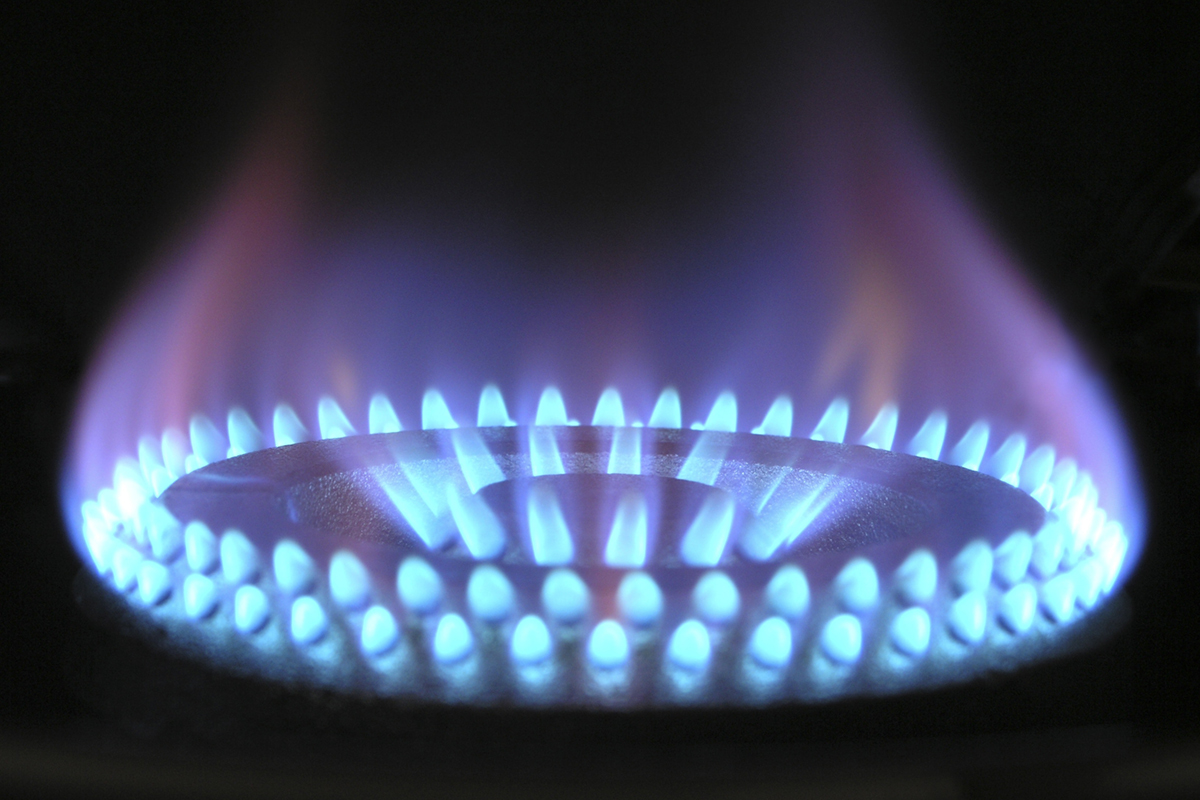

Recent revelations about the negative effect cooking with gas can have on indoor air quality have given rise to new concerns about other gas-powered appliances. Credit: Pexels.
Natural gas is almost as ubiquitous an energy source in American households as electricity. Indeed, 48 percent of U.S. homes stay warm with gas-powered furnaces while 38 percent do their cooking with gas. But recent revelations about the negative effect cooking with gas can have on indoor air pollution has given rise to new concerns about other types of gas-powered appliances inside our homes as well.
Gas cooktops may be the biggest offender given how much pollution they throw off when we use them, but gas-powered ovens, water heaters, clothes dryers and fireplaces are also worthy of concern. Gas-powered appliances emit carbon monoxide (CO), a colorless, odorless gas that, when inhaled, can cause headaches, dizziness, nausea—even death in high concentrations. Modern furnaces and appliances have safety features to prevent dangerous levels from building up, but they can still emit small amounts of CO.
Another concern with gas-powered appliances is the emission of nitrogen dioxide (NO2). NO2 is a reddish-brown gas that can irritate the eyes, nose and throat. It can also exacerbate respiratory conditions such as asthma and bronchitis. Gas stoves are the primary source of indoor NO2, but gas furnaces and other gas-powered appliances can also produce it. Gas-powered appliances also emit particulate matter (PM), another type of indoor air pollution. PM is a mixture of tiny particles that can be inhaled deep into the lungs. Exposure to PM can cause respiratory and cardiovascular problems, particularly in vulnerable populations such as children, the elderly and those with pre-existing health conditions.
To minimize the negative effects of gas-powered appliances on indoor air quality, it is important to properly maintain and ventilate them. Regular maintenance, such as cleaning and replacing filters, can help ensure that appliances are running efficiently and emitting fewer pollutants. Additionally, proper ventilation can help remove pollutants from the air. Ventilation can be achieved by opening windows or using exhaust fans that vent to the outside.
Another option for reducing indoor air pollution from gas-powered appliances is to switch to electric varieties instead. Electric stoves and furnaces do not produce CO or NO2, and they emit far less PM than gas appliances. While electric appliances may have higher upfront costs, they can be more cost-effective over time due to lower operating costs and reduced maintenance needs.
If you are designing a new home from scratch, it’s a no-brainer these days to choose appliances powered by electricity not gas. But most of us don’t have that luxury, and it’s not easy to decide if it’s worth the expense and hassle of switching out an old gas-powered appliance with a shiny new electric one. The bottom line is “if it ain’t broke, don’t fix it” as swapping out an old one for a new one generates more pollution overall thanks to the lifecycle costs of manufacturing. But if your old appliance has reached the end of its useful life anyway, changing to an electric one may well be the best move.
*Note: This EarthMonth Earth Talk is taking over my website in order to educate my readers on climate change and our environment. Get up to speed with this epic series.

CONTACTS: Gas stoves can generate unsafe levels of indoor air pollution, vox.com/energy-and-environment/2020/5/7/21247602/gas-stove-cooking-indoor-air-pollution-health-risks; Gas stoves pose health risks. Are gas furnaces and other appliances safe to use? /yaleclimateconnections.org/2023/03/gas-stoves-pose-health-risks-are-gas-furnaces-and-other-appliances-safe-to-use/.EarthTalk® is produced by Roddy Scheer & Doug Moss for the 501(c)3 nonprofit EarthTalk. See more at https://emagazine.com. To donate, visit https://earthtalk.org. Send questions to: question@earthtalk.org


This Earth Month was a great one for me. I finally was able to extend my network and work with people in my community to help implement tools and create processes for change. Typically, I focus on education. But this year, I plan to empower others in their decision-making. This year’s Earth Day theme was “Invest in Our Planet” which called for businesses to implement more sustainable practices. While things like switching to LED light bulbs, adding recyclable paper products to the workspace, and offering remote work are excellent starting points, here are some additional ways companies can still thrive while investing in our planet.

Go Paperless
This is a personal mission of mine. Anytime I see piles of paper and large file cabinets anywhere — I itch. Looking at rows of paper is not only unpleasant, but it gives me IRS vibes, and it’s also lifeless. I mean, it’s a bunch of dead trees. You can’t hug them. They give no life. If you don’t believe me, hug your parking ticket. On a serious note, my biggest goal is to go paperless. To assist me in my quest, I’ve begun to rely heavily on digital note-taking apps like Notability and Goodnotes to organize my thoughts and share information. Coupled with a cloud storage system or an external hard drive, it’s much better than paper. Although we do incur a level of e-waste when you use electronics, I’m still for going paperless when you consider space and the labor involved with managing paper.
Make Hybrid Work More Than An Option
More than 35 North American companies and about 20 global companies are testing out a four-day workweek in a pilot program spearheaded by 4 Day Week Global. 4 Day Week Global is a not-for-profit community established by New Zealanders Andrew Barnes and Charlotte Lockhart to create a better quality of life by urging companies to allow for a shortened week. In doing so, companies can offer their employees a greater work-life balance and address some of the causes leading to the Great Resignation. To me, this is a no-brainer. Fewer employees on-site means there is less need for large office spaces, which means lower costs overall. We live in a digitally advanced society, and the pandemic proved that we can work from our computers.
Some people want to come into their office to work, which should be an option. Owl Labs conducted a study of remote work in September of 2021. They surveyed over 2,000 workers and reported 84% of them reported they would be happier working remotely. The internet allows for extended reach — why be limited to a traditional desk if you don’t have to. Employees burn a lot of time grabbing coffee, chatting by the water cooler, and surfing the internet. It’s doubtful these things will change but will shift while employees work at home. But, companies won’t have to pay the lease on buildings, and commuters don’t have to clog up the roads and pollute the air. It makes fiscal sense to keep overhead low and make remote work and hybrid work permanent options, leaving employees to stay focused on work and manage life’s responsibilities without burnout.
Plant Some Trees In An Underserved Community

Companies can really make a difference by funding tree planting. There seems to be a bit of bureaucracy and over complication when it comes to planting trees, but it doesn’t have to be. Yesterday, I bought a grape tree from Ace Hardware and planted it in my yard. It took all of twenty minutes. In a month or so, hopefully I can pick the grapes and make some jam. As you see, no big deal.
Trees produce negative emissions and help mitigate climate risk. Yes, there is a cost associated and decisions to be made regarding the quality of the trees and the how many to plant. But, if you consider the fact that many low-income neighborhoods lack trees, adequate green spaces, or heavily forested areas that provide residents greater opportunities to interact with the natural world, planting a few trees seems like the right thing to do. At 5 dollars a tree plus site preparation this is a good way for companies to walk their talk. The next major step after planting the trees is caring for them. Companies should focus energy there — thinking for the long haul — and watch their green investments grow.
Here are a few organizations already dedicated to this effort:
Onetreeplanted: https://onetreeplanted.org,
Tree Foundation: https://treefoundation.org,
River Smart Homes Shade Trees (DC)https://doee.dc.gov/service/riversmart-homes-shade-tree-planting
 | Chiara "Luz" Atoyebi on Nicole. |
 | Albert E. Dogbe; a 2… on Nicole. |
 | Charli Renee on The Advice I Needed Back Then |
| Chiara "Luz" Atoyebi on St. Martin de Porres |
 | Enlarge My Heart in… on St. Martin de Porres |