When I think of meat, or meat related questions a big picture of Fred Flintstone and his brontosaurus burger often comes to mind. I know it’s a silly image but I became a vegetarian all by myself at the age of twelve. It wasn’t until the last twelve years have I been on again off again with meat. Today, I think I have derived a firm conclusion on meat eating via the ideology of the Pueblo Indians and my connection to Curanderismo. It’s good in moderation and even better when it’s well sourced.
In the second grade my son was working on a project about the Southwest Indian culture when I had an epiphany: the eating of flesh is when you need to be strong and aggressive and the intake of veggies and fruits are for calming and peace. Also, the seasons of eating meat came into significance for me based on when the concepts of seed time and harvest.
After I had that highly intellectual and rationalized thought, it made sense to me why eating fish sometimes made me sad. It’s because I believe life is in all things. Once I reconciled all those high level beliefs within myself—I went to the Korean BBQ and had a meat feast—no regrets. It was amazing and I love good cuts of meat. Unfortunately not all cuts are of good quality unless they come from the right source. I would rather have small portions of great instead of large portions of meh.
To support my wayward meat eating habits and the meat eating habits of my family I purchased a smoker. I love eating smoked foods. This method of cooking low and slow is actually good for your skin as well. (I believe so)
In short, my daily habits don’t include meat. It does however, include too much dairy. I feel better, think and operate better, with minimal meat. But there does come a time when I can’t say no to a good steak. It’s one of the best ways to recharge the blood.
I don t know about you, but since the pandemic, I have seemed to struggle with time. Not necessarily time management when it comes to completing tasks but arriving at places in person on time. What makes it even more of a challenge is that I am pretty comfortable working remotely. Unfortunately, I don’t see myself, especially as an entrepreneur, making a permanent switch to working in person. I am of the mindset that more work gets done in isolation. Yet, I am venturing out again into the world socially, and on the outside, time does matter. Not everyone wants to stay within their own four walls forever. As I started going out more, I found that I was often met with closed doors and canceled reservations because I was late.
Monochronic and Polychronic Cultural Views of Time
Differing cultural views can have an effect on how we see time. In Western society, people are often judged on their ability to be timely. We tend to follow along with and thrive best within a linear, monochronic society. Linear thinking follows a straightforward, cause-and-effect pattern. It assumes that events progress in a predictable, step-by-step manner. Additionally, monochronic cultures like ours, value timeliness when it comes to work, structured workdays, and individual accountability. These characteristics are valued in employees as well as in leadership.
However, this highly structured work environment can create burnout in people. It can be rigid and devoid of flexibility, leaving people feeling discontent and searching for life’s balance. On the other hand, cultures that are polychronic, such as those in the Middle East, tend to have work environments that allow for interruptions, breaks, and social interactions. Employees may engage in multiple tasks simultaneously. While this style of interaction can promote relationship building and greater team focus due to flexible schedules, efficiency can become an issue. I can attest to the latter. Efficiency, takes on many forms and criticisms, especially in a society where productivity can be boosted by AI. I believe that although some work and even employees may not be as timely, as other hard-driving producers, they tend to bring a distinct value that is necessary. Think quality or quantity due to honoring the natural flow of life. We could place them in a category of non-linear thinkers. These individuals tend to take a more holistic viewpoint of life, seeing the system as a whole rather than just isolated parts – they are our creatives and visionaries.
My issues with time date back to childhood. I was the kid they had to move away from the window due to my lack of focus and incessant day dreaming. My parents were in the military and I while I was often punished for my lateness, it seemed to create an adverse reaction to rigid time restrictions in me. I became rebellious instead of focused. At times, I have found myself missing out on time with friends, my yoga classes, and even some important deadlines due to my causal relationship with time. Over the last six months I have worked diligently to get back on the wagon in regard to time and I am seeing great improvements. I still tend to display a Laissez fare attitude towards time every now and then, I have learned to slay this dragon by considering the time of others. When I am late, it also affects others, and that is not a good feeling. Additionally, when you’re on time you can casually walk into a building, orient yourself, and begin your day with ease. When you are late you are rushing, anxious and often wind-up apologizing.
The moral of the story is: Leave early, be on time, and consider yourself and others in the process.
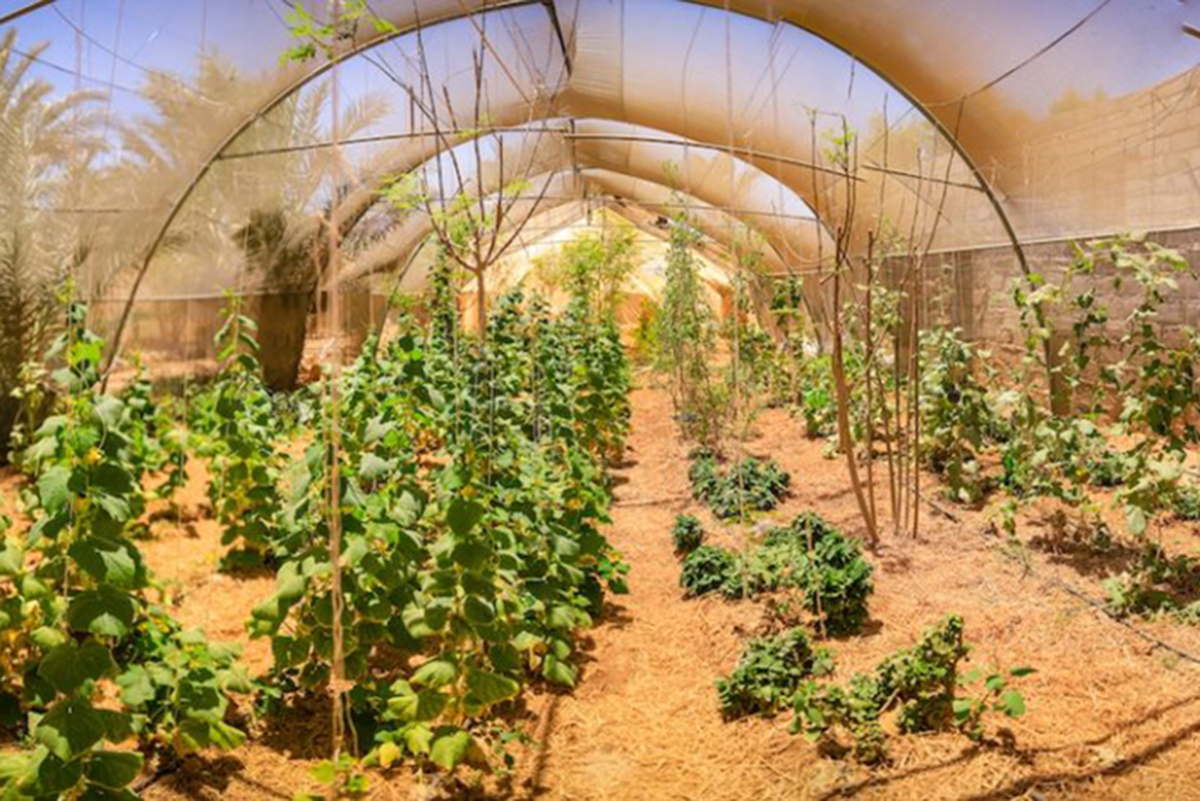
Community planners have turned a desolate patch of desert onto a thriving organic farm at Habiba in Egypt by applying the principles of permaculture. Credit: Habiba Community.
A buzzword in sustainability circles, permaculture—historically combining “permanent” and “agriculture”—describes ecologically-conscious farming to create sustainable ecosystems for future generations, using methods such as conservation tillage, proper drainage, and polyculture (growing more than one crop species in the same space, at the same time). The Australian organization Permaculture Visions notes that “natural energies… [and nature’s eight] reliable patterns that collect, store and move resources around” make it possible for humanity to use less energy to create comfortable living.”
More recently, the word combines “permanent” and “culture” to describe sustainable land use in general, especially in ways that prioritize the knowledge of indigenous peoples. The podcast Green Dreamer has highlighted numerous indigenous voices offering ways to reframe the discussion of nature, permaculture and humanity’s potential responses to the climate crisis. The publication Tenth Acre Farm describes its aim as “working with nature to be low maintenance and highly productive.”
Simply put, permaculture is a method of cultivation that uses multiple tools to minimize human impact on the environment by mimicking the zero-waste feedback loops of naturally-existing systems. Much of permaculture is guided by three ethics and several major principles that help us to be good eco-stewards and support ourselves with native species, while disturbing the least amount of land. It introduces the idea of human responsibility in maintaining ecosystems, encourages greater consideration of the impact of human activities on the environment, and reduces waste associated with production intended only for sale.
The Habiba Organic Farm in Egypt puts these principles into practice, converting a former desert settlement, where crops are difficult to grow, to arable land on which many desert-viable plants have been cultivated. Similarly, in India, coconut trees, neem trees and legumes were planted to diversify areas that had been subject to slash-and-burn agriculture for 20 years. Among most current permaculture programs, resilience (especially to growing threats of climate change), cooperation and educational/volunteering opportunities are key elements that define the project and connect it to the permaculture ethos.
Designing irrigation that allows water to seep slowly into soil across a large area prevents soil erosion and nutrient leaching. Similarly, composting and reusing “waste” products reduces pollution and improves soil quality. Readers interested in beginning their own permaculture projects (even home gardens) can start by observing their own land to determine land patterns, plant native species, collect rainwater and runoff, and carefully compost their home “waste” (vegetable peels, coffee grounds, eggshells, etc.). “Permaculture site design follows a multi-step process, which starts with observing the landscape through a specific set of both passive and active observations… [and using maps to] think through many possible scenarios and outcomes before [committing] to certain strategies or concepts”, as Tenth Acre Farm puts it.
In a more general sense, permaculture can be incorporated into people’s daily lives in simple ways that identify activities which drain lots of energy and redirecting that energy into productive activities.
This Earth Month was a great one for me. I finally was able to extend my network and work with people in my community to help implement tools and create processes for change. Typically, I focus on education. But this year, I plan to empower others in their decision-making. This year’s Earth Day theme was “Invest in Our Planet” which called for businesses to implement more sustainable practices. While things like switching to LED light bulbs, adding recyclable paper products to the workspace, and offering remote work are excellent starting points, here are some additional ways companies can still thrive while investing in our planet.
This is a personal mission of mine. Anytime I see piles of paper and large file cabinets anywhere — I itch. Looking at rows of paper is not only unpleasant, but it gives me IRS vibes, and it’s also lifeless. I mean, it’s a bunch of dead trees. You can’t hug them. They give no life. If you don’t believe me, hug your parking ticket. On a serious note, my biggest goal is to go paperless. To assist me in my quest, I’ve begun to rely heavily on digital note-taking apps like Notability and Goodnotes to organize my thoughts and share information. Coupled with a cloud storage system or an external hard drive, it’s much better than paper. Although we do incur a level of e-waste when you use electronics, I’m still for going paperless when you consider space and the labor involved with managing paper.
Make Hybrid Work More Than An Option
More than 35 North American companies and about 20 global companies are testing out a four-day workweek in a pilot program spearheaded by 4 Day Week Global. 4 Day Week Global is a not-for-profit community established by New Zealanders Andrew Barnes and Charlotte Lockhart to create a better quality of life by urging companies to allow for a shortened week. In doing so, companies can offer their employees a greater work-life balance and address some of the causes leading to the Great Resignation. To me, this is a no-brainer. Fewer employees on-site means there is less need for large office spaces, which means lower costs overall. We live in a digitally advanced society, and the pandemic proved that we can work from our computers.
Some people want to come into their office to work, which should be an option. Owl Labs conducted a study of remote work in September of 2021. They surveyed over 2,000 workers and reported 84% of them reported they would be happier working remotely. The internet allows for extended reach — why be limited to a traditional desk if you don’t have to. Employees burn a lot of time grabbing coffee, chatting by the water cooler, and surfing the internet. It’s doubtful these things will change but will shift while employees work at home. But, companies won’t have to pay the lease on buildings, and commuters don’t have to clog up the roads and pollute the air. It makes fiscal sense to keep overhead low and make remote work and hybrid work permanent options, leaving employees to stay focused on work and manage life’s responsibilities without burnout.
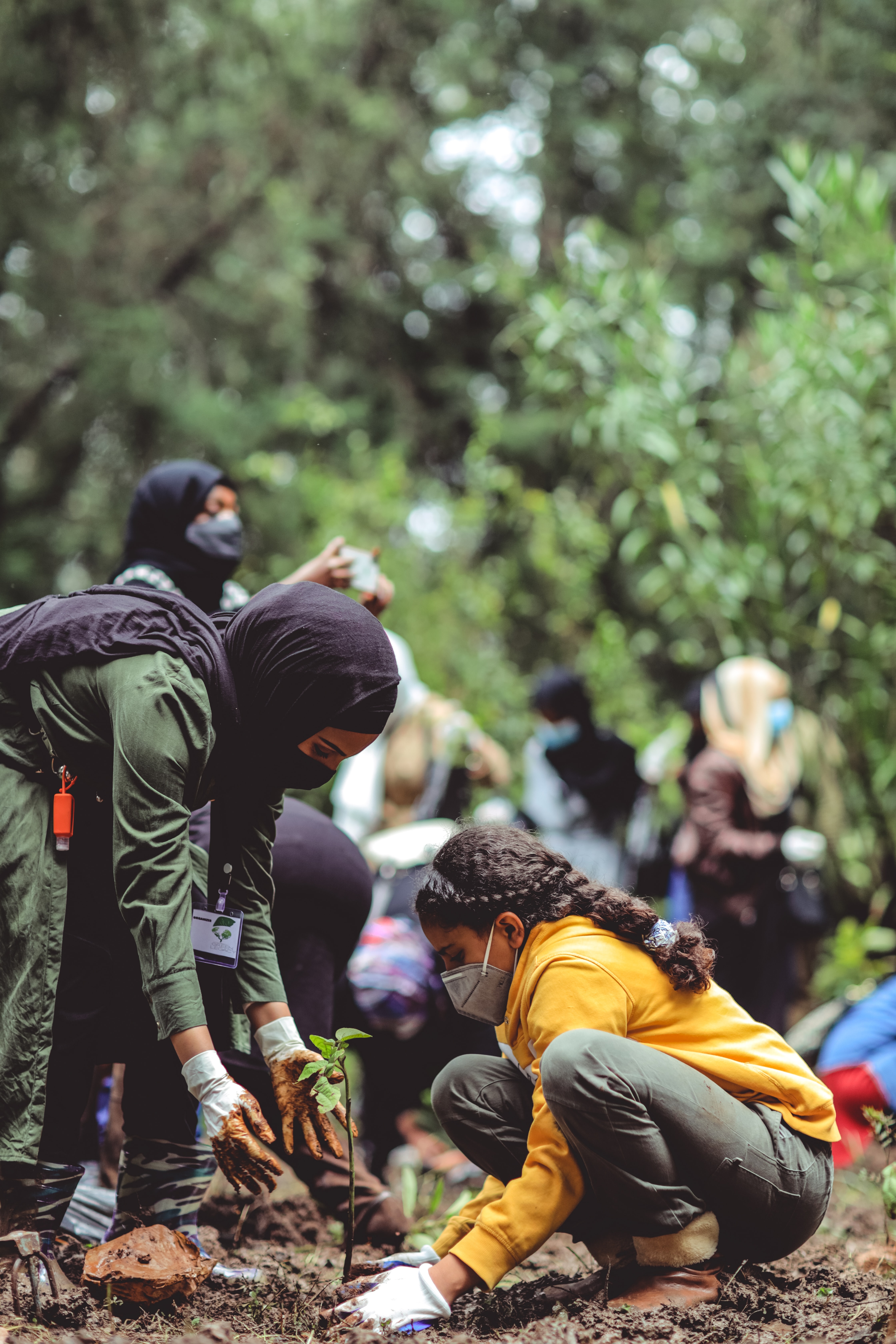
Companies can really make a difference by funding tree planting. There seems to be a bit of bureaucracy and over complication when it comes to planting trees, but it doesn’t have to be. Yesterday, I bought a grape tree from Ace Hardware and planted it in my yard. It took all of twenty minutes. In a month or so, hopefully I can pick the grapes and make some jam. As you see, no big deal.
Trees produce negative emissions and help mitigate climate risk. Yes, there is a cost associated and decisions to be made regarding the quality of the trees and the how many to plant. But, if you consider the fact that many low-income neighborhoods lack trees, adequate green spaces, or heavily forested areas that provide residents greater opportunities to interact with the natural world, planting a few trees seems like the right thing to do. At 5 dollars a tree plus site preparation this is a good way for companies to walk their talk. The next major step after planting the trees is caring for them. Companies should focus energy there — thinking for the long haul — and watch their green investments grow.
Here are a few organizations already dedicated to this effort: