Posted on Leave a comment

Is buying refurbished electronics better for the planet than buying brand new ones?             

According to the United Nations Environment Programme (UNEP), the world produces some 50 million tons of electronic waste each year, and the figure is increasing. Meanwhile, only 20 percent of this electronic waste is disposed of properly. The remaining 80 percent is either sent to landfills, incinerated or illegally traded, resulting in a host of environmental problems including groundwater pollution, reduced air quality and the depletion of virgin natural resources to replace discarded items. As a result, buying refurbished electronics is a step in the right direction.

The U.S. Environmental Protection Agency (EPA) reports that buying refurbished electronics can significantly reduce the environmental impact of electronic waste. The EPA estimates that for every million smartphones that are refurbished and reused, approximately 35,000 pounds of copper, 772 pounds of silver, 75 pounds of gold and 33 pounds of palladium can be recovered. This is a considerable number of valuable resources that can be conserved by buying refurbished electronics.

Refurbishing electronics not only conserve resources but also helps reduce greenhouse gas emissions by as much as 50 percent, according to the EPA. This is because the production of new electronics requires a lot of energy, and greenhouse gas emissions are generated during the manufacturing process. “Most of the pollution that’s made actually is in the manufacturing of the device, not the use,” says Lucas Gutterman of the non-profit public interest group, U.S. PIRG. “So buying refurbished and using things for as long as we possibly can, really helps protect the environment.”

Buying refurbished is also good for the pocketbook, given that they cost less. But is the savings worth it? Refurbished items sold by reputable retailers undergo tests and inspections to ensure that they meet the same quality standards as new items. According to the Consumer Technology Association (CTA), a trade association for the consumer electronics industry, buyers should look for refurbished electronics that come with a warranty that assures that the item has been thoroughly vetted and is of high quality.

“Some credit card companies will extend coverage on refurbished goods, too, as long as they come with a preexisting warranty,” notes Consumer Reports’ Yael Grauer. Another smart consumer tip is to always check the return policy on a refurbished item before hitting the “buy” button. “It might take you a little while to notice poor performance and defects in a refurbished product, so it helps to have at least one month to decide whether you want to keep it,” adds Grauer.

Apple, Dell, Amazon, Walmart and BestBuy are among the large companies that sell many refurbished electronics with limited warranties and a return policy. Dozens of other smaller resellers (e.g., Refurb.io, Gazelle, TechForLess, RefurbMe, etc.) also specialize in refurbished products and typically offer similar if not better terms for consumers. “Buying refurbished products positively impacts the environment by boosting the circular economy, lowering the replacement cycle, reducing carbon dioxide (CO2) emissions, avoiding additional e-waste, and reducing energy and fuel consumption,” says Simo Elalj of RefurbMe. “You do this by giving a new life to a pre-owned device.”

*Note: This EarthMonth Earth Talk is taking over my website in order to educate my readers on climate change and our environment. Get up to speed with this epic series. 

Text

Description automatically generated

CONTACTS: U.S. PIRG, pirg.org; Consumer Technology Association, cta.tech; Refurb.io, ca.refurb.io; Gazelle, gazelle.com; TechForLess, techforless.com; RefurbMe, refurb.me.

EarthTalk® is produced by Roddy Scheer & Doug Moss for the 501(c)3 nonprofit EarthTalk. See more at https://emagazine.com. To donate, visit https://earthtalk.org. Send questions to: question@earthtalk.org.

Posted on Leave a comment

EartTalk Q&A: Have Scientists Been Able To Definitively Prove Links Between Global Warming and More Extreme Weather Phenomena In Recent Years, Or Is This Still Just A Theory?

Caption: Skeptics say you can’t prove anything, but climatologists beg to differ when it comes to proving links between extreme weather and climate change. Credit: George Desipris, Pexels.

The question of whether science has been able to prove, let alone prove definitively, the connection between climate change and extreme weather is a very tricky one. This is because science is always reluctant to deal in certainty. “You can never have 100 percent proof of anything. There will always be doubt,” reports Jack Fraser, an Oxford-trained astrophysics Ph.D. at the Wellcome Sanger Institute. “Proof can only exist when there is no doubt, and there is always doubt. You could be a brain in a vat, living in a crazy simulation. You could be hallucinating everything. You cannot prove anything.” 

Despite this embedded doubt in all things scientific, researchers have opened up a new branch of science called ‘Extreme Event Attribution’ in an attempt to work out the extent of man-made climate change’s culpability. To discern this, scientists begin by setting criteria for what made the event extreme. They then turn to historical climate records and make comparisons with other similar events, checking them against the same criteria. They are looking for a change in the intensity or frequency of a certain extreme event. 

If they find a change, they then work out what caused it. To do this, they use models. There are many different types of models; one example is creating two virtual worlds with exactly the same conditions, except one is pumped full of greenhouse gasses. These simulations then create thousands of weather scenarios allowing a direct comparison between the polluted world and the non-polluted world. The difference between the two suggests man-made climate change’s culpability in certain weather events. 

Although new, this form of science has already gone as far as science permits into proving the role of climate change in certain extreme weather events. “The vast majority of extreme weather events reviewed by researchers since 2011 – 70 percent – were shown to be more likely to occur, or were made more severe, because of global warming,” Eric Roston and Brian Sullivan report in The Washington Post.

Take the floods in Pakistan in 2020, for instance. The World Weather Attribution scientists say that their “evidence suggests that climate change played an important role in the event, although our analysis doesn’t allow us to quantify how big the role was.” And Frederike Otto, a climatologist from Imperial College London, said that “the fingerprints of global warming [were] evident” in the disaster. 

Extreme Event Attribution is a particular science that works on a case-by-case basis, but the trend is clear. Seventy percent of extreme weather events were made more likely or more damaging by man-made issues. Definitive proof will never be offered by science, but most studies point in the same direction: towards global warming.  

CONTACTS: NASA Vital Signs: Sea Level, climate.nasa.gov/vital-signs/sea-level/; “There’s No Such Thing As Proof In The Scientific World – There’s Only Evidence,” forbes.com/sites/quora/2017/12/14/theres-no-such-thing-as-proof-in-the-scientific-world-theres-only-evidence/; “How Science Links Global Warming To Extreme Weather,” washingtonpost.com/business/energy/how-science-links-global-warming-to-extreme-weather/2022/07/18/80b19e1a-06ca-11ed-80b6-43f2bfcc6662_story.html

*Note: This EarthMonth Earth Talk is taking over my website in order to educate my readers on climate change and our environment. Get up to speed with this epic series. 

Text

Description automatically generated

EarthTalk® is produced by Roddy Scheer & Doug Moss for the 501(c)3 nonprofit EarthTalk. See more at https://emagazine.com. To donate, visit https://earthtalk.org. Send questions to: question@earthtalk.org.
Posted on Leave a comment

Earth Talk Q&A: Are the famous Joshua trees of the California desert really going extinct? What can we do to preserve them?

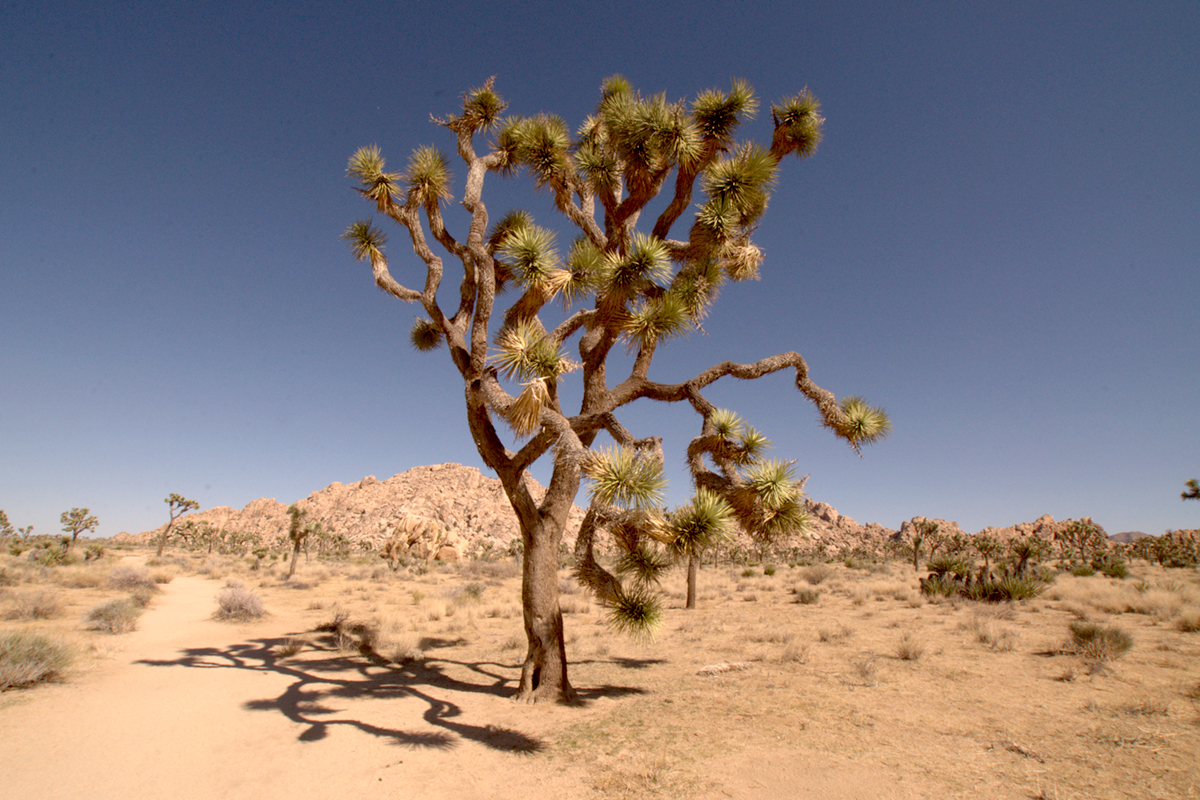
Boy Scout Trail, Joshua Tree National Park, California, US

The Joshua tree is an iconic species of the Mojave Desert that stretches across parts of southeastern California, Nevada, Arizona, and Utah. Known for its resilience in an unforgiving desert climate, the Joshua tree is unique in its unusual anatomy and adaptable ecology, but its future looks bleak in the face of increasing global warming.

Indeed, increasing temperatures and decreasing precipitation thanks to climate change have shifted the suitable habitat for a variety of flora and fauna around the world, including the Joshua tree. Biologists fear that little of the Joshua tree’s historical range will be suitable for it within a century. By 2100, climate models show that Joshua Tree National Park will lose the majority of its suitable habitat for its namesake species. The increasing severity and frequency of forest fires pose a threat to the future of the trees as well. Because Joshua trees did not evolve with fire, they are not adapted to its effects, making it difficult for the population to bounce back after such a disturbance. As temperatures increase, biologists predict that the suitable range for Joshua trees will move northward. However, this northward range is not guaranteed to be viable, as the Yucca moth that pollinates Joshua trees does not live up there.

Given the threat to Joshua trees, several entities have embarked on campaigns to try to save the iconic tree. The National Park Service recently embarked on a campaign to protect the tree’s remaining habitat in Joshua Tree National Park, Mojave National Preserve and Death Valley National Park. Meanwhile, researchers and conservationists launched the Joshua Tree Genome Project in 2020 to collect and monitor data from both professional and citizen scientists in an effort to map and monitor existing populations. Project organizers hope to use the data to inform conservation planning by identifying Joshua tree populations best situated to benefit from conservation protections. Yet another effort to help Joshua trees comes from the Mojave Desert Land Trust, which recently launched a planting program to restore lost habitat for the trees across the Mojave.

Public education about the importance of saving threatened species is also key to saving Joshua trees. To wit, the non-profit Joshua Tree National Park Association is working to educate the public about the importance of Joshua trees and the threats they face through free educational programs and resources for visitors to Joshua Tree National Park.

Yet while Joshua trees were granted temporary protection under the state of California’s endangered species laws, they are as yet unprotected at the federal level. As such, the non-profit Center for Biological Diversity has petitioned the U.S. Fish and Wildlife Service to protect the Joshua tree under the Endangered Species Act.

CONTACTS: Joshua Tree Genome Project, joshuatreegenome.org; Saving Iconic Joshua Trees, chicagobotanic.org/blog/plant_science_conservation/saving_iconic_joshua_trees; California Commission Deadlocks on Protecting Western Joshua Trees as Threatened Species, biologicaldiversity.org/w/news/press-releases/california-commission-deadlocks-on-protecting-western-joshua-trees-as-threatened-species-2022-06-16/.

*Note: This Earth Month I am proud to feature the Earth Talk Q&A from the Editors of E-The Environmental Magazine*

EarthTalk® is produced by Roddy Scheer & Doug Moss for the 501(c)3 nonprofit EarthTalk. See more at https://emagazine.com. To donate, visit https://earthtalk.org. Send questions to: question@earthtalk.org.

Posted on Leave a comment

EarthTalk Q&A: What exactly is permaculture and how is it good for the environment?                                                            

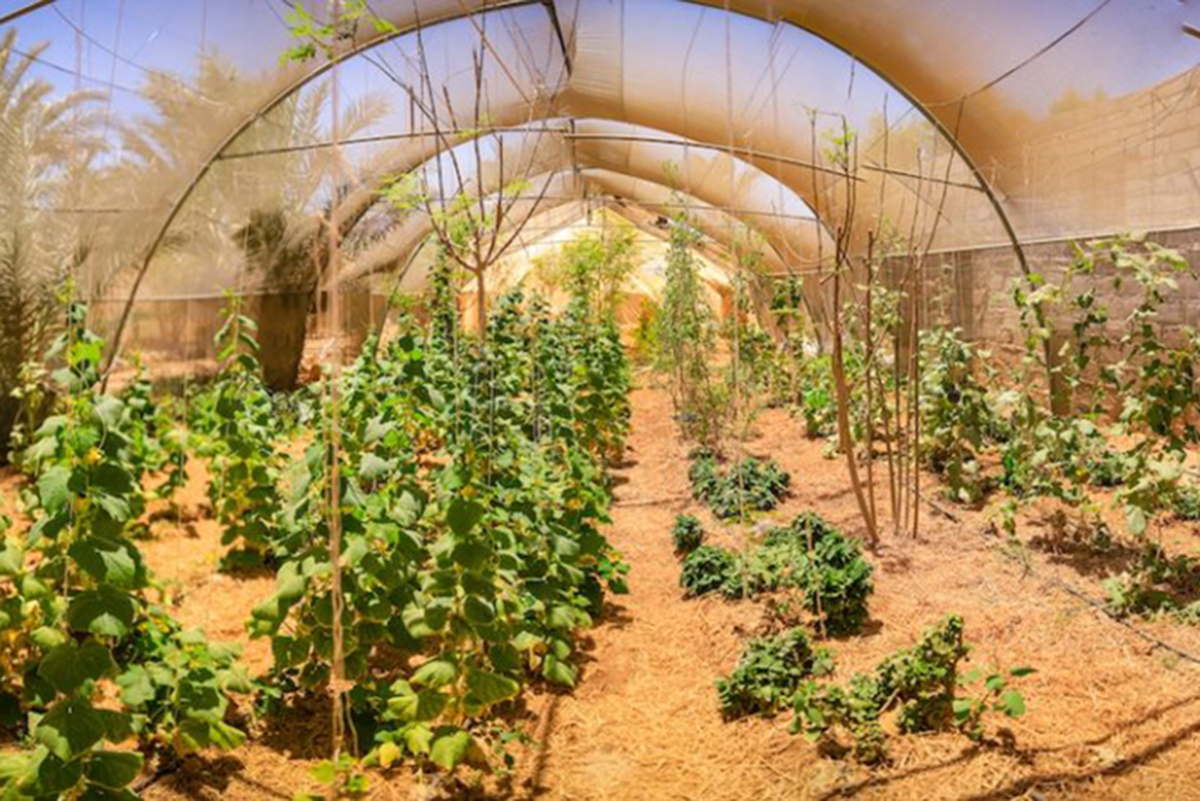
Community planners have turned a desolate patch of desert onto a thriving organic farm at Habiba in Egypt by applying the principles of permaculture. Credit: Habiba Community.

A buzzword in sustainability circles, permaculture—historically combining “permanent” and “agriculture”—describes ecologically-conscious farming to create sustainable ecosystems for future generations, using methods such as conservation tillage, proper drainage, and polyculture (growing more than one crop species in the same space, at the same time). The Australian organization Permaculture Visions notes that “natural energies… [and nature’s eight] reliable patterns that collect, store and move resources around” make it possible for humanity to use less energy to create comfortable living.”

More recently, the word combines “permanent” and “culture” to describe sustainable land use in general, especially in ways that prioritize the knowledge of indigenous peoples. The podcast Green Dreamer has highlighted numerous indigenous voices offering ways to reframe the discussion of nature, permaculture and humanity’s potential responses to the climate crisis. The publication Tenth Acre Farm describes its aim as “working with nature to be low maintenance and highly productive.”

Simply put, permaculture is a method of cultivation that uses multiple tools to minimize human impact on the environment by mimicking the zero-waste feedback loops of naturally-existing systems. Much of permaculture is guided by three ethics and several major principles that help us to be good eco-stewards and support ourselves with native species, while disturbing the least amount of land. It introduces the idea of human responsibility in maintaining ecosystems, encourages greater consideration of the impact of human activities on the environment, and reduces waste associated with production intended only for sale.

The Habiba Organic Farm in Egypt puts these principles into practice, converting a former desert settlement, where crops are difficult to grow, to arable land on which many desert-viable plants have been cultivated. Similarly, in India, coconut trees, neem trees and legumes were planted to diversify areas that had been subject to slash-and-burn agriculture for 20 years. Among most current permaculture programs, resilience (especially to growing threats of climate change), cooperation and educational/volunteering opportunities are key elements that define the project and connect it to the permaculture ethos.

Designing irrigation that allows water to seep slowly into soil across a large area prevents soil erosion and nutrient leaching. Similarly, composting and reusing “waste” products reduces pollution and improves soil quality. Readers interested in beginning their own permaculture projects (even home gardens) can start by observing their own land to determine land patterns, plant native species, collect rainwater and runoff, and carefully compost their home “waste” (vegetable peels, coffee grounds, eggshells, etc.). “Permaculture site design follows a multi-step process, which starts with observing the landscape through a specific set of both passive and active observations… [and using maps to] think through many possible scenarios and outcomes before [committing] to certain strategies or concepts”, as Tenth Acre Farm puts it.

In a more general sense, permaculture can be incorporated into people’s daily lives in simple ways that identify activities which drain lots of energy and redirecting that energy into productive activities.

CONTACTS: Permaculture Visions, permaculturevisions.com; Green Dreamer, greendreamer.com; Habiba Organic Farm, habibacommunity.com.

EarthTalk® is produced by Roddy Scheer & Doug Moss for the 501(c)3 nonprofit EarthTalk. See more at https://emagazine.com. To donate, visit https://earthtalk.org. Send questions to: question@earthtalk.org.

*Note: This Earth Month I am proud to feature the Earth Talk Q&A from the Editors of E-The Environmental Magazine*