Posted on Leave a comment

Why I No Longer Have Food Waste

Food Waste Graphic Courtesy of the Author via Generative AI

I no longer have food waste.

We rarely waste food in the house. I remember sitting in my house after coming from a meeting with the Sustainability Committee in my city where we were trying to solve some food waste issues. I was thinking, how in the world could scarcity and excess exist in the same space? It seemed off to me. I have to say there is never a moment in my life that I had no food. Zero food.

There may have been a time in my adult life where I thought, oh my goodness I may run out of food–let me start to fast so it’ll be less painful! But the miracle of life is that it never got that way. Thankfully. To give you an example of what I mean, I would have rice and mixed vegetables in my house and an onion. I would go grab some soy sauce and small chicken and make stir-fry. Granted I was only feeding me as an artist on the edge but it was great. Especially with a garnish. You can do the same and make it nice for your dinner table. Kids only remember the end result, not so much the struggle unless you are complaining. I don’t know about you, but my Nana and grandmothers never complained. It was only, “come on in and eat!”

I don’t want to belittle or undermine food struggles, but I also don’t want to stoke fear and anxiety. Sometimes the solution may not be quantity but quality and true accessibility. Some of which is resolved with online shopping.

*Amazon offers discount Prime membership based on income.*

I come from people who could take whatever was left in the cupboard and turn it into a gourmet meal. At least, that’s how it was when I was growing up. These days, I notice a lot of folks let food sit in the refrigerator until it goes bad, and to me, that’s a real issue. Having abundance is a blessing, but having high‑quality food and clean water at home is even better. It supports real health, and because the quality is higher, you actually feel more satisfied.

I appreciate that we now have a new food pyramid. After decades of rising illness, it’s clear that what we were doing wasn’t working. Change was overdue. When I was younger and visited friends from wealthier families, I noticed something interesting: they rarely had a lot of food in the house. Maybe a beautifully organized snack shelf, plenty of beverages, and if I stayed over, they usually ordered takeout. Yet everyone was thin, healthy, and full of energy. Food wasn’t the center of their lives. That doesn’t dismiss food insecurity—if anything, it highlights how deeply it matters. The type of food we eat is often more important than the sheer amount. I would cry real tears for anyone who blocked another person from trying to be healthy and change their perception. Life is very precious.

A kitchen stocked with Cheetos, soda, and frozen meals might feel convenient, especially for kids coming home hungry, but true nourishment comes from proteins, vegetables, and real meals that actually fill you.

Variety is wonderful, but learning discipline in how we eat and discernment in how we shop can change everything. I’ve found that I save more money simply by buying less junk. I can still enjoy eating out once or twice a week—or even just once a month—but the biggest difference I see is in my family’s health. Their skin glows. We have our vitamins, clean water, stews, soups, meats, pasta, and salads. The meals I cook last about two days, so we don’t end up with piles of leftovers or much food waste. This is the true key to environmental activism.

What I do notice, though, is how much waste comes from crackers, chips, and snacks. Half‑eaten packages and stray cookies show up everywhere, which tells me all I need to know: these should be occasional treats, not weekly staples.

It’s important to remember that people live very different lives. Across every race and ethnicity, families fall into a wide range of income brackets, and what matters deeply to some may not matter at all to others. My hope is that everyone has access to at least a basic level of health education and support. In many places that already exists, but I’d love to see it go further—especially by empowering community leaders and local businesses who truly understand the area. They’re the ones who can help strengthen and balance the quality of life there.

When it comes to waste, buying higher‑quality items, and buying fewer things overall, can make a real difference for the environment. I learned that in an unexpected way. Two years ago, I was overwhelmed by everything happening in my life and worried I wouldn’t be able to pull off a nice Thanksgiving. Somehow, it turned into an epic $60 Italian Thanksgiving extravaganza.

This past year was completely different. Family was together, the food was plentiful, and I even had embroidered placemats and a ham. I tried to recreate the magic of the year before, but the struggle wasn’t there anymore. Isn’t that something? Maybe part of us tries to recreate that tension, that sense of overcoming. It’s worth reflecting on.

The Food Pyramid Lie: Why We Got Fat

When I think of this new pyramid, among other things, I think about all of the different circles I have moved in. One thing I know for sure is that no one wants to stay where they are. If the best option exists uptown, they want it to exist where they are as well. If all we have to access as a tool for change is information, then knowledge is wealth. Building upon that wealth is up to the execution of each individual. If you do more today with mitigating food waste, buying high quality foods, and practicing disciplined eating than you did yesterday—you are winning. Let’s take this one step at a time. Let’s plan for the year instead of six weeks.

Let’s change together.
Posted on Leave a comment

Earth Talk Q&A: Are the famous Joshua trees of the California desert really going extinct? What can we do to preserve them?

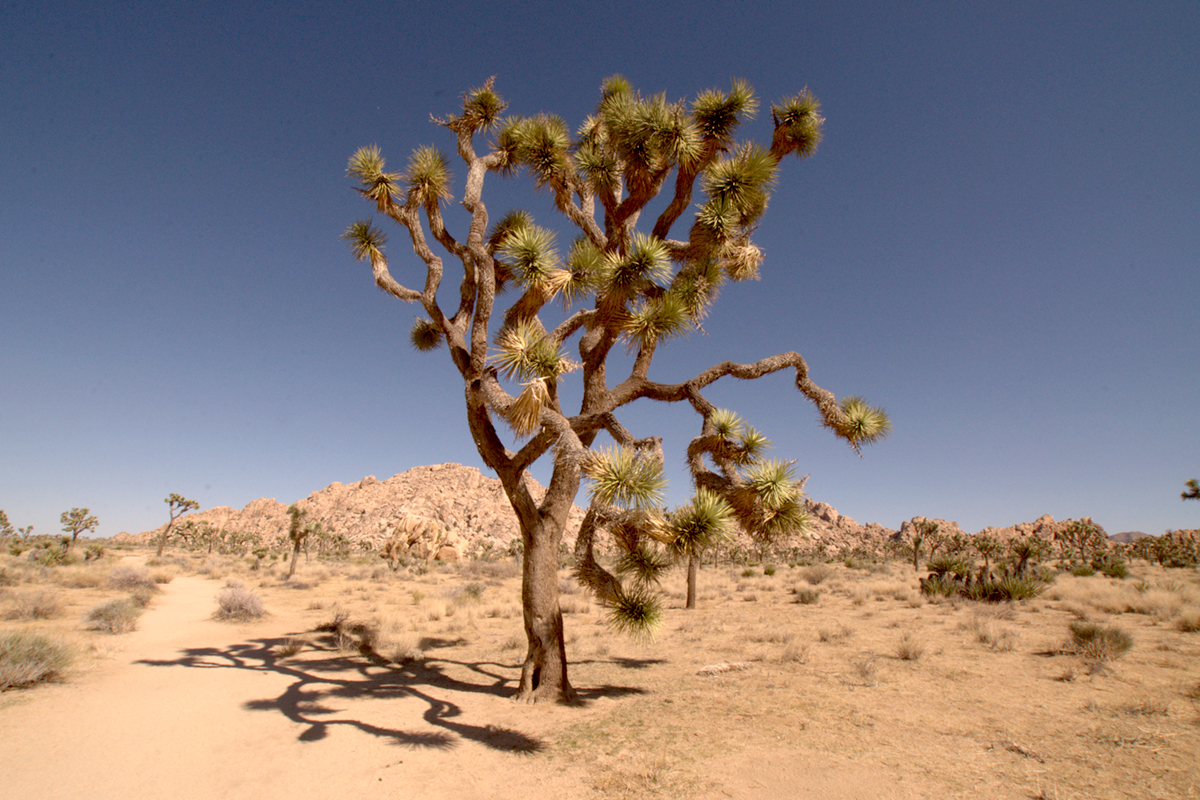
Boy Scout Trail, Joshua Tree National Park, California, US

The Joshua tree is an iconic species of the Mojave Desert that stretches across parts of southeastern California, Nevada, Arizona, and Utah. Known for its resilience in an unforgiving desert climate, the Joshua tree is unique in its unusual anatomy and adaptable ecology, but its future looks bleak in the face of increasing global warming.

Indeed, increasing temperatures and decreasing precipitation thanks to climate change have shifted the suitable habitat for a variety of flora and fauna around the world, including the Joshua tree. Biologists fear that little of the Joshua tree’s historical range will be suitable for it within a century. By 2100, climate models show that Joshua Tree National Park will lose the majority of its suitable habitat for its namesake species. The increasing severity and frequency of forest fires pose a threat to the future of the trees as well. Because Joshua trees did not evolve with fire, they are not adapted to its effects, making it difficult for the population to bounce back after such a disturbance. As temperatures increase, biologists predict that the suitable range for Joshua trees will move northward. However, this northward range is not guaranteed to be viable, as the Yucca moth that pollinates Joshua trees does not live up there.

Given the threat to Joshua trees, several entities have embarked on campaigns to try to save the iconic tree. The National Park Service recently embarked on a campaign to protect the tree’s remaining habitat in Joshua Tree National Park, Mojave National Preserve and Death Valley National Park. Meanwhile, researchers and conservationists launched the Joshua Tree Genome Project in 2020 to collect and monitor data from both professional and citizen scientists in an effort to map and monitor existing populations. Project organizers hope to use the data to inform conservation planning by identifying Joshua tree populations best situated to benefit from conservation protections. Yet another effort to help Joshua trees comes from the Mojave Desert Land Trust, which recently launched a planting program to restore lost habitat for the trees across the Mojave.

Public education about the importance of saving threatened species is also key to saving Joshua trees. To wit, the non-profit Joshua Tree National Park Association is working to educate the public about the importance of Joshua trees and the threats they face through free educational programs and resources for visitors to Joshua Tree National Park.

Yet while Joshua trees were granted temporary protection under the state of California’s endangered species laws, they are as yet unprotected at the federal level. As such, the non-profit Center for Biological Diversity has petitioned the U.S. Fish and Wildlife Service to protect the Joshua tree under the Endangered Species Act.

CONTACTS: Joshua Tree Genome Project, joshuatreegenome.org; Saving Iconic Joshua Trees, chicagobotanic.org/blog/plant_science_conservation/saving_iconic_joshua_trees; California Commission Deadlocks on Protecting Western Joshua Trees as Threatened Species, biologicaldiversity.org/w/news/press-releases/california-commission-deadlocks-on-protecting-western-joshua-trees-as-threatened-species-2022-06-16/.

*Note: This Earth Month I am proud to feature the Earth Talk Q&A from the Editors of E-The Environmental Magazine*

EarthTalk® is produced by Roddy Scheer & Doug Moss for the 501(c)3 nonprofit EarthTalk. See more at https://emagazine.com. To donate, visit https://earthtalk.org. Send questions to: question@earthtalk.org.

Posted on Leave a comment

5 Things To Consider Before Getting Your Residential Solar Panels, It’s Simpler Than You Think

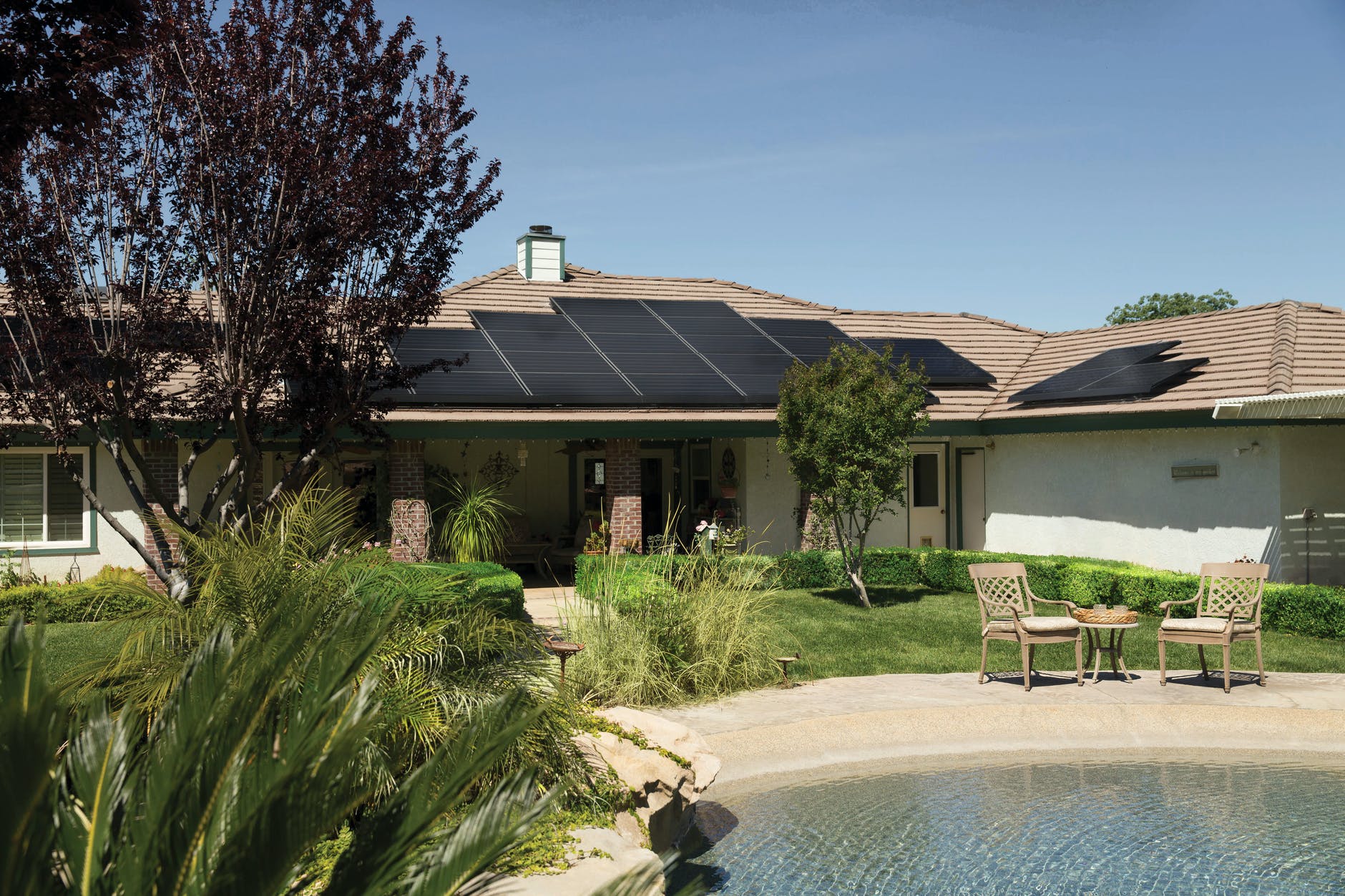
black solar panels on brown roof
Photo by Vivint Solar on Pexels.com

By now, many of us have read, or heard about, the Intergovernmental Panel on Climate Change’s (IPCC) damning report on the state of the environment. On April 4, 2022- UN Secretary-General António Guterres’ made a public appeal to environmental leaders and the global community at-large, to hold leaders accountable for our climate issue. In his brief video, Guterres called for the swift implementation of renewable energy, in order to mitigate the rapidly accruing damages of greenhouse gas emissions, that stem from energy production.

The report came out a week after we installed our own residential solar panels. This is a huge win for our family as we push towards a more sustainable lifestyle. Over the past few years, I have come into an awareness that my desired minimalist, handcrafted lifestyle not only had a name, but a whole community — sustainable living — -and it’s very diverse in terms of ideas.

I often find that there are many people that have heard concepts surrounding renewable energy, zero waste living, and living off-grid but it seems out of reach or overly complex. However, it doesn’t have to be. One of the main ideologies of sustainable living involves everyone doing their part and giving space for our world will begin to recover organically.

What is renewable energy?

Renewable energy comes from natural sources like sunlight, wind, rain, plants, waves, and geothermal heat from the Earth’s core.

It’s good for the environment, good for you and cost-effective over time. 


The Biden-Harris administration has set a goal of creating a carbon pollution-free power sector by 2035. While some still feel that this is an ambitious goal, everyday citizens can make the decision to get the balls of change rolling, and solar energy is a great start.

Residential solar energy is a way to reduce skyrocketing big energy costs and can quickly advance your sustainable goals and help improve our environment. Homeguide.com, residential panels can run from $10,000-$27,000 after the tax incentive. For many people, especially from low-income and marginalized communities solar panels will be a challenge for them to obtain. Even for middle class families, the expense can be too high. Thankfully, non-profits like Solstice Initiatives ,and the Black woman-owned WeSolar, are providing equity with community solar energy — no rooftop needed.

Photo by Jed Owen on Unsplash

If you do have a roof and you are excited to get started, here are 5 things to consider:

The Tax Credit. Time is ticking on the residential solar federal tax credit. The federal tax credit expires in 2024, unless Congress renews it. Currently, there is a 26% tax credit for homeowners. That decreases to 22% by 2023. According to Energy.gov, here’s how the costs are calculated:
For example, if your solar PV system was installed before December 31, 2022, cost $18,000, and your utility gave you a one-time rebate of $1,000 for installing the system, your tax credit would be calculated as follows: 
0.26 *($18,000 — $1,000) = $4,420 

If you are a homeowner and those savings matter to you, it’s time to get focused on making it happen.

Choosing the right company. Choose a company that doesn’t overcharge you upfront and essentially take away what you would be getting back in rebates. It’s always good to do your research and price compare. I would recommend no less than 3–6 months in order to do a deep dive into prices on the install, monitoring, and rebates. You can start here or if you are handy, go DIY.

Size matters. Bigger panels equals bigger savings. Which means more cost for you. You can expect to recoup the total cost 15–20 years down the line. But you will see the benefits in savings long before that. Also keep in mind, this is a season of legacy building. What you set up today is what you are leaving your family to improve upon and pass down for generations.

Understand your needs. Are you looking to cut costs on electricity or also have a battery back up? Tesla’s Powerall is an example of the battery backup system that gives you that near total independence you crave, but you will also need to buy their panels. You can’t purchase the Powerall as a standalone item.

Know the laws of your state because they vary. Solar panels may simply be a start for you. Maybe you want to DIY-it and go totally off-grid in the city. I would advise you to take a look at Primal Survivor. They’ve created an interactive map documenting off-grid laws in almost every state. Which is something to consider and also helpful in learning to manage your expectations with your solar setup.

I also hope that my fully transparent, lifelong pursuit of a sustainable life, will help ground some of the big ideas surrounding the environment and you can see where you fit inside the fight. This way of living ensures a good quality of life for all. In doing so, true change will emerge one family at a time.

Be sure to send me a message, or clap this story, if you found it helpful.