Posted on Leave a comment

A Pueblo of Many Colors: The True Founding Story of Los Angeles

In 1781, Los Angeles was founded as a small farming village—not as a massive European colony, but as a modest agricultural community established by families from what is now Mexico. The settlement, officially named El Pueblo de Nuestra Señora la Reina de Los Ángeles, was organized under the direction of Spanish governor Felipe de Neve. At the time, California was part of the Spanish empire, administered through Mexico (then called New Spain). The founding of Los Angeles was a civilian project: it was meant to grow crops, raise livestock, and supply nearby military presidios and missions not to function as a military conquest site.

Image of Felipe de Neve, 4th Governor of the Californias, 1781, found in Public Domain

The 44 original settlers—11 families—were recruited primarily from the Mexican regions of Sinaloa and Sonora. A significant number came specifically from Sinaloa, bringing experience in farming, ranching, irrigation, and frontier survival. These settlers were not primarily European-born Spaniards. Census records from 1781 clearly list them by racial classifications used in colonial Mexico: Mestizo, Mulato, Negro, and Español.

Only two of the adult settlers were classified as Español (Spanish). The majority were people of mixed ancestry. Mestizos—people of combined Indigenous Mexican and Spanish heritage formed a large portion of the group. Mulato’s who were people of mixed African and Spanish ancestry, were also prominently represented. Several settlers were identified as having African heritage directly.

Among the African-descended settlers were individuals whose ancestry traced to the Asante (Ashanti) people of present-day Ghana in West Africa. The Asante were part of a powerful West African kingdom deeply affected by the transatlantic slave trade. Enslaved Asante people were transported to Mexico during the colonial period, where many later gained freedom, intermarried, and became integrated into Mexican society. By the late 18th century, their descendants were free citizens of Mexico and part of frontier settlement efforts. The documented link between Asante ancestry and some of the Los Angeles settlers highlights a direct West African connection to the city’s founding families.

Casta Paintings in the Public Domain

Understanding the racial terms used at the time helps clarify the makeup of the pueblo. “Mestizo” referred specifically to a person of Spanish and Indigenous ancestry. “Mulato” referred to someone of African and Spanish ancestry. These classifications were part of Mexico’s colonial caste system, yet on the northern frontier—far from Mexico City—social lines were often more fluid. In Los Angeles, families of African, Indigenous, and European ancestry worked side by side to survive.

Life in early Los Angeles revolved around agriculture. The settlers built homes near the Los Angeles River and constructed irrigation ditches (zanjas) to water their crops. The pueblo consisted of a central plaza, modest adobe homes, small fields, and grazing lands. It was rural, tightly knit, and cooperative. Families depended on each other for food production, protection, and trade. Diversity was not a modern development—it was present from the first day.

Comparing Los Angeles then and now reveals both contrast and continuity. In 1781, the entire settlement consisted of fewer than 50 people living in adobe structures surrounded by farmland. Today, Los Angeles is a sprawling metropolis of nearly four million residents, with neighborhoods stretching from Boyle Heights to South Los Angeles, from East L.A. to the San Fernando Valley. Instead of dirt paths and crop fields, the city is defined by freeways, high-rises, ports, and film studios.

Yet the diversity remains strikingly consistent. Modern Los Angeles is known for its Mexican, African American, Central American, Asian, and multiracial communities. Neighborhoods reflect layered migrations over centuries—but the multiracial foundation was present at the beginning. The original pueblo was Indigenous, African, and European at once. Today’s Los Angeles, often described as one of the most diverse cities in the world, mirrors the blended ancestry of its founders.

Los Angeles did not begin as a homogeneous colonial outpost. It began as a humble Mexican farming village built by Mestizo and Mulato families—many from Sinaloa, some with documented Asante roots—whose shared labor and cultural blending shaped the identity of the city long before it became a global metropolis.


References

Castillo, E. D. (1994). The Los Angeles pobladores: The founding families of El Pueblo de la Reina de Los Ángeles, 1781. Los Angeles Historical Society.

Forbes, J. D. (1993). Africans and Native Americans: The language of race and the evolution of Red-Black peoples. University of Illinois Press.

Posted on 1 Comment

The Advice I Needed Back Then

Daily writing prompt
What advice would you give to your teenage self?

If I had to give my teenage self some advice, it would be to slow down. To be more selective. To be braver with my feelings and thoughts in person. Don’t keep everything bottled up and only on the page.

I would also tell myself that it’s okay to keep things to myself—to hold the things I love sacred, in my heart, and close to the vest. It is okay to trust others. It is okay to believe. It is okay to extend family to the friends who became your people.

I would tell myself that it’s okay to stay on your own path. All of your predictions will one day come true because, despite the lack of belief from some of the people closest to you, you hold the answers.

Lastly, I would say to my teenage self: you are beautiful. You are loved. You are stronger than you think you are. You are also a true original. You won’t be for all people. But there are people that are for you, be grateful for that. Don’t forgo new partnerships, relationships, ideas and generosity in exchange for what you think you should have–focus on your true champions and advocates. They will be your greatest blessings. Most of all, stay in the light, stay on the right side of things, and you will be alright. The thing that you don’t see coming is the perfect peace among other things that await you in the future. Don’t stress too hard.

My younger self desired acceptance, but the best and highest good is self-love. It is priceless. If you can relate to the power of a self-love journey please leave a comment. Like it, share it and subscribe.

Posted on Leave a comment

Outschool Review: Flexible Learning Options for Families

girl in pink and white shirt sitting beside brown wooden table
Photo by Julia M Cameron on Pexels.com

In today’s fast-changing digital world, education is no longer confined to traditional classrooms. One platform leading this shift is Outschool, an innovative online learning marketplace designed specifically for children and teens. This platform is for students who are home schooled, traditionally school, and anything in between. The classes have small ratios, they include one on one courses and are largely interest driven, although many adhere to common core standards. For me and my family, I’ve found Outschool to be not only a great platform to teach on, but also a wonderful place for kids to explore classes that genuinely interest them. It’s an excellent supplement to any educational program. I originally joined as a teacher, but I quickly realized it’s also a vibrant space for children to socialize, expand their knowledge, and build community.

What Is Outschool?

Founded in 2015, Outschool is an online platform that connects learners aged 3 to 18 with independent educators from around the world. Unlike conventional e-learning programs that follow a fixed curriculum, Outschool operates as a marketplace. Teachers design and list their own classes, and parents can browse and enroll their children based on interests, age range, schedule, and budget.

The platform hosts live, small-group classes conducted over video chat. These sessions are interactive rather than pre-recorded, allowing students to engage directly with teachers and peers. Class sizes are intentionally small, which encourages participation, discussion, and personalized attention.

What Subjects Does Outschool Offer?

One of Outschool’s biggest strengths is its diversity of topics. While it certainly covers core academic subjects like math, science, reading, and writing, it truly shines in enrichment and niche interests. Students can take classes in coding, creative writing, foreign languages, art, music, financial literacy, entrepreneurship, and even unique topics like mythology, marine biology, or game design.

There are also social clubs and ongoing classes, such as book clubs, gaming groups, and debate circles. This makes the platform appealing not just for academic growth but also for social interaction and community-building, especially for homeschoolers or children seeking peers with shared interests.

Who Is Outschool For?

Outschool is designed for families who want flexibility and personalization in their child’s education. Homeschooling families often use it to supplement their curriculum or outsource certain subjects. Traditional school families may enroll their children in after-school enrichment classes or summer learning programs. It’s also popular among parents looking to nurture a specific talent or passion their child may not be able to explore in a standard school environment.

Because classes are live and interactive, students who thrive in discussion-based settings tend to benefit the most. However, the variety of teaching styles available means parents can find classes suited to different learning preferences.

I can personally vouch for the language lessons, theater, art, gaming club, coding and science. Right now, Outschool is sending out civics’ lessons and materials to families who use the platform. My daughter is starting a self-paced Mars class this week, and I have found the gaming club to be a great way to socialize for introverts.

Maryland and FSA Funding, Why They Don’t Qualify

Maryland’s education system is built on a “public dollars stay in public schools” philosophy. The state does not offer ESAs, vouchers, or flexible education accounts, and it does not allow public funds to follow students into private, online, or supplemental learning platforms. Because Outschool is considered a private, parent‑selected enrichment marketplace—and Maryland does not fund private educational services—there is no legal pathway for families to use state money on the platform. In short, Outschool is ready, but Maryland’s funding structure isn’t designed for it. What do you think of that? Do you think your child could benefit from a supplemental learning space like Outschool? Let me also add, that most teachers have advanced degrees and a wealth of knowledge on any topic you can imagine. If you try it, let me know.

Posted on Leave a comment

Father Angelico: The Saint of Ash Wednesday

This past Wednesday my family and I participated in Ash Wednesday service and for some reason we left the church on an unusually high note. On our way to my son’s basketball practice, we were all very chatty and full of ideas. I have a feeling that this is going to be a very special Lenten season. Possibly even an artistic one. Could it be the blessing of Father Angelico?

Father Angelico, The Saint for Ash Wednesday

Ash Wednesday marks the beginning of Lent — a season of quiet return, of repentance, of remembering who we are. And there is no better companion for this threshold than Blessed John of Fiesole, known to the world as Fra Angelico.

Born around 1395 near Florence, Fra Angelico entered the Dominican Order and lived a life of prayer, humility, and artistic devotion. He didn’t preach with words — he preached with light.

His frescoes, especially those in the convent of San Marco, were painted not for fame but for the contemplation of his fellow friars. He believed that beauty could heal, that color could carry truth, and that holiness could be quiet.

How He Became a Saint

Fra Angelico was beatified in 1982 by Pope John Paul II, who called him the “painter of God.” Though not canonized as a full saint, his beatification recognized the sanctity of his life and the spiritual power of his art. His feast day is celebrated on February 18, making him a natural guide into Lent.

Patronage

Fra Angelico is the patron of Catholic artists — but more deeply, he is a patron of:

  • those who preach through beauty
  • those who live quietly and faithfully
  • those who seek God in color, form, and silence

He reminds us that holiness is not always loud. Sometimes, it is painted in layers. Sometimes, it is offered in stillness.

A Devotional for Father Angelico:

God of quiet beginnings, As I receive the ashes today, let me remember the beauty of repentance. Teach me to return not with fear, but with hope. Let Father Angelico’s quiet light guide me. Not to perform, but to be present. Not to shame, but to truth. Not to noise, but to You.

Since he is the patron saint of artists, he will be on my ofrenda this season in honor of his beautiful memory.

If you have a favorite saint, I would love for you to share it with me. Or you can write about it here on the site.

Posted on Leave a comment

Facing Life’s Challenges: A Six-Month Journey

Daily writing prompt
What is the biggest challenge you will face in the next six months?


Over the next six months, I have some big challenges staring me down. The kind that makes you double-check your coffee intake and your calendar. But oddly enough, I feel momentum building too. Like I’m about to shed an old layer of skin and step into something new.
I love a good transformation. Possibly a little too much.


There’s something about reinvention that feels like oxygen to me. I’m also someone who can fall deeply in love with solitude. Give me a quiet room, a project, and a little tunnel vision and I’m happy as a clam. I can disappear into my own world and thrive there. But without fail, life calls me back out. And honestly? That’s probably the secret sauce.
If you ever see someone who seems to be everywhere at once — building, doing, showing up — pause and ask how and why. There’s usually a system. Or a necessity. Or a deep internal refusal to sit still. I call it the hermit grind, and it can be amazing.


The challenges ahead of me are big, but not insurmountable. I don’t think this season requires brilliance. I think it requires consistency. One foot in front of the other. One day at a time. No dramatic over-analysis.
Because if there’s one thing that paralyzes me, it’s thinking too much instead of just doing the thing.


Case in point: working out.


I have a goal to hit by summer. A reasonable one. A doable one. But sometimes I spend more time researching “the best workout” than actually working out. I’ll contemplate the most optimal lifting split, debate the perfect walking route, and suddenly… I’ve done absolutely nothing.
My most complicated challenge right now? Committing to a three-mile walk.


I actually like walking. I just don’t like walking the same route. I also love lifting weights, which is great because I would happily pick up heavy things and put them down all day. Walking sometimes feels like the side dish I forget to eat.
The irony is that six months from now, I’ll probably reread this and laugh because it won’t even be an issue. But right now, it feels like one.
What I know for sure: I am not sedentary. I do not need punishing workouts that make me cry or see my ancestors. I worked out through three pregnancies. I snapped back. I have good genes and very reliable muscle memory. Thank you, body.
The downside? I can get lazy about it.
The upside? I know it’s non-negotiable.


I’ve also officially retired from my imaginary professional athletic career. After listening to Mike Tyson talk about how “disgusting” our diets are, I had a moment of clarity. I don’t need to be elite. I just need to be consistent.
Lift the weights. Take the walk. Call it a day.
And here’s the interesting part: when I engage my body, everything else flows better. I sew more. I create more. I feel sharper. Stronger. More like myself.
Maybe this next six months isn’t about conquering massive mountains.
Maybe it’s about movement.
Forward.
Simple.
Daily.
No overthinking. Just doing.

And maybe, just maybe, that’s the real transformation.

Posted on Leave a comment

Why Military Service Matters to Patriotism

Daily writing prompt
Are you patriotic? What does being patriotic mean to you?

Protection is a strange thing. Most of the time, you don’t notice it until it’s gone. You don’t realize how much stability you live inside of until you move somewhere—say, an island—where the infrastructure falters and the basics you once took for granted suddenly feel fragile. In the United States, many of us move through our days with the quiet assurance that if we call the police, they will come; if our house catches fire, the fire department will show up. That sense of safety shapes how we live, how we move, and how we dream.

I write often about “getting in the game” because I know what it feels like to be talked out of your position. And I also know what it looks like when young people step into theirs. When I was in high school in Seoul, some of our friends were soldiers—enlisted, but still only eighteen. Kids, really. I remember the day they were deployed to war zones. The air shifted. We were suddenly separated by a reality they had to face and we didn’t. It was a moment that reminded me, in a way I could never forget, that freedom is not free. Someone pays for it. Someone’s child. Someone’s friend.

I was never in the military, and watching so many young people leave for war made it clear that it wasn’t my path. But I never forgot the price they paid. Whenever I can, I try to help people understand that the military matters. Protection matters. Being protected allows us to move through our neighborhoods, our country, and our homes with a sense of comfort. And when that comfort slips, even a little, we owe it to ourselves to pause, reassess, and recalibrate.

I also wish more people understood how multi‑layered the military truly is. It’s not just uniforms and ranks—it’s families, stories, sacrifices, and entire lifetimes of service. Two of the proudest moments of my life came from witnessing that up close. The first was at my grandfather CSM Calvin Morse’s funeral, when my grandmother was presented with a folded American flag after 56 years of marriage. The second was watching my stepfather be promoted to full Colonel and seeing my mother salute him. For the first time, I saw them as equals—two Lt. Colonels who had built a life together, standing in their shared accomplishment. His journey from private to Colonel was shaped by education, discipline, and taking every opportunity available to him.

When I write about education, culture, finance, or history, it’s because I understand how deeply the personal is political. As artists, writers, storytellers, and Americans, we shape the narrative for whoever is listening. We do it through dance, visual culture, books, music, and every creative form we touch. I hope we continue to protect our freedom of speech, even in this tense moment. Maybe that tension is part of what makes democracy so powerful.

I am proud of the people who keep going, even when the work is misunderstood or unseen. I know it’s hard. I know even soldiers want to give up sometimes. But they keep going.

And I’m proud of everyday Americans who haven’t given up either—who haven’t fled, who haven’t abandoned their communities, who continue to build and rebuild even when the odds are stacked against them. I’ve lived in other places, and the people were wonderful. But there is something distinct about the American fighter spirit. It’s stubborn, hopeful, relentless. And I’m proud to be part of that lineage.

Posted on Leave a comment

Restoring Voting Rights: A Path to Rehabilitation

Daily writing prompt
If you had the power to change one law, what would it be and why?

If I could change one law, it would be this: every person who has completed their sentence should automatically have their voting rights restored. No paperwork. No petitions. No second punishment. While I am speaking about women, this doesn’t exclude men. I am simply reporting on a topic I have experience with.

Rise in Women’s Incarceration, 1980-2023

Sources: Historical data 1854-1984

Addiction plays a major role in this. Women are more likely than men to be incarcerated for drug‑related offenses, and more likely to have experienced trauma, domestic violence, or homelessness before arrest. When addiction goes untreated, the criminal legal system becomes the default response, and mothers pay the highest price. Separation from children increases stress, relapse risk, and instability, all of which make reentry harder and recidivism more likely. I believe that anyone who has served their time deserves the right to vote, unless there are justified and extreme cases barring them from doing so.

Because voting isn’t just symbolic. For mothers, it’s a tool of stability. It’s a way to advocate for the services that prevent relapse, keep families together, and reduce the likelihood of returning to prison. It’s a way to participate in shaping the world their children will grow up in. And it’s a recognition that once someone has paid their debt, the state should not keep collecting.

Restoring voting rights after time served is not leniency. It’s alignment. A person still has to choose to exercise that right, but at least it is available. It matches our stated belief in rehabilitation, reintegration, and second chances. I have written about women receiving a second chance after incarceration before. With structure many people do well, that is a good thing. This is a Christian value that I hold that after you pay a penance, served your time, and rehabilitated yourself while incarcerated you can do good for society with civic duty.

No one has to remain in a victim state. But it is ok to acknowledge that some people were dealt a raw deal. Now is the time to educate the disenfranchised on how to participate in this new economy. Educate them so that they can educate their children. I am not an expert, but I am loyal to second chances, and I imagine most people would be if given a shot.

Source

Data summarized from Incarcerated Women and Girls – The Sentencing Project.

Posted on Leave a comment

Discover Paul Laurence Dunbar: Poet’s Legacy and Impact #TIH

Photograph of poem “We Wear the Mask” by Paul Laurence Dunbar in the Public Domain

Paul Laurence Dunbar was doing a lot before most people even knew his name. Born in 1872 to parents who had been enslaved, Dunbar grew up with stories, songs, and a deep love for language. By the time he was in high school, he was already writing poetry—and not quietly, either. He was president of his school’s literary society and editor of the school newspaper. Casual.

One of the most interesting things about Dunbar is that he was bilingual in a literary sense. He wrote both in standard English and in Black dialect. The dialect poems made him famous, but they also frustrated him. He once wrote, “I have grown sick of dialect poems,” because publishers often ignored his more complex work. Still, he mastered both forms, and that skill is part of what made him unforgettable.

If you’ve ever felt like you had to hide parts of yourself to be accepted, Dunbar gets it. His most famous poem, “We Wear the Mask,” says it plainly:

“We wear the mask that grins and lies,
It hides our cheeks and shades our eyes.”

That line still resonates more than a century later.

Alice Dunbar Nelson Image in the Public Domain

Fun fact: Dunbar worked as an elevator operator to support himself while writing poetry on the side. Another fun (and painful) fact he was only 33 when he died of tuberculosis. Yet in that short life, he published poetry, novels, short stories, essays, and had an interesting and tumultuous marriage to writer Alice Dunbar Nelson. The marriage between these two is filled with letters that could rival a soap opera but also was matched with the same volatility. Schuges of Washington, DC, Public domain, via Wikimedia Commons

Paul Laurence Dunbar wasn’t just a poet of his time—he was a poet ahead of it. His work reminds us that talent can bloom even under pressure, and that sometimes the quietest voices are carrying the heaviest truths.

Posted on Leave a comment

On Both Sides of the Line: Hispanic Soldiers of the Civil War #Military

Photograph shows a full-length portrait of three officers of the 54th Massachusetts Infantry Regiment. Sitters have been identified as Second Lieutenant Ezekiel Gaulbert Tomlinson, Captain Luis F. Emilio (center), and Second Lieutenant Daniel G. Spear (National Archives) Group shot, officers of the 54th Mass. Colored. United States, 1863. Photograph. https://www.loc.gov/item/2010650833/.

When we picture the American Civil War, our minds usually go to the blue and gray uniforms of the North and South, framed in a strictly Black-and-white narrative. But there is a massive, often ignored chapter of this history: the 10,000 to 20,000 Hispanic soldiers who fought on both sides of the front lines.

From the deserts of New Mexico to the ironclads of the Atlantic, Hispanic Americans were pivotal to the outcome of the war. So, why don’t we hear about them?

Why Were They Erased from the Narrative?

The “invisibility” of Hispanic soldiers wasn’t an accident—it was a byproduct of how history was recorded:

  • Census Categories: In the 1860s, “Hispanic” wasn’t a checkbox. Soldiers were often grouped simply as “White” or by their country of origin (Mexico, Spain, Cuba), making them hard to track in historical data.
  • The Geography of History: Most Civil War education focuses on Virginia and Pennsylvania. However, many Hispanic regiments fought in the western portion of the United States (Texas and New Mexico), a region long neglected by early historians.
  • Language Barriers: Thousands of letters and records were written in Spanish, remaining untranslated in archives for over a century.

Defining Moments and Heroes

Hispanic contributions weren’t just peripheral; they were game-changing.

The “Gettysburg of the West”

In 1862, the 1st New Mexico Volunteer Infantry—a predominantly Hispano unit—met Confederate forces at the Battle of Glorieta Pass. Their local knowledge allowed them to find and destroy the Confederate supply train, effectively ending the South’s dream of conquering the American West and its gold mines.

Trailblazers in Uniform

  • Admiral David Farragut: The son of a Spanish merchant captain, Farragut became the Union’s first Admiral. He is immortalized for his grit at the Battle of Mobile Bay, where he famously shouted, “Damn the torpedoes, full speed ahead!”
  • Joseph H. De Castro: A hero of the 19th Massachusetts Infantry, De Castro was the first Hispanic American to receive the Medal of Honor after capturing a Confederate flag during the heat of Pickett’s Charge at Gettysburg.
  • Loreta Janeta Velázquez: Breaking all social norms of the era, this Cuban-born woman reportedly disguised herself as a man to fight as a soldier and later served as a daring double agent.

A Legacy Restored

The Civil War was more than a regional conflict; it was a continental struggle that relied on the bravery of immigrants and descendants of Spanish colonies. By reclaiming these stories, we get a more honest look at the diverse coalition that shaped the United States. We also see that it still is an all hands-on deck situation when it comes to the fight for independence. Although not talked about often we were there too.

Quick Stats: Hispanic Participation

GroupPrimary RegionNotable Impact
Hispano Union UnitsNew Mexico TerritoryPrevented Confederate Western expansion.
Tejano CavalryTexas / Gulf CoastServed as elite scouts for both North and South.
Naval OfficersAtlantic CoastLed some of the most successful Union blockades.
Posted on Leave a comment

Is It Right For You? Modern Challenges and Opportunities in School Choice

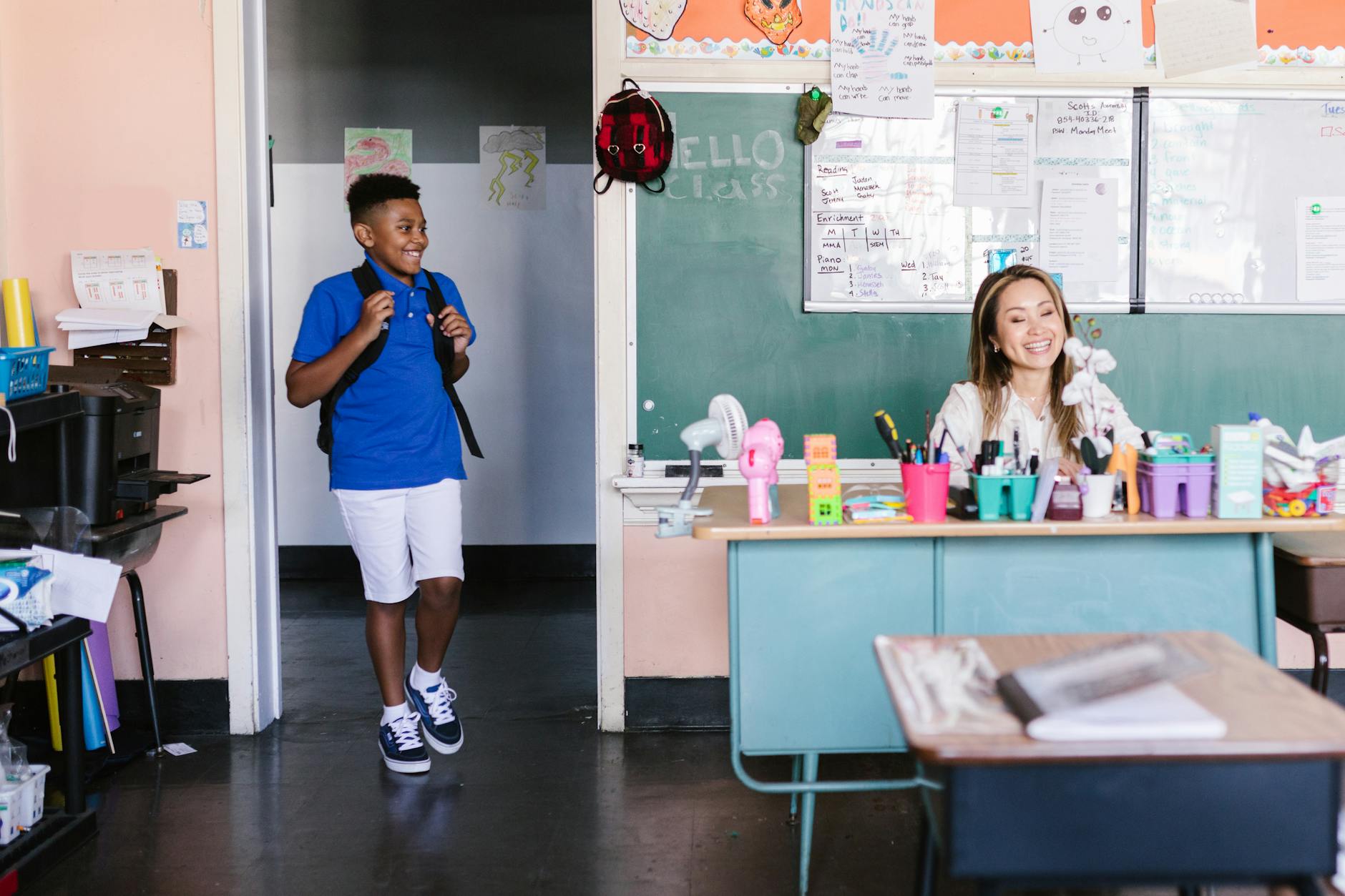
boy in blue shirt with black backpack standing on the doorway
Photo by RDNE Stock project on Pexels.com

If the country is moving to a merit-based society, that is great. However, there are some places that will need to modernize their infrastructure. But in the meantime, we like to get in motion as much as we can until the pendulum swings in our favor. 

As a child, my parents chose where we lived based on the school district alone. When my mother was just starting out in her career and had to work nights at the hospital, she would do something that I actually could not do: she would drive from the city to the suburbs—a forty-minute commute to Ann Arbor just so I could go to school where she felt I would get the best education. The irony was that there was a school right on the corner where my grandmother lived, but my mom wanted a school where I could be creative and thrive. I actually moved around quite a bit as a child, but each choice was made based on education. Admittedly, no one should have to deal with those extremes, but throughout history, parents have made sacrifices whenever they could to ensure their children’s success. Today, you have that opportunity with school choice—if that is the choice you would like to make.  It is not for everyone, but it is an option that could shore up a need for your child. Also, there are all kinds of reasons a parent may want to change their kids schools. Maybe their gifted, play an instrument, are inclined to science, or need special education; the list goes on. But I don’t personally believe you should be caged in for any reason. School choice is not solely economic to me, it’s about access and exposure because we all learn and thrive from each other.  

A Trajectory of Choice 

We often think of “School Choice” as a modern political debate, but in the 18th and 19th centuries, it was the only reality. Before the “Common School” movement of the mid-1800s, education was a decentralized tapestry. Families “chose” through homeschooling, private academies, or community-funded one-room schoolhouses. 

Notably, in many underserved communities, the most effective models were the women-led, Black-led schoolhouses. These weren’t just buildings; they were centers of self-determination where the curriculum was tied to the community’s survival and success. When the public system was eventually standardized, many of these intimate, effective models were lost in favor of a “one-size-fits-all” factory model. 

The Equity Gap Post-Brown v. Board 

The landmark Brown v. Board of Education decision was a victory for desegregation, but its failure was the lack of equanimity. We integrated the students, but we didn’t integrate the resources. Decades later, a child’s zip code still largely determines the quality of their school’s roof, the depth of their library, and the safety of their halls. 

This is where the agency of choice shores up the gaps. Choice should work both ways: we must invest tax dollars to build up and modernize our neighborhood schools so they become places of pride once again. But while that infrastructure is being rebuilt, parents need the “motion” of choice to ensure their child isn’t left behind in a failing building. 

Diversity as an Asset 

True diversity is not just racial—it is a diversity of thought, talent, and pedagogical approach. Some children thrive in a traditional classroom; others need a vocational-heavy environment or a specialized arts curriculum. When we allow funding to follow the student, we encourage a marketplace of ideas that benefits everyone. Choice isn’t a mandate; it’s an option that respects the diverse needs of the modern family. 

The Landscape in Maryland Today (2026) 

In Maryland, this “motion” is happening through programs like BOOST (Broadening Options and Opportunities for Students Today). As of 2026, BOOST provides scholarships to nearly 3,000 low-income students, allowing them to attend participating non-public schools that fit their specific needs. 

While Maryland is currently making historic $10 billion investments into public school modernization via the “Blueprint for Maryland’s Future,” the BOOST program acts as a vital bridge. It offers immediate relief and equity for families who can’t wait a decade for a building to be renovated. 

How it works in MD: 

  • Eligibility: Primarily based on Free and Reduced-Price Meals (FARMs) status. 
  • The Process: Parents submit Federal 1040 tax returns to verify income. 
  • The Outcome: The scholarship follows the student to an eligible private or community-led school, covering or significantly offsetting tuition. 

Education is the engine of a merit-based society. By supporting both our public infrastructure and the individual right to choose, we ensure that the next generation doesn’t have to drive forty minutes away just to find a fair start. 

Here are some tips:

StepAction Item
1. Find Your FundsCheck if your state has an ESA (Education Savings Account) portal.
2. Audit the FitVisit at least three schools. Look for “Shadow Days” where your child can attend for a day.
3. Verify LogisticsCan you handle the transport? Does the school offer after-care?
4. Watch DeadlinesMany choice programs require applications 6–9 months before the school year starts.
Posted on Leave a comment

Celebrate Chinese New Year 2026: Fun Traditions for Kids

Exploring new cultures is the best thing. If you can’t leave your hometown, the good news is you can use social media and your local community to explore things around you. In our home, we love Chinese New Year. We love the bright red decorations, the exciting traditions, and most of all… the red packets! Chinese New Year is a special celebration that marks the start of a new year based on the lunar calendar, and in 2026 it begins on February 17. This year welcomes the Year of the Horse, an animal that represents energy, adventure, and confidence. Even kids can feel that exciting “fresh start” feeling when Chinese New Year arrives.

Chinese New Year is also called Lunar New Year or the Spring Festival, and it’s celebrated by families all over the world. Before the holiday, people often clean their homes to sweep away old luck and make room for good fortune. Homes are decorated with red and gold because red is believed to bring happiness, luck, and protection. During the celebration, families gather to eat delicious food, spend time together, and wish each other health and joy for the year ahead.

One of the most exciting traditions for children is receiving red packets, also called hongbao. These are bright red envelopes usually given by parents, grandparents, or other adults. Inside is money, but the most important part isn’t how much is inside, it’s the loving wish for good luck, happiness, and success in the new year. Kids often wait eagerly for these envelopes and opening them feels like a little burst of magic and celebration.

The Year of the Horse makes this Chinese New Year extra fun to talk about with kids. Horses are known for being fast, strong, and adventurous, so it’s a great time to encourage children to be brave, try new things, and run toward their dreams. You can even ask kids what kind of year they hope to have — a year full of fun, learning, kindness, or exciting adventures.

To celebrate at home, a simple and meaningful craft kids can do is making their own lucky red envelope. Using red paper, fold it into an envelope shape and glue or tape the sides, leaving the top open. Kids can decorate their envelopes with drawings of horses, gold designs, sparkles, or even try writing the Chinese character 福 (fú), which means good luck. Inside, they can place a handwritten wish, a drawing, or a pretend coin. It’s a lovely way for kids to understand the tradition while creating something personal and festive.

Chinese New Year is a celebration filled with color, joy, and hope, and sharing these traditions at home helps children learn about the world while making warm family memories. Whether it’s opening red packets, making crafts, or simply talking about the Year of the Horse, it’s a beautiful reminder that a new year always brings new possibilities.

There are several celebrations happening in Montgomery County:

In Rockville, Richard Montgomery High School will have cultural performances, interactive displays, and kid-friendly activities. Safeway’s 5th annual celebration features lion dances, live music, face painting, and food samples from Asian brands like Fly By Jing and Kikkoman.

In Bethesda, Westfield Montgomery hosts the Chinese Culture and Community Service Center’s celebration with dragon and lion dances, calligraphy blessings, clay dumpling crafts, and red envelope giveaways. Strathmore’s Music Center offers a festive concert with the Baltimore Symphony Orchestra, while Connie Morella Library invites children to storytime, crafts, and songs.

Gaithersburg brings a unique twist with the Mintd Card Show at the Marriott Washingtonian Center—featuring Pokémon vendors, raffles, and Lunar New Year-themed prizes. Across the county, you can also support local Asian restaurants, bakeries, and bubble tea shops to keep the celebration going.

Posted on Leave a comment

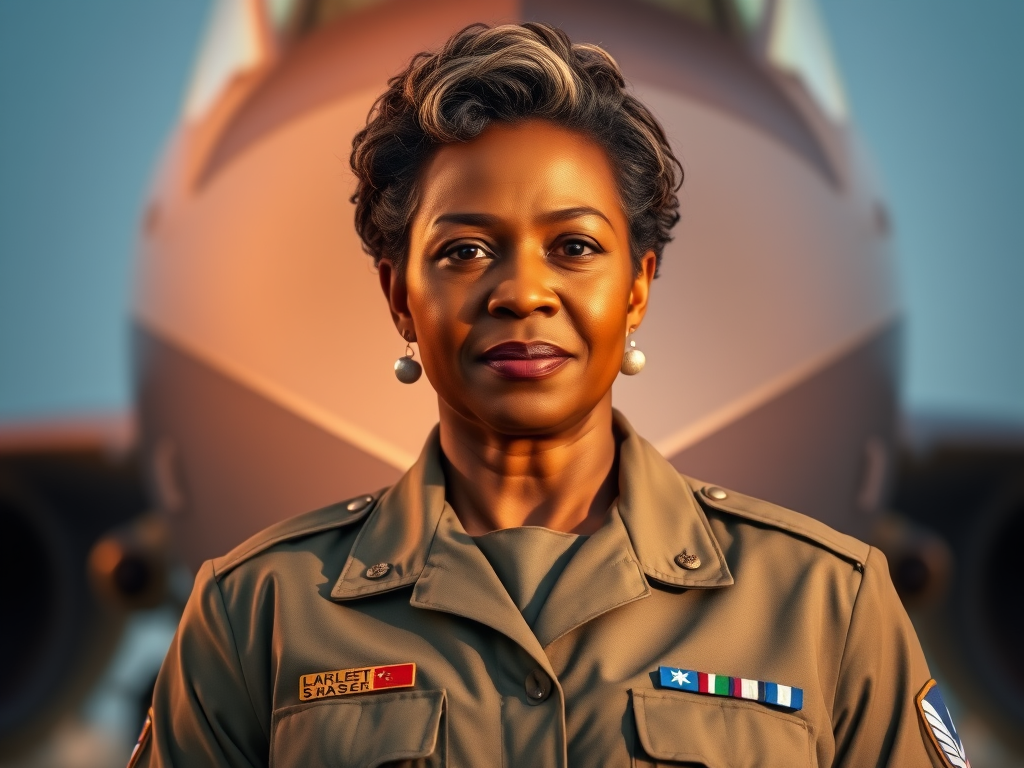
Major General Marcelite Harris: A Trailblazer in the Air Force

Major General Marcelite J. Harris shattered barriers throughout her Air Force career, becoming the first African‑American woman general and redefining what leadership looked like in the skies. Her legacy continues to inspire generations of women, Black service members, and all who believe in service as a force for change.

Major General Marcelite Jordan Harris (1943–2018) stands among the most influential leaders in U.S. Air Force history. Born in Houston and educated at Spelman College, she entered the Air Force in 1965 and immediately began breaking new ground. Harris became the first African‑American woman to achieve the rank of general in the Air Force, the first female aircraft maintenance officer, and one of the first women to serve as an air officer commanding at the U.S. Air Force Academy.

Her career spanned more than three decades, from the Vietnam War era through the 1990s, during which she held leadership roles that shaped the Air Force’s operational readiness. As the Director of Maintenance, she oversaw global aircraft operations and logistics, an enormous responsibility in a rapidly evolving military landscape

Service Beyond the Uniform

After retiring as a major general in 1997, Harris continued her commitment to national service. She joined NASA as the Florida Site Director for United Space Alliance, supporting the nation’s shuttle program. Her civic leadership extended to organizations such as the NAACP, and she was appointed by President Barack Obama to the Board of Visitors for the Air Force Academy.

Posted on Leave a comment

#TIH The Curious Proposal: Lincoln’s War Elephants from Siam

Abraham Lincoln, artist’s impression, lithograph, circa 1877,” House Divided: The Civil War Research Engine at Dickinson College, https://hd.housedivided.dickinson.edu/node/40378

In the winter of 1862, as the American Civil War ground on with grim uncertainty, President Abraham Lincoln received one of the most unexpected diplomatic proposals in U.S. history: an offer of war elephants.

The offer came from King Mongkut of Siam (modern-day Thailand), a forward-thinking monarch eager to engage with Western powers and demonstrate his kingdom’s relevance in a rapidly modernizing world. In a formal letter written in 1861, Mongkut proposed sending a number of trained elephants to the United States to assist the Union war effort against the Confederacy.

The image is almost surreal, elephants lumbering across American battlefields, but the offer was serious, thoughtful, and rooted in genuine goodwill.

military elephantnamed Lizzie (elephant) during World War I image in the Public Domain

A World Watching America’s War

To understand the moment, it helps to remember that the Civil War was not just a domestic affair. European and Asian powers watched closely, weighing how the conflict might reshape global politics, trade, and influence. For Siam, maintaining friendly relations with powerful Western nations was a strategic priority. Mongkut, well-educated in European science and diplomacy, saw engagement as a way to preserve Siam’s independence in an age of colonial expansion.

In Southeast Asia, elephants had long been used for transport, engineering, intimidation, and warfare. To Mongkut, offering elephants was the equivalent of offering valuable military hardware, a practical contribution rather than a symbolic gift.

There was also a lag in global communication. By the time the letter arrived in Washington, it was already outdated. Mongkut had addressed it to President James Buchanan, unaware that Abraham Lincoln had been inaugurated in March 1861. The slow pace of 19th-century diplomacy meant good intentions sometimes arrived wrapped in obsolete assumptions.

Lincoln’s Measured Reply

Lincoln responded on February 3, 1862, with characteristic courtesy and clarity. He thanked the King of Siam for his generosity and friendly spirit, acknowledging the value of elephants in their native regions. But he politely declined the offer. Below is the exact letter from Lincoln via the House Divided Project:

February 3, 1862

Abraham Lincoln,

President of the United States of America.

To His Majesty Somdetch Phra Paramendr Maha Mongut,

King of Siam,

&c., &c.

Great and Good Friend: I have received Your Majesty’s two letters of the date of February 14th., 1861.

I have also received in good condition the royal gifts which accompanied those letters,—namely, a sword of costly materials and exquisite workmanship; a photographic likeness of Your Majesty and of Your Majesty’s beloved daughter; and also two elephants’ tusks of length and magnitude such as indicate that they could have belonged only to an animal which was a native of Siam.

Your Majesty’s letters show an understanding that our laws forbid the President from receiving these rich presents as personal treasures. They are therefore accepted in accordance with Your Majesty’s desire as tokens of your good will and friendship for the American People. Congress being now in session at this capital, I have had great pleasure in making known to them this manifestation of Your Majesty’s munificence and kind consideration.

Under their directions the gifts will be placed among the archives of the Government, where they will remain perpetually as tokens of mutual esteem and pacific dispositions more honorable to both nations than any trophies of conquest could be.

I appreciate most highly Your Majesty’s tender of good offices in forwarding to this Government a stock from which a supply of elephants might be raised on our own soil. This Government would not hesitate to avail itself of so generous an offer if the object were one which could be made practically useful in the present condition of the United States.

Our political jurisdiction, however, does not reach a latitude so low as to favor the multiplication of the elephant, and steam on land, as well as on water, has been our best and most efficient agent of transportation in internal commerce.

I shall have occasion at no distant day to transmit to Your Majesty some token of indication of the high sense which this Government entertains of Your Majesty’s friendship.

Meantime, wishing for Your Majesty a long and happy life, and for the generous and emulous People of Siam the highest possible prosperity, I commend both to the blessing of Almighty God. 

Your Good Friend,

ABRAHAM LINCOLN.

Washington, February 3, 1862.

By the President:

WILLIAM H. SEWARD, Secretary of State.

 “Abraham Lincoln to the King of Siam, February 3, 1862,” House Divided: The Civil War Research Engine at Dickinson College, https://hd.housedivided.dickinson.edu/node/40508.

Why the Offer Mattered

No elephants ever crossed the Pacific, but the episode endures because it reveals several important truths about the era.

First, it highlights how globally connected the mid-19th century already was. News traveled slowly, but it traveled far, and events in America resonated in royal courts half a world away.

Second, despite early Union defeats and widespread uncertainty, Lincoln never believed the war would be decided by exotic weapons or foreign intervention. Victory would come through mobilization, industry, manpower, and time.

Finally, the exchange humanizes history. Beneath the grand narratives of battles and strategy, there are moments of sincere misunderstanding, cultural difference, and unexpected generosity. A king offered what he knew to be valuable. A president declined with grace.

A Curious Footnote, A Connected World

Today, Lincoln’s reply is preserved among his papers and stands as one of the more curious footnotes in American military history. It reminds us that even in the darkest chapters of war, diplomacy could still be polite, imaginative and occasionally strange.

Sometimes history isn’t just about armies and battles. Sometimes it’s about a letter, a king, and a handful of elephants that never were.

Posted on Leave a comment

The History of The Hamburger, Just Because

Daily writing prompt
What’s your favorite thing to cook?

I love a good burger. As a matter of fact, I think I will get one today. It’s so simple, yet so delicious. When I think about the hamburger, it’s funny how something so ordinary can have such a long and surprising history. Today, burgers are everywhere, backyard barbecues, fast-food restaurants, and even fancy menus, but their story begins far from modern America and stretches back hundreds of years.

The idea behind the hamburger starts with people simply trying to make meat easier to eat. Long before buns and grills, Mongol warriors in the 13th century reportedly carried pieces of meat under their saddles as they traveled. The meat would become tender, making it easier to chew. While this sounds unappealing by today’s standards, it shows an early form of minced meat that later influenced dishes in Europe. Over time, this practice helped inspire foods like steak tartare and other chopped-meat recipes.

By the 1800s, minced beef had become especially popular in Hamburg, Germany. There, “Hamburg steak” was a common dish made from ground beef, usually seasoned and sometimes eaten raw or lightly cooked. It was affordable, filling, and practical—qualities that would later define the hamburger. When German immigrants traveled to the United States, they brought this dish with them, introducing Americans to the Hamburg steak through ports like New York.

In the U.S., the dish began to change. Americans preferred their meat cooked, and the Hamburg steak was soon grilled or fried instead of served raw. At some point, likely out of convenience, someone placed the meat between two pieces of bread. This small change made a big difference. Suddenly, the meal was portable, easy to eat, and perfect for workers who needed something quick and satisfying. This simple sandwich became what we now recognize as the hamburger.

Vergara, Camilo J, photographer. 535 The Famous Jimbo’s Hamburger Palace, Harlem
. New York United States New York State Harlem Manhattan, 2012. -09-16. Photograph. https://www.loc.gov/item/2020702864/.

There’s still debate about who exactly invented the first hamburger. Different towns and individuals across the United States claim credit, from fair vendors in the Midwest to diner owners on the East Coast. While the true origin may never be settled, what matters more is how quickly the hamburger caught on. By the early 20th century, it had become a staple of American food culture.

The hamburger’s popularity exploded with the rise of fast-food restaurants. Chains like White Castle and McDonald’s helped standardize burgers and make them affordable for almost everyone. These restaurants turned the hamburger into a symbol of speed, convenience, and modern life. For many people, grabbing a burger became part of everyday routine.

Today, the hamburger continues to evolve. From gourmet burgers with unique toppings to plant-based alternatives, it reflects changing tastes and values. Yet at its core, the hamburger remains a simple idea: seasoned meat, cooked and shared. Its journey from ancient traditions to a global favorite, shows how even the most familiar foods can have surprisingly rich and personal histories.