
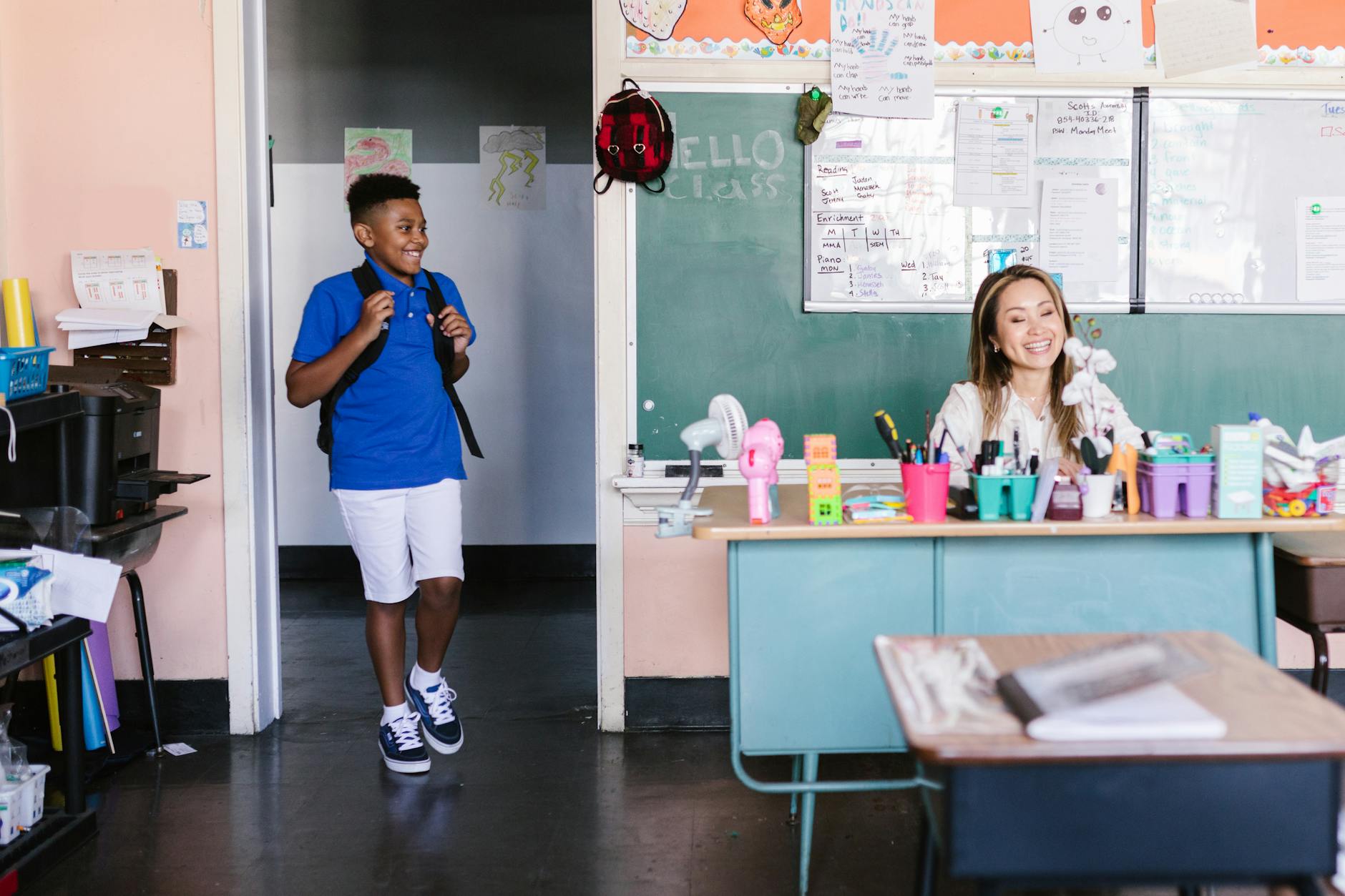

If the country is moving to a merit-based society, that is great. However, there are some places that will need to modernize their infrastructure. But in the meantime, we like to get in motion as much as we can until the pendulum swings in our favor.
As a child, my parents chose where we lived based on the school district alone. When my mother was just starting out in her career and had to work nights at the hospital, she would do something that I actually could not do: she would drive from the city to the suburbs—a forty-minute commute to Ann Arbor just so I could go to school where she felt I would get the best education. The irony was that there was a school right on the corner where my grandmother lived, but my mom wanted a school where I could be creative and thrive. I actually moved around quite a bit as a child, but each choice was made based on education. Admittedly, no one should have to deal with those extremes, but throughout history, parents have made sacrifices whenever they could to ensure their children’s success. Today, you have that opportunity with school choice—if that is the choice you would like to make. It is not for everyone, but it is an option that could shore up a need for your child. Also, there are all kinds of reasons a parent may want to change their kids schools. Maybe their gifted, play an instrument, are inclined to science, or need special education; the list goes on. But I don’t personally believe you should be caged in for any reason. School choice is not solely economic to me, it’s about access and exposure because we all learn and thrive from each other.
A Trajectory of Choice
We often think of “School Choice” as a modern political debate, but in the 18th and 19th centuries, it was the only reality. Before the “Common School” movement of the mid-1800s, education was a decentralized tapestry. Families “chose” through homeschooling, private academies, or community-funded one-room schoolhouses.
Notably, in many underserved communities, the most effective models were the women-led, Black-led schoolhouses. These weren’t just buildings; they were centers of self-determination where the curriculum was tied to the community’s survival and success. When the public system was eventually standardized, many of these intimate, effective models were lost in favor of a “one-size-fits-all” factory model.
The Equity Gap Post-Brown v. Board
The landmark Brown v. Board of Education decision was a victory for desegregation, but its failure was the lack of equanimity. We integrated the students, but we didn’t integrate the resources. Decades later, a child’s zip code still largely determines the quality of their school’s roof, the depth of their library, and the safety of their halls.
This is where the agency of choice shores up the gaps. Choice should work both ways: we must invest tax dollars to build up and modernize our neighborhood schools so they become places of pride once again. But while that infrastructure is being rebuilt, parents need the “motion” of choice to ensure their child isn’t left behind in a failing building.
Diversity as an Asset
True diversity is not just racial—it is a diversity of thought, talent, and pedagogical approach. Some children thrive in a traditional classroom; others need a vocational-heavy environment or a specialized arts curriculum. When we allow funding to follow the student, we encourage a marketplace of ideas that benefits everyone. Choice isn’t a mandate; it’s an option that respects the diverse needs of the modern family.
The Landscape in Maryland Today (2026)
In Maryland, this “motion” is happening through programs like BOOST (Broadening Options and Opportunities for Students Today). As of 2026, BOOST provides scholarships to nearly 3,000 low-income students, allowing them to attend participating non-public schools that fit their specific needs.
While Maryland is currently making historic $10 billion investments into public school modernization via the “Blueprint for Maryland’s Future,” the BOOST program acts as a vital bridge. It offers immediate relief and equity for families who can’t wait a decade for a building to be renovated.
How it works in MD:
- Eligibility: Primarily based on Free and Reduced-Price Meals (FARMs) status.
- The Process: Parents submit Federal 1040 tax returns to verify income.
- The Outcome: The scholarship follows the student to an eligible private or community-led school, covering or significantly offsetting tuition.
Education is the engine of a merit-based society. By supporting both our public infrastructure and the individual right to choose, we ensure that the next generation doesn’t have to drive forty minutes away just to find a fair start.
Here are some tips:
| Step | Action Item |
| 1. Find Your Funds | Check if your state has an ESA (Education Savings Account) portal. |
| 2. Audit the Fit | Visit at least three schools. Look for “Shadow Days” where your child can attend for a day. |
| 3. Verify Logistics | Can you handle the transport? Does the school offer after-care? |
| 4. Watch Deadlines | Many choice programs require applications 6–9 months before the school year starts. |
Discover more from Chiara Atoyebi Media
Subscribe to get the latest posts sent to your email.


