Posted on Leave a comment

On Both Sides of the Line: Hispanic Soldiers of the Civil War #Military

Photograph shows a full-length portrait of three officers of the 54th Massachusetts Infantry Regiment. Sitters have been identified as Second Lieutenant Ezekiel Gaulbert Tomlinson, Captain Luis F. Emilio (center), and Second Lieutenant Daniel G. Spear (National Archives) Group shot, officers of the 54th Mass. Colored. United States, 1863. Photograph. https://www.loc.gov/item/2010650833/.

When we picture the American Civil War, our minds usually go to the blue and gray uniforms of the North and South, framed in a strictly Black-and-white narrative. But there is a massive, often ignored chapter of this history: the 10,000 to 20,000 Hispanic soldiers who fought on both sides of the front lines.

From the deserts of New Mexico to the ironclads of the Atlantic, Hispanic Americans were pivotal to the outcome of the war. So, why don’t we hear about them?

Why Were They Erased from the Narrative?

The “invisibility” of Hispanic soldiers wasn’t an accident—it was a byproduct of how history was recorded:

  • Census Categories: In the 1860s, “Hispanic” wasn’t a checkbox. Soldiers were often grouped simply as “White” or by their country of origin (Mexico, Spain, Cuba), making them hard to track in historical data.
  • The Geography of History: Most Civil War education focuses on Virginia and Pennsylvania. However, many Hispanic regiments fought in the western portion of the United States (Texas and New Mexico), a region long neglected by early historians.
  • Language Barriers: Thousands of letters and records were written in Spanish, remaining untranslated in archives for over a century.

Defining Moments and Heroes

Hispanic contributions weren’t just peripheral; they were game-changing.

The “Gettysburg of the West”

In 1862, the 1st New Mexico Volunteer Infantry—a predominantly Hispano unit—met Confederate forces at the Battle of Glorieta Pass. Their local knowledge allowed them to find and destroy the Confederate supply train, effectively ending the South’s dream of conquering the American West and its gold mines.

Trailblazers in Uniform

  • Admiral David Farragut: The son of a Spanish merchant captain, Farragut became the Union’s first Admiral. He is immortalized for his grit at the Battle of Mobile Bay, where he famously shouted, “Damn the torpedoes, full speed ahead!”
  • Joseph H. De Castro: A hero of the 19th Massachusetts Infantry, De Castro was the first Hispanic American to receive the Medal of Honor after capturing a Confederate flag during the heat of Pickett’s Charge at Gettysburg.
  • Loreta Janeta Velázquez: Breaking all social norms of the era, this Cuban-born woman reportedly disguised herself as a man to fight as a soldier and later served as a daring double agent.

A Legacy Restored

The Civil War was more than a regional conflict; it was a continental struggle that relied on the bravery of immigrants and descendants of Spanish colonies. By reclaiming these stories, we get a more honest look at the diverse coalition that shaped the United States. We also see that it still is an all hands-on deck situation when it comes to the fight for independence. Although not talked about often we were there too.

Quick Stats: Hispanic Participation

GroupPrimary RegionNotable Impact
Hispano Union UnitsNew Mexico TerritoryPrevented Confederate Western expansion.
Tejano CavalryTexas / Gulf CoastServed as elite scouts for both North and South.
Naval OfficersAtlantic CoastLed some of the most successful Union blockades.
Posted on Leave a comment

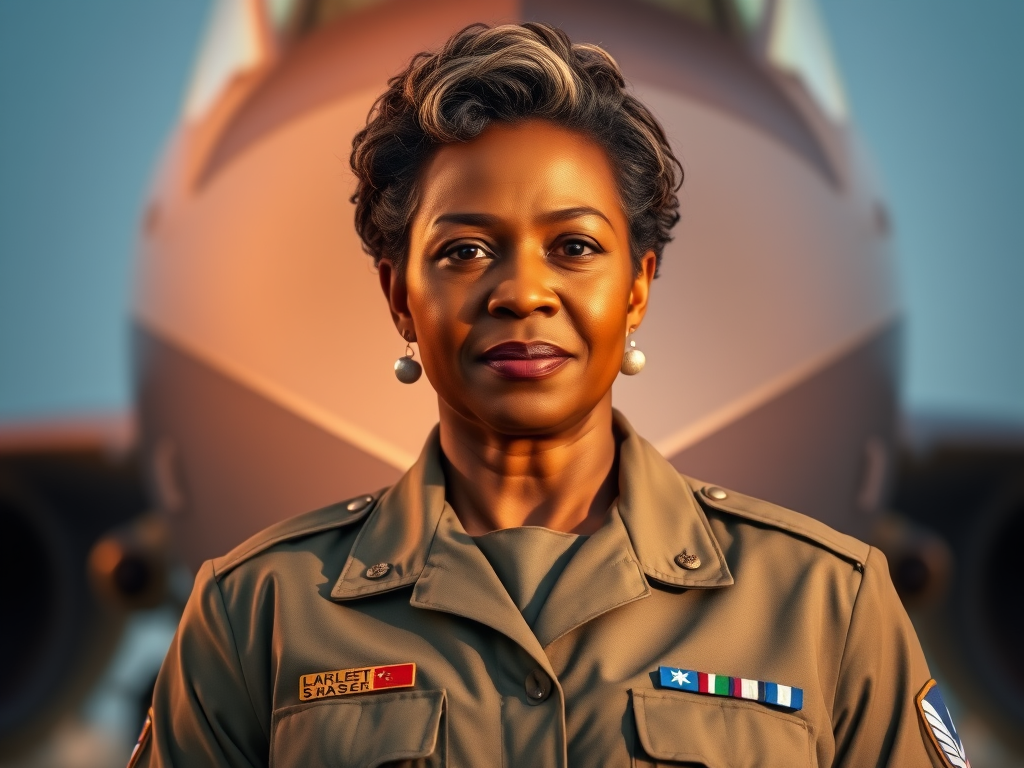
Major General Marcelite Harris: A Trailblazer in the Air Force

Major General Marcelite J. Harris shattered barriers throughout her Air Force career, becoming the first African‑American woman general and redefining what leadership looked like in the skies. Her legacy continues to inspire generations of women, Black service members, and all who believe in service as a force for change.

Major General Marcelite Jordan Harris (1943–2018) stands among the most influential leaders in U.S. Air Force history. Born in Houston and educated at Spelman College, she entered the Air Force in 1965 and immediately began breaking new ground. Harris became the first African‑American woman to achieve the rank of general in the Air Force, the first female aircraft maintenance officer, and one of the first women to serve as an air officer commanding at the U.S. Air Force Academy.

Her career spanned more than three decades, from the Vietnam War era through the 1990s, during which she held leadership roles that shaped the Air Force’s operational readiness. As the Director of Maintenance, she oversaw global aircraft operations and logistics, an enormous responsibility in a rapidly evolving military landscape

Service Beyond the Uniform

After retiring as a major general in 1997, Harris continued her commitment to national service. She joined NASA as the Florida Site Director for United Space Alliance, supporting the nation’s shuttle program. Her civic leadership extended to organizations such as the NAACP, and she was appointed by President Barack Obama to the Board of Visitors for the Air Force Academy.

Posted on Leave a comment

#TIH Military: The Legacy of Colonel Charles Young From Enslavement To Military Greatness

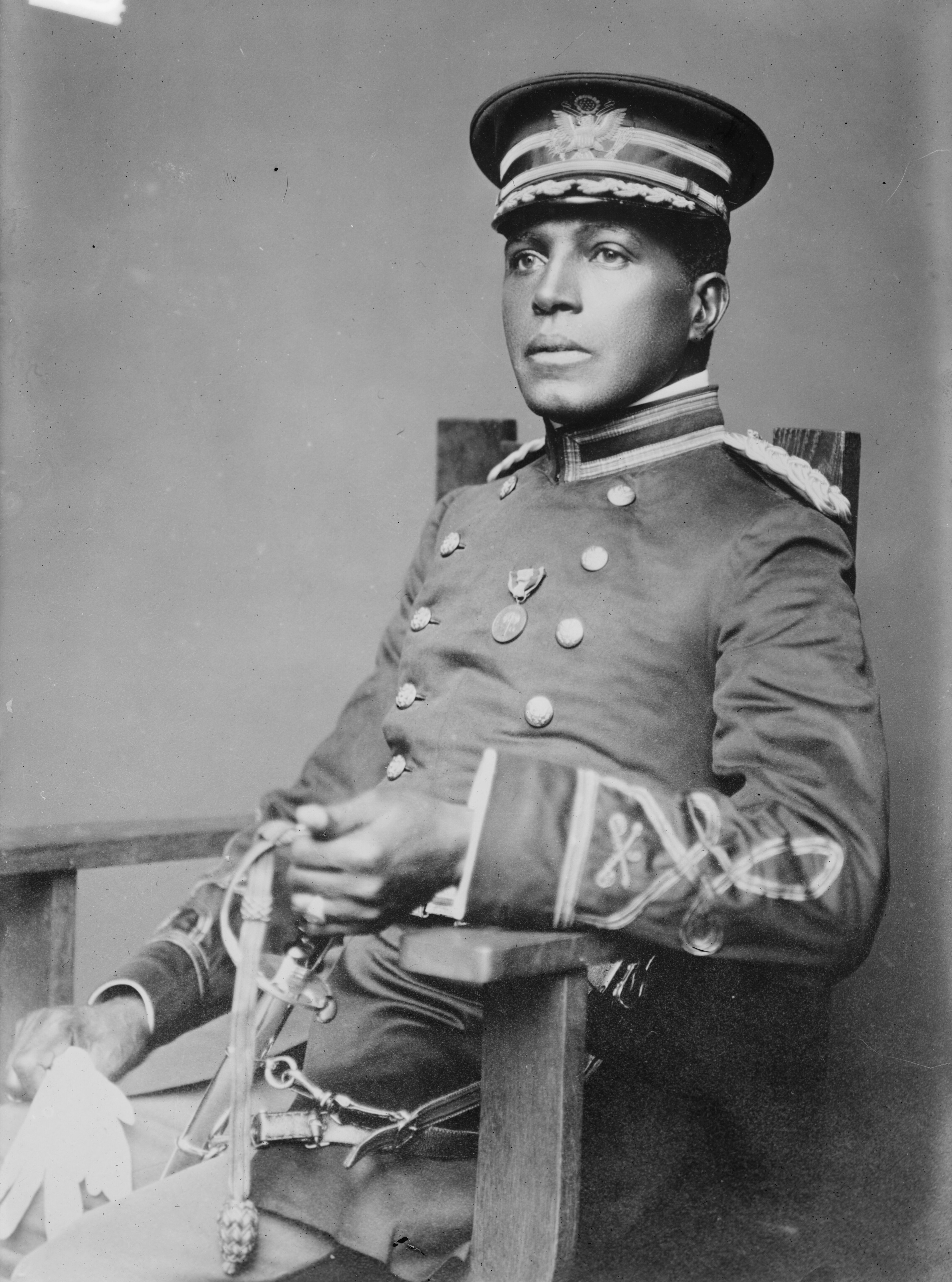
Historic black-and-white photograph of Colonel Charles Young, a high-ranking U.S. Army officer, seated in a wooden chair and wearing a decorated dress uniform with medals, embroidered cuffs, and a ceremonial sword, early 1900s.

Colonel Charles Young United States Army image in the Public Domain

“The life of Charles Young was a triumph of tragedy.”

-W.E.B. Dubois

Colonel Charles Young (1864–1922) was one of the most accomplished military leaders of his generation and a pioneering figure in African American military history. Born in Kentucky to formerly enslaved parents, he rose from Reconstruction-era beginnings to become the third African American graduate of West Point (1889) and eventually the first African American Colonel in the United States Army.

Young served with distinction in the 9th and 10th Cavalry and the 25th Infantry, the famed Buffalo Soldier regiments. His early career included years on the Western frontier, followed by a professorship at Wilberforce University, where he taught multiple languages and forged a lifelong friendship with W.E.B. Du Bois. You can view one of the letters here.

During the Spanish-American War, Young commanded troops in Cuba and the Philippines, including participation in the charge up San Juan Hill. In 1903, he became the first African American superintendent of a U.S. National Park, overseeing Sequoia and General Grant National Parks.

He continued to break barriers, leading the 10th Cavalry during the 1916 campaign against Pancho Villa and later serving as U.S. military attaché to Liberia. Despite being initially declared medically unfit for World War I service, Young famously rode 500 miles on horseback from Ohio to Washington, D.C. to prove his fitness and was reinstated.

Young died in 1922 while on assignment in Lagos, Nigeria. He was honored with military funerals in both Lagos and the United States, and was reinterred at Arlington National Cemetery in 1923, where Du Bois delivered his eulogy.

Posted on Leave a comment

#TIH: The Convergence of Truth & Memory St. Barbea of Edessa, Upper Mesopotamia

The City of Edessa By Bernard Gagnon Courtesy of Wikipedia

Our Posts–Education, Faith, and Feminine Spiritual Transformations

Joan of Arc by the Author via Generative AI

Every topic we’ve explored—economics, faith, women’s financial autonomy, the politics of truth—has really been a study in memory. Who remembers. Who forgets. Who gets written into the story of a nation, a family, a church, an economy. And who has to fight to be seen. At its core, this work is about how memory shapes identity, and how identity shapes the choices women make in a world that is always negotiating power. Truth is one of the most powerful forms of currency.

What looks like separate topics between economics, Catholic spirituality, women’s financial literacy, truth and transformation, has always been one conversation. We’ve been studying the point of convergence: where memory becomes identity, where identity becomes history, and where history becomes story. At that crossroads, women make choices that reveal who they are and what they believe. This is the terrain where truth is chosen, not inherited. Therefore, when you understand the world, you can make choices in it. Also, there are so many women that have been martyrs and leaders, and they go unnoticed and unwritten about today.

Edessa, Upper Mesopotamia, St. Barbea

Convergence is the moment when spiritual truth, political pressure, and personal identity collide — and the choice you make reveals who you are. Few places in the ancient world embodied this collision more fully than Edessa. Born from the collapse of empires, it rose on a fault line of history a frontier city where Arab kings, Roman legions, and Persian armies contested not only territory but allegiance. Perched between worlds, Edessa functioned as both buffer and battleground, a place where control depended less on walls than on the loyalty of its people. Shifting between Parthian, Armenian, and Roman rule, the city learned early that power here was provisional: armies could occupy its streets, but belief determined whether authority endured. January 29th is the feast day of St. Barbea who is honored here today.

Saint Barbea of Edessa: Holding To Conviction

Saint Barbea of Edessa was an early Christian martyr from Syria, remembered primarily for her courage during the persecutions under Emperor Trajan. She was the sister of Saint Sarbelius and was converted to Christianity through the influence of Saint Barsimeus, a prominent Christian leader in Edessa.

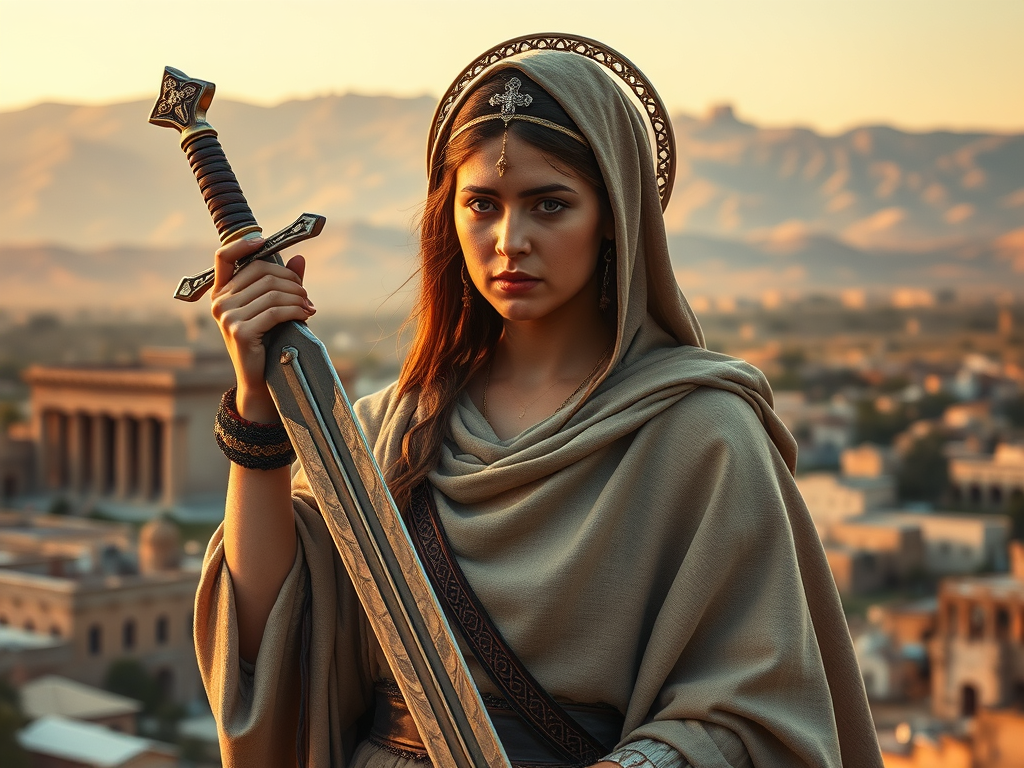
St. Barbea image by the author via generative AI

Once she embraced the faith, Barbea practiced it openly despite the intense hostility toward Christians at the time. Her refusal to renounce Christ led to her arrest and brutal torture. According to tradition, she endured:

  • burning with hot irons
  • severe scourging
  • and ultimately death by spear

Throughout these ordeals, she remained unwavering in her devotion.

Barbea is considered a pre‑congregation saint, meaning her veneration predates the formal canonization process of the Catholic Church. She has no specific patronage or iconographic symbols associated with her, but her legacy endures through the commemoration of her feast day on January 29. She is honored as a model of loyalty, courage, and steadfast faith, especially among those who look to the early martyrs for inspiration. Her story stands as a testament to the strength of conviction and the power of belief in the face of persecution.

Epistemic Memory

This is interesting because where your epistemic memory is matters. I included this in my graduate school thesis, and I will share it here on the site. It is all about memory and story and it is key to any people’s and nation’s survival.

Posted on Leave a comment

American Heritage Tribute: Exploring African American Fighter Units this Veteran’s Day

Veterans Day is a time to reflect, honor, and express gratitude to all who have served in the armed forces. From every background and every branch, these individuals have made profound sacrifices to protect our freedoms and shape our nation’s story.
This year, we wanted to offer something special—a way to honor not just the well-known chapters of military history, but also those that deserve more visibility. That’s why we created the Vintage African American Military Heritage Bundle.
This digital collection features carefully curated vintage imagery that highlights the strength, dignity, and service of African American soldiers throughout U.S. history.

To commemorate this, we’ve created a special Vintage African American Military Heritage Bundle—a curated digital collection of powerful vintage imagery that celebrates the strength, dignity, and patriotism of Black soldiers.


Veterans History Project Voice of Isham George Benton–from the Library of Congress.

🗂️ What’s included:

This striking set of four insignia designs paying tribute to the legendary African American military units that served with distinction in the U.S. Armed Forces. Each patch is a powerful symbol of bravery, resilience, and heritage—perfect for collectors, history enthusiasts, or anyone who values the untold stories of Black excellence in military service.


2nd Ranger Company (Airborne) – Featuring a buffalo and parachute emblem with the motto “Buffalo Rangers”
758th Tank Battalion – Iconic crossed swords and goggles with the Latin motto “Semper Paratus” (Always Ready)
555th Parachute Infantry Battalion (“Triple Nickles”) – Crescent moon and triple fives, honoring the first all-Black airborne unit
505th Airborne Infantry – Bold eagle and star design representing elite paratroopers
📌 Product Details:
• 1 high-quality embroidered patch design with separate sewing instructions
• 1 Printable SVG file
• 1 high resolution collective insignia design with gold lettering and 1 without the gold lettering.
• 1 high resolution collective insignia design perfect for printing and framing.