Posted on Leave a comment

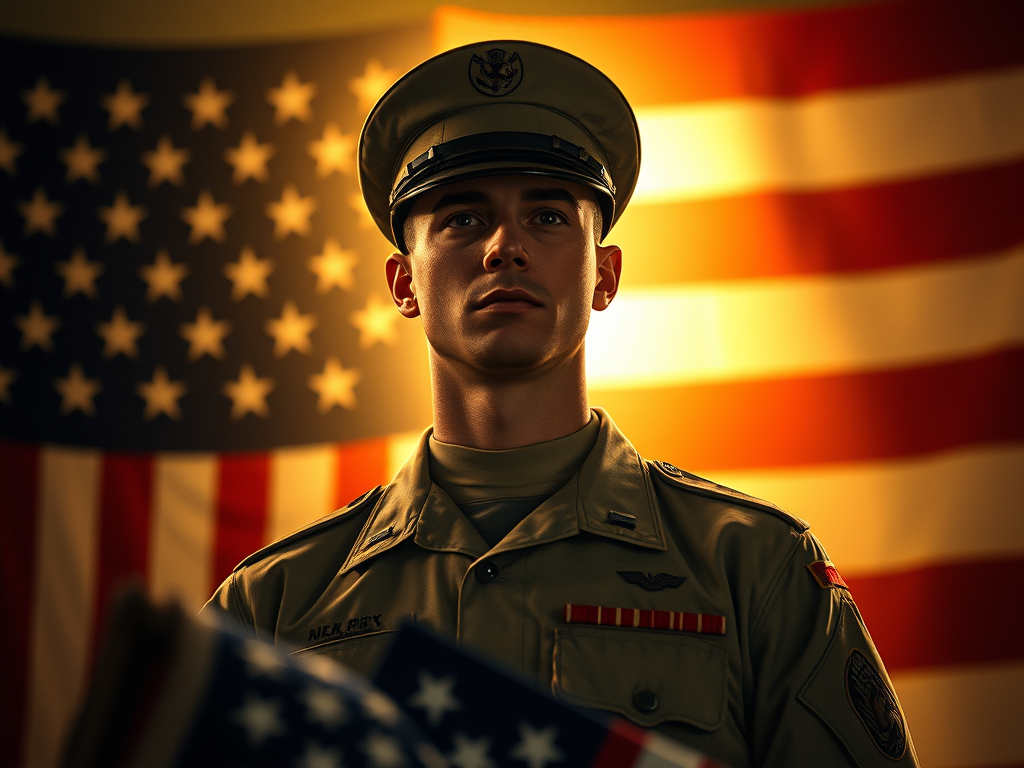
Why Military Service Matters to Patriotism

Daily writing prompt
Are you patriotic? What does being patriotic mean to you?

Protection is a strange thing. Most of the time, you don’t notice it until it’s gone. You don’t realize how much stability you live inside of until you move somewhere—say, an island—where the infrastructure falters and the basics you once took for granted suddenly feel fragile. In the United States, many of us move through our days with the quiet assurance that if we call the police, they will come; if our house catches fire, the fire department will show up. That sense of safety shapes how we live, how we move, and how we dream.

I write often about “getting in the game” because I know what it feels like to be talked out of your position. And I also know what it looks like when young people step into theirs. When I was in high school in Seoul, some of our friends were soldiers—enlisted, but still only eighteen. Kids, really. I remember the day they were deployed to war zones. The air shifted. We were suddenly separated by a reality they had to face and we didn’t. It was a moment that reminded me, in a way I could never forget, that freedom is not free. Someone pays for it. Someone’s child. Someone’s friend.

I was never in the military, and watching so many young people leave for war made it clear that it wasn’t my path. But I never forgot the price they paid. Whenever I can, I try to help people understand that the military matters. Protection matters. Being protected allows us to move through our neighborhoods, our country, and our homes with a sense of comfort. And when that comfort slips, even a little, we owe it to ourselves to pause, reassess, and recalibrate.

I also wish more people understood how multi‑layered the military truly is. It’s not just uniforms and ranks—it’s families, stories, sacrifices, and entire lifetimes of service. Two of the proudest moments of my life came from witnessing that up close. The first was at my grandfather CSM Calvin Morse’s funeral, when my grandmother was presented with a folded American flag after 56 years of marriage. The second was watching my stepfather be promoted to full Colonel and seeing my mother salute him. For the first time, I saw them as equals—two Lt. Colonels who had built a life together, standing in their shared accomplishment. His journey from private to Colonel was shaped by education, discipline, and taking every opportunity available to him.

When I write about education, culture, finance, or history, it’s because I understand how deeply the personal is political. As artists, writers, storytellers, and Americans, we shape the narrative for whoever is listening. We do it through dance, visual culture, books, music, and every creative form we touch. I hope we continue to protect our freedom of speech, even in this tense moment. Maybe that tension is part of what makes democracy so powerful.

I am proud of the people who keep going, even when the work is misunderstood or unseen. I know it’s hard. I know even soldiers want to give up sometimes. But they keep going.

And I’m proud of everyday Americans who haven’t given up either—who haven’t fled, who haven’t abandoned their communities, who continue to build and rebuild even when the odds are stacked against them. I’ve lived in other places, and the people were wonderful. But there is something distinct about the American fighter spirit. It’s stubborn, hopeful, relentless. And I’m proud to be part of that lineage.
Posted on Leave a comment

#TIH: The Convergence of Truth & Memory St. Barbea of Edessa, Upper Mesopotamia

The City of Edessa By Bernard Gagnon Courtesy of Wikipedia

Our Posts–Education, Faith, and Feminine Spiritual Transformations

Joan of Arc by the Author via Generative AI

Every topic we’ve explored—economics, faith, women’s financial autonomy, the politics of truth—has really been a study in memory. Who remembers. Who forgets. Who gets written into the story of a nation, a family, a church, an economy. And who has to fight to be seen. At its core, this work is about how memory shapes identity, and how identity shapes the choices women make in a world that is always negotiating power. Truth is one of the most powerful forms of currency.

What looks like separate topics between economics, Catholic spirituality, women’s financial literacy, truth and transformation, has always been one conversation. We’ve been studying the point of convergence: where memory becomes identity, where identity becomes history, and where history becomes story. At that crossroads, women make choices that reveal who they are and what they believe. This is the terrain where truth is chosen, not inherited. Therefore, when you understand the world, you can make choices in it. Also, there are so many women that have been martyrs and leaders, and they go unnoticed and unwritten about today.

Edessa, Upper Mesopotamia, St. Barbea

Convergence is the moment when spiritual truth, political pressure, and personal identity collide — and the choice you make reveals who you are. Few places in the ancient world embodied this collision more fully than Edessa. Born from the collapse of empires, it rose on a fault line of history a frontier city where Arab kings, Roman legions, and Persian armies contested not only territory but allegiance. Perched between worlds, Edessa functioned as both buffer and battleground, a place where control depended less on walls than on the loyalty of its people. Shifting between Parthian, Armenian, and Roman rule, the city learned early that power here was provisional: armies could occupy its streets, but belief determined whether authority endured. January 29th is the feast day of St. Barbea who is honored here today.

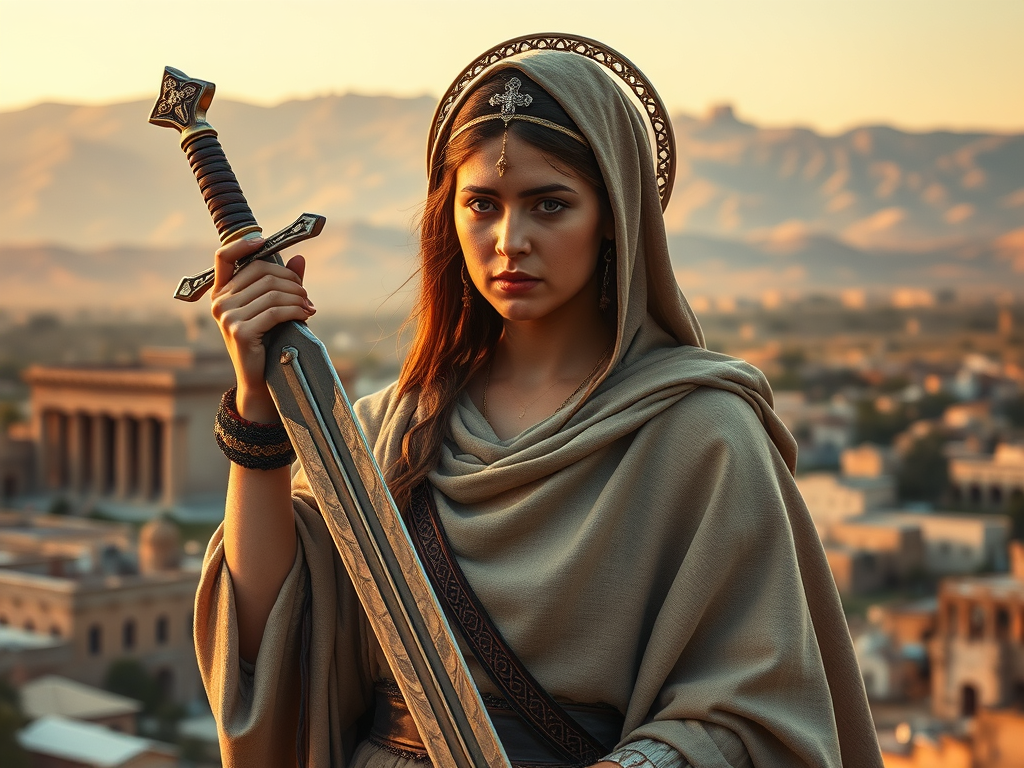
Saint Barbea of Edessa: Holding To Conviction

Saint Barbea of Edessa was an early Christian martyr from Syria, remembered primarily for her courage during the persecutions under Emperor Trajan. She was the sister of Saint Sarbelius and was converted to Christianity through the influence of Saint Barsimeus, a prominent Christian leader in Edessa.

St. Barbea image by the author via generative AI

Once she embraced the faith, Barbea practiced it openly despite the intense hostility toward Christians at the time. Her refusal to renounce Christ led to her arrest and brutal torture. According to tradition, she endured:

  • burning with hot irons
  • severe scourging
  • and ultimately death by spear

Throughout these ordeals, she remained unwavering in her devotion.

Barbea is considered a pre‑congregation saint, meaning her veneration predates the formal canonization process of the Catholic Church. She has no specific patronage or iconographic symbols associated with her, but her legacy endures through the commemoration of her feast day on January 29. She is honored as a model of loyalty, courage, and steadfast faith, especially among those who look to the early martyrs for inspiration. Her story stands as a testament to the strength of conviction and the power of belief in the face of persecution.

Epistemic Memory

This is interesting because where your epistemic memory is matters. I included this in my graduate school thesis, and I will share it here on the site. It is all about memory and story and it is key to any people’s and nation’s survival.