Posted on Leave a comment

A Pueblo of Many Colors: The True Founding Story of Los Angeles

In 1781, Los Angeles was founded as a small farming village—not as a massive European colony, but as a modest agricultural community established by families from what is now Mexico. The settlement, officially named El Pueblo de Nuestra Señora la Reina de Los Ángeles, was organized under the direction of Spanish governor Felipe de Neve. At the time, California was part of the Spanish empire, administered through Mexico (then called New Spain). The founding of Los Angeles was a civilian project: it was meant to grow crops, raise livestock, and supply nearby military presidios and missions not to function as a military conquest site.

Image of Felipe de Neve, 4th Governor of the Californias, 1781, found in Public Domain

The 44 original settlers—11 families—were recruited primarily from the Mexican regions of Sinaloa and Sonora. A significant number came specifically from Sinaloa, bringing experience in farming, ranching, irrigation, and frontier survival. These settlers were not primarily European-born Spaniards. Census records from 1781 clearly list them by racial classifications used in colonial Mexico: Mestizo, Mulato, Negro, and Español.

Only two of the adult settlers were classified as Español (Spanish). The majority were people of mixed ancestry. Mestizos—people of combined Indigenous Mexican and Spanish heritage formed a large portion of the group. Mulato’s who were people of mixed African and Spanish ancestry, were also prominently represented. Several settlers were identified as having African heritage directly.

Among the African-descended settlers were individuals whose ancestry traced to the Asante (Ashanti) people of present-day Ghana in West Africa. The Asante were part of a powerful West African kingdom deeply affected by the transatlantic slave trade. Enslaved Asante people were transported to Mexico during the colonial period, where many later gained freedom, intermarried, and became integrated into Mexican society. By the late 18th century, their descendants were free citizens of Mexico and part of frontier settlement efforts. The documented link between Asante ancestry and some of the Los Angeles settlers highlights a direct West African connection to the city’s founding families.

Casta Paintings in the Public Domain

Understanding the racial terms used at the time helps clarify the makeup of the pueblo. “Mestizo” referred specifically to a person of Spanish and Indigenous ancestry. “Mulato” referred to someone of African and Spanish ancestry. These classifications were part of Mexico’s colonial caste system, yet on the northern frontier—far from Mexico City—social lines were often more fluid. In Los Angeles, families of African, Indigenous, and European ancestry worked side by side to survive.

Life in early Los Angeles revolved around agriculture. The settlers built homes near the Los Angeles River and constructed irrigation ditches (zanjas) to water their crops. The pueblo consisted of a central plaza, modest adobe homes, small fields, and grazing lands. It was rural, tightly knit, and cooperative. Families depended on each other for food production, protection, and trade. Diversity was not a modern development—it was present from the first day.

Comparing Los Angeles then and now reveals both contrast and continuity. In 1781, the entire settlement consisted of fewer than 50 people living in adobe structures surrounded by farmland. Today, Los Angeles is a sprawling metropolis of nearly four million residents, with neighborhoods stretching from Boyle Heights to South Los Angeles, from East L.A. to the San Fernando Valley. Instead of dirt paths and crop fields, the city is defined by freeways, high-rises, ports, and film studios.

Yet the diversity remains strikingly consistent. Modern Los Angeles is known for its Mexican, African American, Central American, Asian, and multiracial communities. Neighborhoods reflect layered migrations over centuries—but the multiracial foundation was present at the beginning. The original pueblo was Indigenous, African, and European at once. Today’s Los Angeles, often described as one of the most diverse cities in the world, mirrors the blended ancestry of its founders.

Los Angeles did not begin as a homogeneous colonial outpost. It began as a humble Mexican farming village built by Mestizo and Mulato families—many from Sinaloa, some with documented Asante roots—whose shared labor and cultural blending shaped the identity of the city long before it became a global metropolis.


References

Castillo, E. D. (1994). The Los Angeles pobladores: The founding families of El Pueblo de la Reina de Los Ángeles, 1781. Los Angeles Historical Society.

Forbes, J. D. (1993). Africans and Native Americans: The language of race and the evolution of Red-Black peoples. University of Illinois Press.

Posted on Leave a comment

On Both Sides of the Line: Hispanic Soldiers of the Civil War #Military

Photograph shows a full-length portrait of three officers of the 54th Massachusetts Infantry Regiment. Sitters have been identified as Second Lieutenant Ezekiel Gaulbert Tomlinson, Captain Luis F. Emilio (center), and Second Lieutenant Daniel G. Spear (National Archives) Group shot, officers of the 54th Mass. Colored. United States, 1863. Photograph. https://www.loc.gov/item/2010650833/.

When we picture the American Civil War, our minds usually go to the blue and gray uniforms of the North and South, framed in a strictly Black-and-white narrative. But there is a massive, often ignored chapter of this history: the 10,000 to 20,000 Hispanic soldiers who fought on both sides of the front lines.

From the deserts of New Mexico to the ironclads of the Atlantic, Hispanic Americans were pivotal to the outcome of the war. So, why don’t we hear about them?

Why Were They Erased from the Narrative?

The “invisibility” of Hispanic soldiers wasn’t an accident—it was a byproduct of how history was recorded:

  • Census Categories: In the 1860s, “Hispanic” wasn’t a checkbox. Soldiers were often grouped simply as “White” or by their country of origin (Mexico, Spain, Cuba), making them hard to track in historical data.
  • The Geography of History: Most Civil War education focuses on Virginia and Pennsylvania. However, many Hispanic regiments fought in the western portion of the United States (Texas and New Mexico), a region long neglected by early historians.
  • Language Barriers: Thousands of letters and records were written in Spanish, remaining untranslated in archives for over a century.

Defining Moments and Heroes

Hispanic contributions weren’t just peripheral; they were game-changing.

The “Gettysburg of the West”

In 1862, the 1st New Mexico Volunteer Infantry—a predominantly Hispano unit—met Confederate forces at the Battle of Glorieta Pass. Their local knowledge allowed them to find and destroy the Confederate supply train, effectively ending the South’s dream of conquering the American West and its gold mines.

Trailblazers in Uniform

  • Admiral David Farragut: The son of a Spanish merchant captain, Farragut became the Union’s first Admiral. He is immortalized for his grit at the Battle of Mobile Bay, where he famously shouted, “Damn the torpedoes, full speed ahead!”
  • Joseph H. De Castro: A hero of the 19th Massachusetts Infantry, De Castro was the first Hispanic American to receive the Medal of Honor after capturing a Confederate flag during the heat of Pickett’s Charge at Gettysburg.
  • Loreta Janeta Velázquez: Breaking all social norms of the era, this Cuban-born woman reportedly disguised herself as a man to fight as a soldier and later served as a daring double agent.

A Legacy Restored

The Civil War was more than a regional conflict; it was a continental struggle that relied on the bravery of immigrants and descendants of Spanish colonies. By reclaiming these stories, we get a more honest look at the diverse coalition that shaped the United States. We also see that it still is an all hands-on deck situation when it comes to the fight for independence. Although not talked about often we were there too.

Quick Stats: Hispanic Participation

GroupPrimary RegionNotable Impact
Hispano Union UnitsNew Mexico TerritoryPrevented Confederate Western expansion.
Tejano CavalryTexas / Gulf CoastServed as elite scouts for both North and South.
Naval OfficersAtlantic CoastLed some of the most successful Union blockades.
Posted on Leave a comment

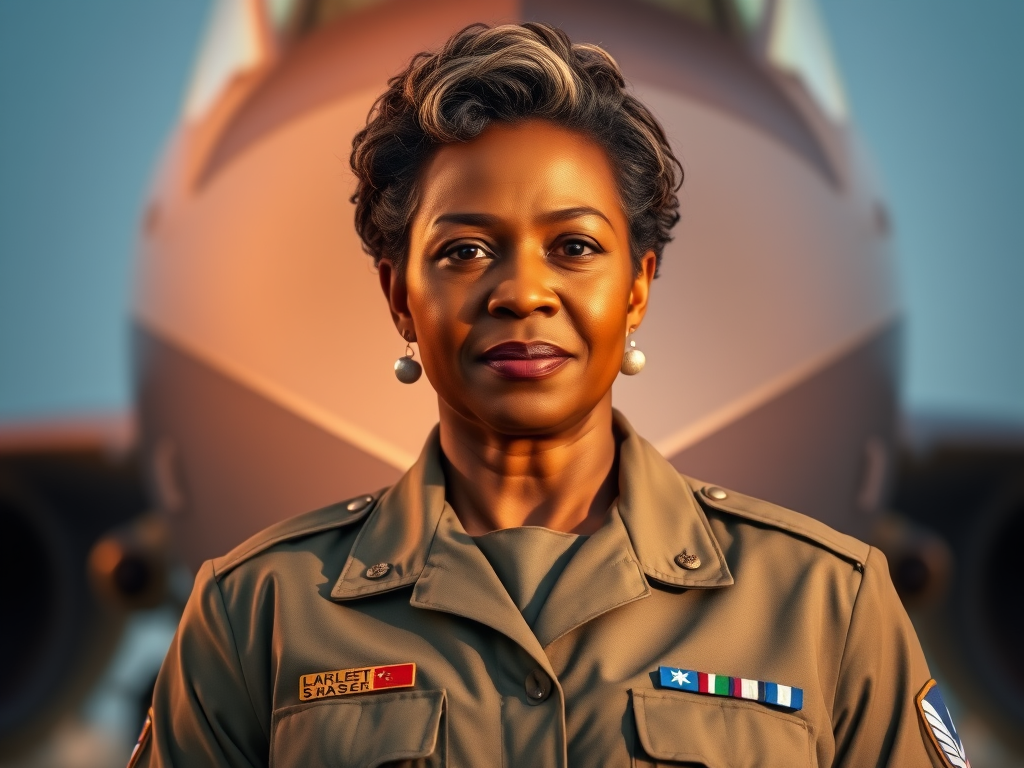
Major General Marcelite Harris: A Trailblazer in the Air Force

Major General Marcelite J. Harris shattered barriers throughout her Air Force career, becoming the first African‑American woman general and redefining what leadership looked like in the skies. Her legacy continues to inspire generations of women, Black service members, and all who believe in service as a force for change.

Major General Marcelite Jordan Harris (1943–2018) stands among the most influential leaders in U.S. Air Force history. Born in Houston and educated at Spelman College, she entered the Air Force in 1965 and immediately began breaking new ground. Harris became the first African‑American woman to achieve the rank of general in the Air Force, the first female aircraft maintenance officer, and one of the first women to serve as an air officer commanding at the U.S. Air Force Academy.

Her career spanned more than three decades, from the Vietnam War era through the 1990s, during which she held leadership roles that shaped the Air Force’s operational readiness. As the Director of Maintenance, she oversaw global aircraft operations and logistics, an enormous responsibility in a rapidly evolving military landscape

Service Beyond the Uniform

After retiring as a major general in 1997, Harris continued her commitment to national service. She joined NASA as the Florida Site Director for United Space Alliance, supporting the nation’s shuttle program. Her civic leadership extended to organizations such as the NAACP, and she was appointed by President Barack Obama to the Board of Visitors for the Air Force Academy.

Posted on Leave a comment

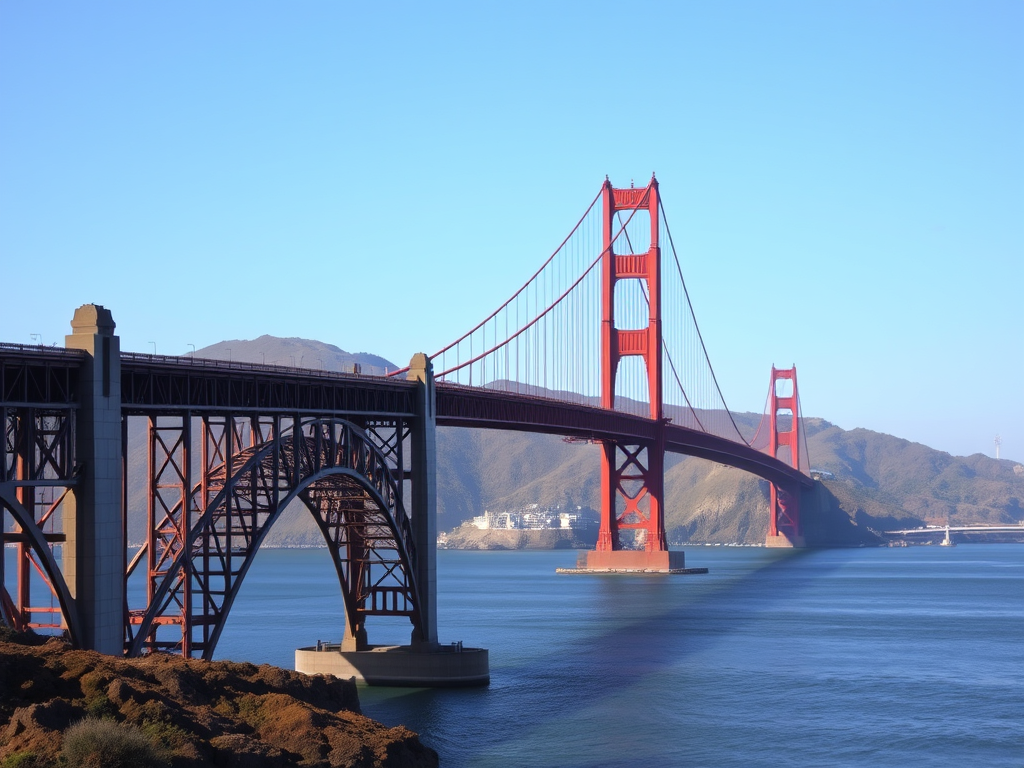
Today In History: The Golden Gate Bridge and The Legacy of Connection

The Golden Gate Bridge and The Legacy of Connection

During the 1930s America was in the throes of a depression. This event, which was prompted by the stock market crash of 1929, had a global impact that affected millions of lives. This was a time of great suffering and Americans, were looking for answers, stability and a pathway forward. In essence, people were looking for jobs in order to renew their sense of purpose and restore hope in the future–they needed something to bridge the gap. It was a perfect time to build a bridge. Bridges are more than just physical structures; they serve as symbols of human ingenuity and resilience. They not only connect lands but cultures and communities, while playing a pivotal role in shaping their identities.

America would soon get it’s symbol during the summer of 1937. One that assured it’s resilience and hope for the future. On May 27, 1937, San Francisco’s Golden Gate Bridge was officially opened.

This monumental endeavor that was ushered in by a week-long fiesta where more than 200,000 pedestrians paid twenty-five cents to walk its newly constructed 8-mile street. The bridge was erected during the Great Depression and came at a time where unemployment was high and morale was low. These much-needed jobs were ones where not only satisfying but deeply gratifying to those that worked on them.

The Golden Gate Bridge stood as a testament to the determination and spirit of the American people, providing jobs and instilling a sense of pride and accomplishment. The bridge’s construction, was one of Franklin D. Roosevelt’s infrastructure deals that helped shape America and helped secure his legacy. It not only symbolized economic recovery, but also became a beacon of hope, promising a brighter future.