
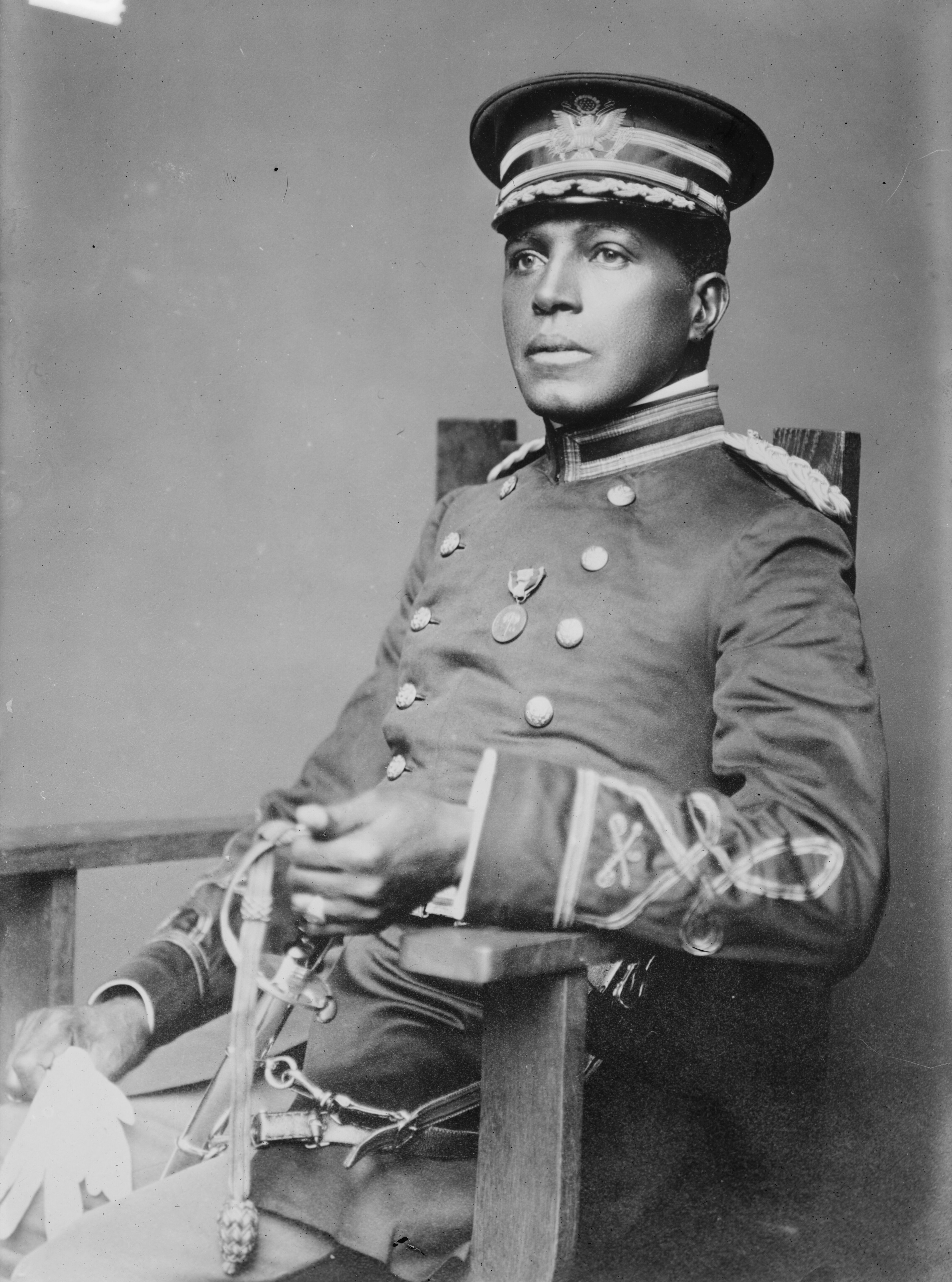

Colonel Charles Young United States Army image in the Public Domain
“The life of Charles Young was a triumph of tragedy.”
-W.E.B. Dubois
Colonel Charles Young (1864–1922) was one of the most accomplished military leaders of his generation and a pioneering figure in African American military history. Born in Kentucky to formerly enslaved parents, he rose from Reconstruction-era beginnings to become the third African American graduate of West Point (1889) and eventually the first African American Colonel in the United States Army.
Young served with distinction in the 9th and 10th Cavalry and the 25th Infantry, the famed Buffalo Soldier regiments. His early career included years on the Western frontier, followed by a professorship at Wilberforce University, where he taught multiple languages and forged a lifelong friendship with W.E.B. Du Bois. You can view one of the letters here.

During the Spanish-American War, Young commanded troops in Cuba and the Philippines, including participation in the charge up San Juan Hill. In 1903, he became the first African American superintendent of a U.S. National Park, overseeing Sequoia and General Grant National Parks.
He continued to break barriers, leading the 10th Cavalry during the 1916 campaign against Pancho Villa and later serving as U.S. military attaché to Liberia. Despite being initially declared medically unfit for World War I service, Young famously rode 500 miles on horseback from Ohio to Washington, D.C. to prove his fitness and was reinstated.
Young died in 1922 while on assignment in Lagos, Nigeria. He was honored with military funerals in both Lagos and the United States, and was reinterred at Arlington National Cemetery in 1923, where Du Bois delivered his eulogy.


