Posted on Leave a comment

Outschool Review: Flexible Learning Options for Families

girl in pink and white shirt sitting beside brown wooden table
Photo by Julia M Cameron on Pexels.com

In today’s fast-changing digital world, education is no longer confined to traditional classrooms. One platform leading this shift is Outschool, an innovative online learning marketplace designed specifically for children and teens. This platform is for students who are home schooled, traditionally school, and anything in between. The classes have small ratios, they include one on one courses and are largely interest driven, although many adhere to common core standards. For me and my family, I’ve found Outschool to be not only a great platform to teach on, but also a wonderful place for kids to explore classes that genuinely interest them. It’s an excellent supplement to any educational program. I originally joined as a teacher, but I quickly realized it’s also a vibrant space for children to socialize, expand their knowledge, and build community.

What Is Outschool?

Founded in 2015, Outschool is an online platform that connects learners aged 3 to 18 with independent educators from around the world. Unlike conventional e-learning programs that follow a fixed curriculum, Outschool operates as a marketplace. Teachers design and list their own classes, and parents can browse and enroll their children based on interests, age range, schedule, and budget.

The platform hosts live, small-group classes conducted over video chat. These sessions are interactive rather than pre-recorded, allowing students to engage directly with teachers and peers. Class sizes are intentionally small, which encourages participation, discussion, and personalized attention.

What Subjects Does Outschool Offer?

One of Outschool’s biggest strengths is its diversity of topics. While it certainly covers core academic subjects like math, science, reading, and writing, it truly shines in enrichment and niche interests. Students can take classes in coding, creative writing, foreign languages, art, music, financial literacy, entrepreneurship, and even unique topics like mythology, marine biology, or game design.

There are also social clubs and ongoing classes, such as book clubs, gaming groups, and debate circles. This makes the platform appealing not just for academic growth but also for social interaction and community-building, especially for homeschoolers or children seeking peers with shared interests.

Who Is Outschool For?

Outschool is designed for families who want flexibility and personalization in their child’s education. Homeschooling families often use it to supplement their curriculum or outsource certain subjects. Traditional school families may enroll their children in after-school enrichment classes or summer learning programs. It’s also popular among parents looking to nurture a specific talent or passion their child may not be able to explore in a standard school environment.

Because classes are live and interactive, students who thrive in discussion-based settings tend to benefit the most. However, the variety of teaching styles available means parents can find classes suited to different learning preferences.

I can personally vouch for the language lessons, theater, art, gaming club, coding and science. Right now, Outschool is sending out civics’ lessons and materials to families who use the platform. My daughter is starting a self-paced Mars class this week, and I have found the gaming club to be a great way to socialize for introverts.

Maryland and FSA Funding, Why They Don’t Qualify

Maryland’s education system is built on a “public dollars stay in public schools” philosophy. The state does not offer ESAs, vouchers, or flexible education accounts, and it does not allow public funds to follow students into private, online, or supplemental learning platforms. Because Outschool is considered a private, parent‑selected enrichment marketplace—and Maryland does not fund private educational services—there is no legal pathway for families to use state money on the platform. In short, Outschool is ready, but Maryland’s funding structure isn’t designed for it. What do you think of that? Do you think your child could benefit from a supplemental learning space like Outschool? Let me also add, that most teachers have advanced degrees and a wealth of knowledge on any topic you can imagine. If you try it, let me know.
Posted on Leave a comment

Is It Right For You? Modern Challenges and Opportunities in School Choice

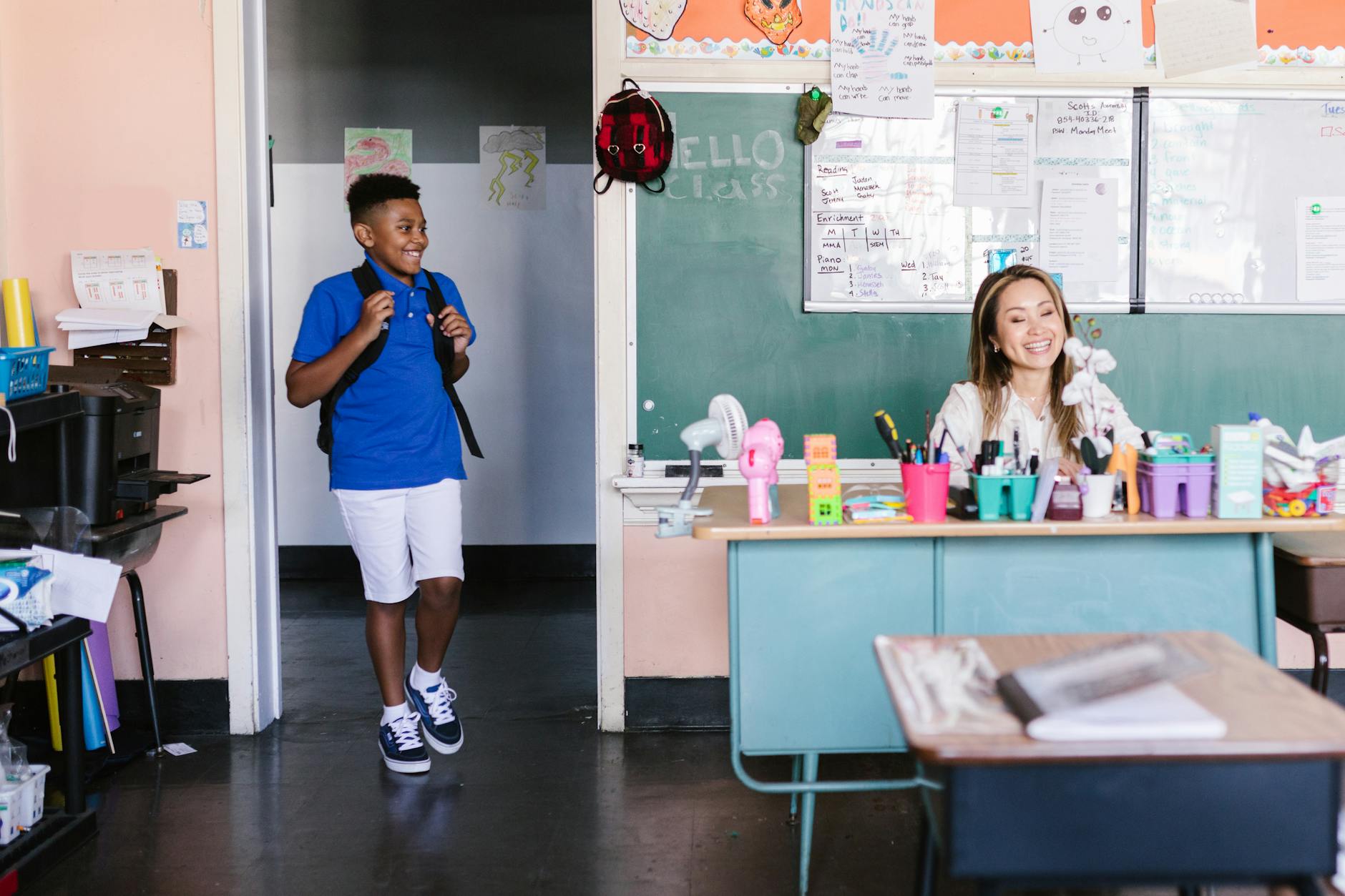
boy in blue shirt with black backpack standing on the doorway
Photo by RDNE Stock project on Pexels.com

If the country is moving to a merit-based society, that is great. However, there are some places that will need to modernize their infrastructure. But in the meantime, we like to get in motion as much as we can until the pendulum swings in our favor. 

As a child, my parents chose where we lived based on the school district alone. When my mother was just starting out in her career and had to work nights at the hospital, she would do something that I actually could not do: she would drive from the city to the suburbs—a forty-minute commute to Ann Arbor just so I could go to school where she felt I would get the best education. The irony was that there was a school right on the corner where my grandmother lived, but my mom wanted a school where I could be creative and thrive. I actually moved around quite a bit as a child, but each choice was made based on education. Admittedly, no one should have to deal with those extremes, but throughout history, parents have made sacrifices whenever they could to ensure their children’s success. Today, you have that opportunity with school choice—if that is the choice you would like to make.  It is not for everyone, but it is an option that could shore up a need for your child. Also, there are all kinds of reasons a parent may want to change their kids schools. Maybe their gifted, play an instrument, are inclined to science, or need special education; the list goes on. But I don’t personally believe you should be caged in for any reason. School choice is not solely economic to me, it’s about access and exposure because we all learn and thrive from each other.  

A Trajectory of Choice 

We often think of “School Choice” as a modern political debate, but in the 18th and 19th centuries, it was the only reality. Before the “Common School” movement of the mid-1800s, education was a decentralized tapestry. Families “chose” through homeschooling, private academies, or community-funded one-room schoolhouses. 

Notably, in many underserved communities, the most effective models were the women-led, Black-led schoolhouses. These weren’t just buildings; they were centers of self-determination where the curriculum was tied to the community’s survival and success. When the public system was eventually standardized, many of these intimate, effective models were lost in favor of a “one-size-fits-all” factory model. 

The Equity Gap Post-Brown v. Board 

The landmark Brown v. Board of Education decision was a victory for desegregation, but its failure was the lack of equanimity. We integrated the students, but we didn’t integrate the resources. Decades later, a child’s zip code still largely determines the quality of their school’s roof, the depth of their library, and the safety of their halls. 

This is where the agency of choice shores up the gaps. Choice should work both ways: we must invest tax dollars to build up and modernize our neighborhood schools so they become places of pride once again. But while that infrastructure is being rebuilt, parents need the “motion” of choice to ensure their child isn’t left behind in a failing building. 

Diversity as an Asset 

True diversity is not just racial—it is a diversity of thought, talent, and pedagogical approach. Some children thrive in a traditional classroom; others need a vocational-heavy environment or a specialized arts curriculum. When we allow funding to follow the student, we encourage a marketplace of ideas that benefits everyone. Choice isn’t a mandate; it’s an option that respects the diverse needs of the modern family. 

The Landscape in Maryland Today (2026) 

In Maryland, this “motion” is happening through programs like BOOST (Broadening Options and Opportunities for Students Today). As of 2026, BOOST provides scholarships to nearly 3,000 low-income students, allowing them to attend participating non-public schools that fit their specific needs. 

While Maryland is currently making historic $10 billion investments into public school modernization via the “Blueprint for Maryland’s Future,” the BOOST program acts as a vital bridge. It offers immediate relief and equity for families who can’t wait a decade for a building to be renovated. 

How it works in MD: 

  • Eligibility: Primarily based on Free and Reduced-Price Meals (FARMs) status. 
  • The Process: Parents submit Federal 1040 tax returns to verify income. 
  • The Outcome: The scholarship follows the student to an eligible private or community-led school, covering or significantly offsetting tuition. 

Education is the engine of a merit-based society. By supporting both our public infrastructure and the individual right to choose, we ensure that the next generation doesn’t have to drive forty minutes away just to find a fair start. 

Here are some tips:

StepAction Item
1. Find Your FundsCheck if your state has an ESA (Education Savings Account) portal.
2. Audit the FitVisit at least three schools. Look for “Shadow Days” where your child can attend for a day.
3. Verify LogisticsCan you handle the transport? Does the school offer after-care?
4. Watch DeadlinesMany choice programs require applications 6–9 months before the school year starts.
Posted on Leave a comment

Celebrate Chinese New Year 2026: Fun Traditions for Kids

Exploring new cultures is the best thing. If you can’t leave your hometown, the good news is you can use social media and your local community to explore things around you. In our home, we love Chinese New Year. We love the bright red decorations, the exciting traditions, and most of all… the red packets! Chinese New Year is a special celebration that marks the start of a new year based on the lunar calendar, and in 2026 it begins on February 17. This year welcomes the Year of the Horse, an animal that represents energy, adventure, and confidence. Even kids can feel that exciting “fresh start” feeling when Chinese New Year arrives.

Chinese New Year is also called Lunar New Year or the Spring Festival, and it’s celebrated by families all over the world. Before the holiday, people often clean their homes to sweep away old luck and make room for good fortune. Homes are decorated with red and gold because red is believed to bring happiness, luck, and protection. During the celebration, families gather to eat delicious food, spend time together, and wish each other health and joy for the year ahead.

One of the most exciting traditions for children is receiving red packets, also called hongbao. These are bright red envelopes usually given by parents, grandparents, or other adults. Inside is money, but the most important part isn’t how much is inside, it’s the loving wish for good luck, happiness, and success in the new year. Kids often wait eagerly for these envelopes and opening them feels like a little burst of magic and celebration.

The Year of the Horse makes this Chinese New Year extra fun to talk about with kids. Horses are known for being fast, strong, and adventurous, so it’s a great time to encourage children to be brave, try new things, and run toward their dreams. You can even ask kids what kind of year they hope to have — a year full of fun, learning, kindness, or exciting adventures.

To celebrate at home, a simple and meaningful craft kids can do is making their own lucky red envelope. Using red paper, fold it into an envelope shape and glue or tape the sides, leaving the top open. Kids can decorate their envelopes with drawings of horses, gold designs, sparkles, or even try writing the Chinese character 福 (fú), which means good luck. Inside, they can place a handwritten wish, a drawing, or a pretend coin. It’s a lovely way for kids to understand the tradition while creating something personal and festive.

Chinese New Year is a celebration filled with color, joy, and hope, and sharing these traditions at home helps children learn about the world while making warm family memories. Whether it’s opening red packets, making crafts, or simply talking about the Year of the Horse, it’s a beautiful reminder that a new year always brings new possibilities.

There are several celebrations happening in Montgomery County:

In Rockville, Richard Montgomery High School will have cultural performances, interactive displays, and kid-friendly activities. Safeway’s 5th annual celebration features lion dances, live music, face painting, and food samples from Asian brands like Fly By Jing and Kikkoman.

In Bethesda, Westfield Montgomery hosts the Chinese Culture and Community Service Center’s celebration with dragon and lion dances, calligraphy blessings, clay dumpling crafts, and red envelope giveaways. Strathmore’s Music Center offers a festive concert with the Baltimore Symphony Orchestra, while Connie Morella Library invites children to storytime, crafts, and songs.

Gaithersburg brings a unique twist with the Mintd Card Show at the Marriott Washingtonian Center—featuring Pokémon vendors, raffles, and Lunar New Year-themed prizes. Across the county, you can also support local Asian restaurants, bakeries, and bubble tea shops to keep the celebration going.

Posted on Leave a comment

Pediatric Brain Tumors: Understanding the Impact


More children die from brain tumors than any other cancer; those who survive must navigate a lifetime of side effects. The Pediatric Brain Tumor Foundation (www.curethekids.org/stay-connected) is the largest patient advocacy funder of pediatric brain tumor research and leading champion for families and survivors, providing patients, caregivers, and siblings with information, financial assistance, and a community of support from the moment symptoms start, through diagnosis, treatment, and beyond.

If you logged onto this site a few years back, you will notice that it has gone through several iterations. Initially this website began as a way to bring awareness to pediatric brain tumors and to share how I used art as therapy for my grief journey. I still do. In 2015, my 3-year old daughter named Calais, was diagnosed with a rare tumor called ATRT. At the time she was a perfectly healthy and an extremely active child–cancer was something we never saw coming.

How we got off our path 

When I took my highly active 3-year-old to a pediatrician’s visit, they wanted her weight to be slightly higher, and to have more protein because she was only drinking soy milk. I was told to add a protein drink like Pediasure if she isn’t drinking milk to make sure she was getting her protein and nutrients. Big mistake, it’s all sugar, and it’s the beast that fueled my fire for years after.  

My upbringing did not prepare me to deal with medicine as a parent. My husband often looked to me, and I didn’t always trust my gut–until it was too late. I can’t say sugar causes cancer, but cancer cells feed off sugar. According to Cancer.gov, roughly 1.9 million people will be diagnosed with Cancer in the United States. Education is something we all can benefit from. When you have a belief in something you need a community to keep you on the straight and narrow and to see you through. It’s important to educate yourself on your bloodline as well as your nutrition. One size doesn’t fit all in this area.

Although Calais was technically my second child and 17 months younger than her older brother, I often felt like I was still new and inexperienced as a mom. Especially living in Washington, DC, with a California mindset. As progressive as the city was supposed to be, I often felt talked down to as a Black mother. I shouldn’t have to defend myself or my parenting or be interrogated about things that have nothing to do with the situation. These factors made it hard to parent in general, coupled with the crippling and irrational sense of guilt I felt at being limited in my capacity to help my kids. Surprisingly enough, I lost all of those insecurities during our daughter’s cancer fight. I was empowered and present during her life and death situation. The doctors learned to respect me and often sought after my opinion, which must have been coming from the other side. To give you insight to the situation, I was using medical terminology that was correct. All that is gone now, however, in hindsight I realize I was helping my children more than I understood. My daughter said I was a good mother as her final words.

1.9 million people will be diagnosed with Cancer in the United States. Education is something we all can benefit from.

Going through approximately a decade of challenges made me question alot of things. I always thought to myself, God wouldn’t double down on us, would he? Yes, He would, and it showed me that people deal with even more while having little to no resources. 

My biggest regret has been having a level of knowledge that was ahead of its time and not always using it for myself. I was good for imparting it to others and not always able to apply it to myself when challenged by institutionalized mindsets. When you grow up around family members trained in the traditional medical system, you may receive a lot of pushback on ideas, treatments, and remedies that have no “scientific basis.” Today, many unproven folk practices are being recognized and investigated as treatments needed to cure illnesses. This is excellent news. Still, they all need funding in order to bring them to the masses and to allow for proper testing. 

 Get In Community

For me, a helpful group was Mocha Moms Inc. As a mother of color, you won’t find a better group of nationally organized, locally informed, and compassionate women who value family and children more.

During my daughter’s battle with ATRT, I went into overdrive making remedies and sending research papers to the oncologists to help her. Miracles were happening, and it was amazing. Our cancer journey took us from Washington, DC, to Philadelphia, and finally to San Francisco on a quest to discover a life-saving treatment. It was a constant emotional roller-coaster filled with countless heartbreaks and many triumphs. Eventually, she did leave us, but not without showing us a better way to live.

Brighter Days Ahead

When a parent loses a child, it can be hard to recover. I am grateful to God that I did, even though it took a minute. Thankfully, we have been given a second chance with our daughter Monarch. She is the only child I carried full term. I did pregnancy my way and remained primarily stress free. She is my veggie, yoga baby, whom I spent lots of time forest bathing and grounding with while pregnant. I even had her at advanced maternal age–so never stop believing.  

Before my daughter’s death, I lived a high-stress life full of people pleasing. That is not the case today. We raise our children differently than we used to. Even as Black children, I want them to be free-thinking, have a close relationship with the environment, and radiate with love. Never underestimate the effects of stress on you, and how it transfers to your children. These things matter. They used to call me a hippie and a flower child. Now, Black hippies are everywhere, and I am committed to a life of sustainability to the best of my ability while educating others as well. Just maybe, you can will be inspired to become more concsious and live a better life, starting today.

Posted on 1 Comment

I Can Attest To The Fact That Brain Tumors Suck, Which Is Why I Go Hard For The Environment


More children die from brain tumors than any other cancer; those who survive must navigate a lifetime of side effects. The Pediatric Brain Tumor Foundation (www.curethekids.org/stay-connected) is the largest patient advocacy funder of pediatric brain tumor research and leading champion for families and survivors, providing patients, caregivers, and siblings with information, financial assistance, and a community of support from the moment symptoms start, through diagnosis, treatment, and beyond.

If you logged onto this site a few years back, you will notice that it has gone through several iterations. Initially this website began as a way to bring awareness to pediatric brain tumors and to share how I used art as therapy for my grief journey. I still do. In 2015, my 3-year old daughter named Calais, was diagnosed with a rare tumor called ATRT. At the time she was a perfectly healthy and an extremely active child–cancer was something we never saw coming.

How we got off our path 

When I took my highly active 3-year-old to a pediatrician’s visit, they wanted her weight to be slightly higher, and to have more protein because she was only drinking soy milk. I was told to add a protein drink like Pediasure if she isn’t drinking milk to make sure she was getting her protein and nutrients. Big mistake, it’s all sugar, and it’s the beast that fueled my fire for years after.  

My upbringing did not prepare me to deal with medicine as a parent. My husband often looked to me, and I didn’t always trust my gut–until it was too late. I can’t say sugar causes cancer, but cancer cells feed off sugar. According to Cancer.gov, roughly 1.9 million people will be diagnosed with Cancer in the United States. Education is something we all can benefit from. When you have a belief in something you need a community to keep you on the straight and narrow and to see you through. It’s important to educate yourself on your bloodline as well as your nutrition. One size doesn’t fit all in this area.

Although Calais was technically my second child and 17 months younger than her older brother, I often felt like I was still new and inexperienced as a mom. Especially living in Washington, DC, with a California mindset. As progressive as the city was supposed to be, I often felt talked down to as a Black mother. I shouldn’t have to defend myself or my parenting or be interrogated about things that have nothing to do with the situation. These factors made it hard to parent in general, coupled with the crippling and irrational sense of guilt I felt at being limited in my capacity to help my kids. Surprisingly enough, I lost all of those insecurities during our daughter’s cancer fight. I was empowered and present during her life and death situation. The doctors learned to respect me and often sought after my opinion, which must have been coming from the other side. To give you insight to the situation, I was using medical terminology that was correct. All that is gone now, however, in hindsight I realize I was helping my children more than I understood. My daughter said I was a good mother as her final words.

1.9 million people will be diagnosed with Cancer in the United States. Education is something we all can benefit from.

Going through approximately a decade of challenges made me question alot of things. I always thought to myself, God wouldn’t double down on us, would he? Yes, He would, and it showed me that people deal with even more while having little to no resources. 

My biggest regret has been having a level of knowledge that was ahead of its time and not always using it for myself. I was good for imparting it to others and not always able to apply it to myself when challenged by institutionalized mindsets. When you grow up around family members trained in the traditional medical system, you may receive a lot of pushback on ideas, treatments, and remedies that have no “scientific basis.” Today, many unproven folk practices are being recognized and investigated as treatments needed to cure illnesses. This is excellent news. Still, they all need funding in order to bring them to the masses and to allow for proper testing. 

 Get In Community

For me, a helpful group was Mocha Moms Inc. As a mother of color, you won’t find a better group of nationally organized, locally informed, and compassionate women who value family and children more.

During my daughter’s battle with ATRT, I went into overdrive making remedies and sending research papers to the oncologists to help her. Miracles were happening, and it was amazing. Our cancer journey took us from Washington, DC, to Philadelphia, and finally to San Francisco on a quest to discover a life-saving treatment. It was a constant emotional roller-coaster filled with countless heartbreaks and many triumphs. Eventually, she did leave us, but not without showing us a better way to live.

Brighter Days Ahead

When a parent loses a child, it can be hard to recover. I am grateful to God that I did, even though it took a minute. Thankfully, we have been given a second chance with our daughter Monarch. She is the only child I carried full term. I did pregnancy my way and remained primarily stress free. She is my veggie, yoga baby, whom I spent lots of time forest bathing and grounding with while pregnant. I even had her at advanced maternal age–so never stop believing.  

Before my daughter’s death, I lived a high-stress life full of people pleasing. That is not the case today. We raise our children differently than we used to. Even as Black children, I want them to be free-thinking, have a close relationship with the environment, and radiate with love. Never underestimate the effects of stress on you, and how it transfers to your children. These things matter. They used to call me a hippie and a flower child. Now, Black hippies are everywhere, and I am committed to a life of sustainability to the best of my ability while educating others as well. Just maybe, you can will be inspired to become more concsious and live a better life, starting today.