Posted on — Leave a comment

The Tomb of the Unknown Soldier: A Nation’s Promise Never to Forget

Laying Wreath on Tomb of the Unknown Soldier, Library of Congress, Harris and Ewing Collection. Public Domain

On a quiet hill overlooking Washington, D.C., stands one of the most sacred monuments in the United States. Visitors often arrive in silence. Conversations fade. Heads bow. The Tomb of the Unknown Soldier is not simply a memorial of stone and marble. It is a promise. A promise that America will remember those who gave everything, even when their names have been lost to history.

More than a century ago, the wounds of World War I were still fresh. Thousands of American families mourned loved ones who never returned home. For many, there would be no grave to visit, no marker bearing a name, and no final place to lay flowers. Across Europe, countless soldiers had been buried without identification amid the devastation of battle.

To honor all those whose identities were unknown, the United States selected one unidentified American service member from among the World War I dead. On November 11, 1921, that soldier was laid to rest at Arlington National Cemetery with the highest military honors. The Unknown Soldier became a symbol of every American who had fallen in service and whose name was never recovered.

In the years that followed, additional unknown service members from World War II and the Korean War were interred at the Tomb. A crypt was also dedicated to an unknown from the Vietnam War, though advances in DNA technology later identified those remains, and they were returned to the serviceman’s family. Today, the Tomb continues to honor all missing and unknown American service members from every generation.

Yet the Tomb’s significance extends far beyond those who rest beneath it.

The Unknown Soldier represents sacrifice without recognition. He stands for the young man who left home and never returned. He represents the sailor lost at sea, the airman whose aircraft vanished beyond the horizon, and the Marine whose family waited for answers that never came. He represents thousands of lives, thousands of dreams, and thousands of families forever changed by war.

The beauty of the memorial is that it reminds us that service is not measured by fame, rank, or achievement. The soldier buried there could have been anyone. A farmer from Iowa. A factory worker from Pennsylvania. A teacher from Georgia. His identity was unknown, but his sacrifice was no less meaningful.

“We live in a world that often celebrates the prominent, the powerful, and the well-known. The Tomb of the Unknown Soldier asks us to pause and honor those whose stories may never be told.”

In many ways, that is the lesson America most needs to remember.

We live in a world that often celebrates the prominent, the powerful, and the well-known. The Tomb of the Unknown Soldier asks us to pause and honor those whose stories may never be told. It reminds us that freedom has always depended on ordinary people who answered an extraordinary call.

What Americans should take away from the Tomb is gratitude. Not gratitude expressed only on Memorial Day or Veterans Day, but gratitude woven into the way we live our lives. Every opportunity we enjoy, every vote we cast, every freedom we exercise has been protected by men and women willing to place service above self.

The Tomb also teaches humility. The soldiers it represents did not choose sacrifice for recognition. Many left behind families, futures, and dreams because they believed something larger than themselves was worth defending. Their example challenges us to think beyond our own interests and consider what we owe to one another and to future generations.

Most importantly, we should remember them not merely through ceremonies, but through our actions.

We remember them when we learn their history and teach it to our children.

We remember them when we care for veterans and military families.

We remember them when we preserve the freedoms for which they fought.

We remember them when we strive to be worthy of the sacrifices that secured our nation.

The soldiers represented by the Tomb of the Unknown Soldier may never have their names restored, but they are not forgotten. Their legacy lives in every American who pauses to reflect on the cost of liberty.

As the sentinels of the Old Guard continue their watch, day and night, through rain, snow, and sunshine, they carry forward a solemn message to the nation: some sacrifices are so great that they must never be forgotten.

The Tomb of the Unknown Soldier stands not as a monument to death, but as a monument to remembrance, duty, honor, and love of country. It reminds us that while a name may be lost, a sacrifice never should be.

And as long as Americans continue to remember, the Unknown Soldier will never truly be unknown. He will remain what he has always been: the living symbol of a grateful nation’s enduring respect for those who gave everything and asked for nothing in return.

Army Sgt. Danyell E. Walters nee (Wilson), became the first female African American Tomb Guard in 1997. You can learn more about this patriotic trailblazing woman here.

Posted on — Leave a comment

The New Federal Savers Match (2027) That Helps Moms Save for the Future, Even on a Tight Budget

For example:

The money is deposited directly into your retirement account rather than being claimed as a tax credit on your tax return.

  • Your total retirement investment becomes $3,000.

Posted on — Leave a comment

The Summer of Lights: Painting

“A Night Among The Lights” Mixed Media, by Chiara Luz, 2026.

I am back painting. I am sharing the beginning of my summer series focused on what I call the Light Among Lights.

It is a section of a larger work. I will make some sections for sale.

Peace.

Posted on — Leave a comment

Art Still Is Life

Daily writing prompt
When you were five, what did you want to be when you grew up?

An Artist. Then I went on to pursue writing and drama. I did not know any painters.

I have had moments to live out that dream and anytime I engage it, it goes well.

Posted on — Leave a comment

America 250 Bookmark Design Challenge for Kids

By Chiara Luz

If you’re looking for a simple, meaningful activity to get your kids involved in the America 250 celebration, this is one you won’t want to miss. The National Endowment for the Arts has launched a nationwide Bookmark Design Challenge just for kids—and it’s the kind of low-pressure, creative opportunity that’s perfect for busy families.

The contest is open to all students in grades K–8, including homeschoolers, and invites kids to design an original, hand-drawn bookmark showing what America means to them. Whether your child wants to highlight history, family heritage, cultural traditions, or even their hopes for the future, the theme is intentionally flexible so they can make it personal.

Here’s what parents need to know: entries must be completely original and created by hand (no digital or AI-generated artwork allowed), and kids must use the official bookmark template provided by the NEA. Each child can submit one design, and a parent or guardian must upload the final entry along with a simple acknowledgment form—teachers can’t submit on their behalf. Designs should also avoid things like logos, political messages, or personal information to be eligible.

The deadline is March 31, 2026, at 5:00 p.m. ET, so this is a great quick-turn project to squeeze in before spring gets too busy. Winners will be selected in three age groups (K–2, 3–5, and 6–8), and their bookmarks will actually be printed and shared at national events, including the Great American State Fair. Even more exciting, winners will be invited to Washington, D.C. with a parent for a special celebration.

What I love most about this challenge is how doable it is. There’s no long essay, no complicated rules—just a piece of paper, some crayons or markers, and your child’s perspective. It’s a small project that gives kids a chance to feel part of a once-in-a-generation moment, and honestly, those are the kinds of opportunities that stick.

So if you need a creative activity this week, this is your sign—print the template, set out the art supplies, and see what your kids come up with.

Reminder: Deadline is March 31, 2026.

Posted on — 2 Comments

Nicole.

Daily writing prompt
What is your middle name? Does it carry any special meaning/significance?

My middle name is Nicole. It doesn’t mean much to me, or at least it didn’t until I went to Egypt. I met a woman there named Nicole and we looked alike. The first thing she said when she saw me was, “wow, my sister how are you?” She told me her name, and I said I was Nicole too. She became our tour guide and took us off the beaten path. I saw where they hide the women. The women were busy working and having a ball. It was a good time. To this day, I have never met a Nicole I did not like. Nicole’s are very cool people.

Posted on — Leave a comment

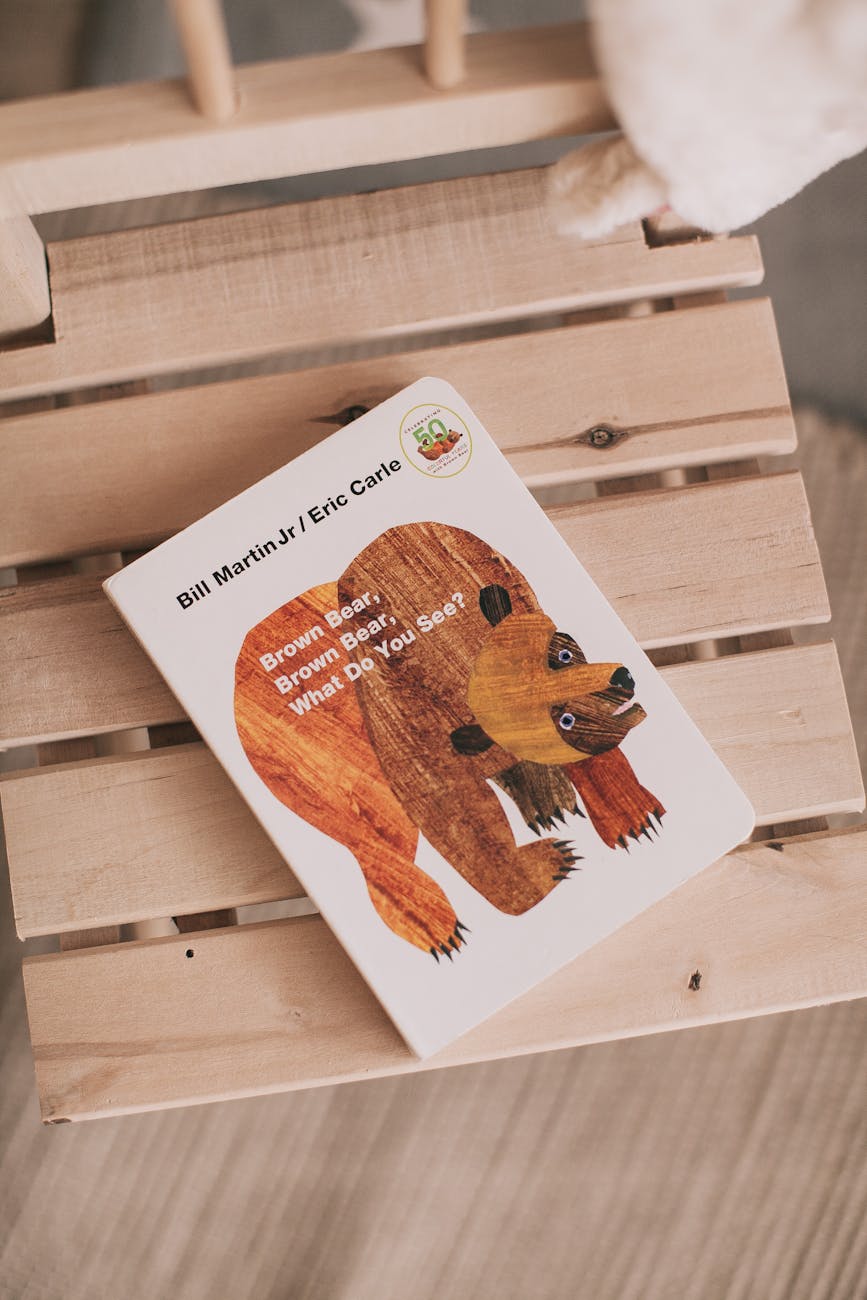
Top Book Picks for Level One Readers

white book on wooden chair

These book recommendations are for level one readers, and they are curated to help your child prepare for the next year and stay on grade level. I used many of these with my own children. Some of these are no longer at the library and you may have to look on Amazon, but it is worth it.

white book on wooden chair
Photo by Lina Kivaka on Pexels.com

Autumn Leaves, by Gail Saunders-Smith

The Berenstein Bears in the House of Mirrors, by Stan and Jan Berenstein

Look What I Can Do, by Jose Aruego

My Book, by Ron Maris

My Class, by Lynn Salem

What Do Insects Do? by Susan Canizares

Reading Matters

As a writer, I believe deeply in literacy. The love of reading begins at a young age, and the ability to travel to different worlds, cities, and even moments in history is what fuels the imagination. I make book pillows for teachers each year, and the thing they’re most excited about is receiving new and interesting books for their classrooms.

A lot of kids simply lack the confidence to read and push past their mistakes. But that’s part of the process. It’s the same reason I push myself to learn other languages — for the challenge. It’s how we grow and get better. If you can read, you can learn just about anything.

More books posting soon.

Posted on — Leave a comment

Exciting Changes Ahead: Join Our Journey

inspirational quote on black letter board

By Chiara Luz

inspirational quote on black letter board
Photo by Ana Miranda on Pexels.com

The site is undergoing a facelift soon and I thank you for being here. I want to add more voices here and revamp the interior a bit and get to some of the fun parts. I will need your help! Get your pens, computer, imagination and creativity ready and stay tuned. The subscription here says, “information is access,” we want that to hold up while we also add in some stories.

Moreover, I want you to find what you want and only what you want. Alot more will be local, because I am back in the studio (which is a separate site) and so many things are happening. Anyone who doesn’t believe that with a little elbow grease life can be ok, hopefully we can show you different. And in a time of stress and strength, a little love and peace is always a nice balance. We are the keepers of our community so why not make it great. I hope you will scroll along the side and click through and find something relevant for you. People respond differently when I tell them in person, but sadly, I can’t be everywhere at once and so you will have to read–I hope you do.

Stay tuned. Thanks for reading.

#America250 #MD250

Posted on — Leave a comment

Shhhhh…

Daily writing prompt
What is one question you hate to be asked? Explain.

I would never answer this question. It would guarantee that I would be asked it.

This will have to remain a mystery.

Posted on — Leave a comment

International Pancake Day At #IHOP: From Ancient Griddles to Your Local Restaurant

I love pancakes, how about you? International Pancake Day always sneaks up on us, but it shouldn’t. Few foods have traveled through history with as much charm, adaptability, and pure joy as the humble pancake. Today, we get to celebrate that journey with a short stack that’s doing what pancakes have always done best: bringing people together.

Today at your local IHOP, you can grab a free short stack until 8:00 pm if you dine-in. I think you’re supposed to purchase a coffee. This is also a day of fundraising for a good cause. IHOP runs a “Feeding the Hungry” initiative as part of its community giving efforts, partnering with Feeding America to help fight food insecurity across the United States. The campaign is best known during National Pancake Day, when guests receive a free short stack of pancakes and are invited to make a voluntary donation to support hunger relief. Every dollar raised helps provide meals to individuals and families in need through Feeding America’s nationwide network of food banks.

Beyond the one-day event, IHOP also extends its impact through everyday purchases like coffee. In partnership with its suppliers Royal Cup Coffee and Tea and Westrock Coffee Company, a portion of coffee sales contributes to a minimum donation goal benefiting Feeding America. Together, these efforts make it easy for guests to enjoy a meal — or even just a cup of coffee — while helping provide meals to communities facing hunger.

The good thing is, I love coffee and IHOP is pretty good. I am glad to also know that this is money well spent. Additionally, if you aren’t saving part of the “pancoin” club at IHOP, why not? You can get pancakes, merch, kid’s meals and you don’t need thousands of pancoins to get a return. Now that I know this about IHOP and I have participated in the program, I love it. I am glad it’s in my neighborhood. I hope it continues to thrive because the giveback is legitimate. Take your kids to IHOP before 8pm, get your pancoins and buy a cup of coffee –all while knowing you are feeding others as well.

The History of National Pancake Day and Its Roots in Shrove Tuesday

Long before IHOP turned pancakes into a national celebration, the tradition of dedicating a day to batter, flipping, and indulgence began in medieval Europe. Shrove Tuesday—known in many places simply as Pancake Day—falls on the day before Ash Wednesday and marks the final opportunity to enjoy rich foods before the fasting season of Lent. Households needed to use up eggs, milk, sugar, and butter, and the simplest, most satisfying solution was the pancake. The word shrove comes from “shrive,” meaning to confess, a reminder that the day once carried a spiritual seriousness even as it evolved into a joyful, food‑centered ritual.

Over centuries, the day grew into a cultural event. In Britain, where the tradition is especially beloved, Pancake Day became synonymous with friendly chaos: schoolchildren running pancake races, families debating toppings, and supermarkets selling out of lemons and flour. Tens of millions of eggs are cracked each year, and Guinness World Records have been set for everything from the highest pancake toss to the fastest flipping race. Today, both traditions coexist: Shrove Tuesday with its centuries‑old roots in reflection and resourcefulness, and National Pancake Day with its focus on joy, generosity, and gathering people around a warm plate.

Together, they tell a story of how something as humble as a pancake can carry history, culture, and community forward, one flip at a time.

Posted on — Leave a comment

A Pueblo of Many Colors: The True Founding Story of Los Angeles

In 1781, Los Angeles was founded as a small farming village—not as a massive European colony, but as a modest agricultural community established by families from what is now Mexico. The settlement, officially named El Pueblo de Nuestra Señora la Reina de Los Ángeles, was organized under the direction of Spanish governor Felipe de Neve. At the time, California was part of the Spanish empire, administered through Mexico (then called New Spain). The founding of Los Angeles was a civilian project: it was meant to grow crops, raise livestock, and supply nearby military presidios and missions not to function as a military conquest site.

Image of Felipe de Neve, 4th Governor of the Californias, 1781, found in Public Domain

The 44 original settlers—11 families—were recruited primarily from the Mexican regions of Sinaloa and Sonora. A significant number came specifically from Sinaloa, bringing experience in farming, ranching, irrigation, and frontier survival. These settlers were not primarily European-born Spaniards. Census records from 1781 clearly list them by racial classifications used in colonial Mexico: Mestizo, Mulato, Negro, and Español.

Only two of the adult settlers were classified as Español (Spanish). The majority were people of mixed ancestry. Mestizos—people of combined Indigenous Mexican and Spanish heritage formed a large portion of the group. Mulato’s who were people of mixed African and Spanish ancestry, were also prominently represented. Several settlers were identified as having African heritage directly.

Among the African-descended settlers were individuals whose ancestry traced to the Asante (Ashanti) people of present-day Ghana in West Africa. The Asante were part of a powerful West African kingdom deeply affected by the transatlantic slave trade. Enslaved Asante people were transported to Mexico during the colonial period, where many later gained freedom, intermarried, and became integrated into Mexican society. By the late 18th century, their descendants were free citizens of Mexico and part of frontier settlement efforts. The documented link between Asante ancestry and some of the Los Angeles settlers highlights a direct West African connection to the city’s founding families.

Casta Paintings in the Public Domain

Understanding the racial terms used at the time helps clarify the makeup of the pueblo. “Mestizo” referred specifically to a person of Spanish and Indigenous ancestry. “Mulato” referred to someone of African and Spanish ancestry. These classifications were part of Mexico’s colonial caste system, yet on the northern frontier—far from Mexico City—social lines were often more fluid. In Los Angeles, families of African, Indigenous, and European ancestry worked side by side to survive.

Life in early Los Angeles revolved around agriculture. The settlers built homes near the Los Angeles River and constructed irrigation ditches (zanjas) to water their crops. The pueblo consisted of a central plaza, modest adobe homes, small fields, and grazing lands. It was rural, tightly knit, and cooperative. Families depended on each other for food production, protection, and trade. Diversity was not a modern development—it was present from the first day.

Comparing Los Angeles then and now reveals both contrast and continuity. In 1781, the entire settlement consisted of fewer than 50 people living in adobe structures surrounded by farmland. Today, Los Angeles is a sprawling metropolis of nearly four million residents, with neighborhoods stretching from Boyle Heights to South Los Angeles, from East L.A. to the San Fernando Valley. Instead of dirt paths and crop fields, the city is defined by freeways, high-rises, ports, and film studios.

Yet the diversity remains strikingly consistent. Modern Los Angeles is known for its Mexican, African American, Central American, Asian, and multiracial communities. Neighborhoods reflect layered migrations over centuries—but the multiracial foundation was present at the beginning. The original pueblo was Indigenous, African, and European at once. Today’s Los Angeles, often described as one of the most diverse cities in the world, mirrors the blended ancestry of its founders.

Los Angeles did not begin as a homogeneous colonial outpost. It began as a humble Mexican farming village built by Mestizo and Mulato families—many from Sinaloa, some with documented Asante roots—whose shared labor and cultural blending shaped the identity of the city long before it became a global metropolis.


References

Castillo, E. D. (1994). The Los Angeles pobladores: The founding families of El Pueblo de la Reina de Los Ángeles, 1781. Los Angeles Historical Society.

Forbes, J. D. (1993). Africans and Native Americans: The language of race and the evolution of Red-Black peoples. University of Illinois Press.

Posted on — 1 Comment

The Advice I Needed Back Then

Daily writing prompt
What advice would you give to your teenage self?

If I had to give my teenage self some advice, it would be to slow down. To be more selective. To be braver with my feelings and thoughts in person. Don’t keep everything bottled up and only on the page.

I would also tell myself that it’s okay to keep things to myself—to hold the things I love sacred, in my heart, and close to the vest. It is okay to trust others. It is okay to believe. It is okay to extend family to the friends who became your people.

I would tell myself that it’s okay to stay on your own path. All of your predictions will one day come true because, despite the lack of belief from some of the people closest to you, you hold the answers.

Lastly, I would say to my teenage self: you are beautiful. You are loved. You are stronger than you think you are. You are also a true original. You won’t be for all people. But there are people that are for you, be grateful for that. Don’t forgo new partnerships, relationships, ideas and generosity in exchange for what you think you should have–focus on your true champions and advocates. They will be your greatest blessings. Most of all, stay in the light, stay on the right side of things, and you will be alright. The thing that you don’t see coming is the perfect peace among other things that await you in the future. Don’t stress too hard.

My younger self desired acceptance, but the best and highest good is self-love. It is priceless. If you can relate to the power of a self-love journey please leave a comment. Like it, share it and subscribe.

Posted on — Leave a comment

Outschool Review: Flexible Learning Options for Families

girl in pink and white shirt sitting beside brown wooden table
Photo by Julia M Cameron on Pexels.com

In today’s fast-changing digital world, education is no longer confined to traditional classrooms. One platform leading this shift is Outschool, an innovative online learning marketplace designed specifically for children and teens. This platform is for students who are home schooled, traditionally school, and anything in between. The classes have small ratios, they include one on one courses and are largely interest driven, although many adhere to common core standards. For me and my family, I’ve found Outschool to be not only a great platform to teach on, but also a wonderful place for kids to explore classes that genuinely interest them. It’s an excellent supplement to any educational program. I originally joined as a teacher, but I quickly realized it’s also a vibrant space for children to socialize, expand their knowledge, and build community.

What Is Outschool?

Founded in 2015, Outschool is an online platform that connects learners aged 3 to 18 with independent educators from around the world. Unlike conventional e-learning programs that follow a fixed curriculum, Outschool operates as a marketplace. Teachers design and list their own classes, and parents can browse and enroll their children based on interests, age range, schedule, and budget.

The platform hosts live, small-group classes conducted over video chat. These sessions are interactive rather than pre-recorded, allowing students to engage directly with teachers and peers. Class sizes are intentionally small, which encourages participation, discussion, and personalized attention.

What Subjects Does Outschool Offer?

One of Outschool’s biggest strengths is its diversity of topics. While it certainly covers core academic subjects like math, science, reading, and writing, it truly shines in enrichment and niche interests. Students can take classes in coding, creative writing, foreign languages, art, music, financial literacy, entrepreneurship, and even unique topics like mythology, marine biology, or game design.

There are also social clubs and ongoing classes, such as book clubs, gaming groups, and debate circles. This makes the platform appealing not just for academic growth but also for social interaction and community-building, especially for homeschoolers or children seeking peers with shared interests.

Who Is Outschool For?

Outschool is designed for families who want flexibility and personalization in their child’s education. Homeschooling families often use it to supplement their curriculum or outsource certain subjects. Traditional school families may enroll their children in after-school enrichment classes or summer learning programs. It’s also popular among parents looking to nurture a specific talent or passion their child may not be able to explore in a standard school environment.

Because classes are live and interactive, students who thrive in discussion-based settings tend to benefit the most. However, the variety of teaching styles available means parents can find classes suited to different learning preferences.

I can personally vouch for the language lessons, theater, art, gaming club, coding and science. Right now, Outschool is sending out civics’ lessons and materials to families who use the platform. My daughter is starting a self-paced Mars class this week, and I have found the gaming club to be a great way to socialize for introverts.

Maryland and FSA Funding, Why They Don’t Qualify

Maryland’s education system is built on a “public dollars stay in public schools” philosophy. The state does not offer ESAs, vouchers, or flexible education accounts, and it does not allow public funds to follow students into private, online, or supplemental learning platforms. Because Outschool is considered a private, parent‑selected enrichment marketplace—and Maryland does not fund private educational services—there is no legal pathway for families to use state money on the platform. In short, Outschool is ready, but Maryland’s funding structure isn’t designed for it. What do you think of that? Do you think your child could benefit from a supplemental learning space like Outschool? Let me also add, that most teachers have advanced degrees and a wealth of knowledge on any topic you can imagine. If you try it, let me know.

Posted on — Leave a comment

Father Angelico: The Saint of Ash Wednesday

This past Wednesday my family and I participated in Ash Wednesday service and for some reason we left the church on an unusually high note. On our way to my son’s basketball practice, we were all very chatty and full of ideas. I have a feeling that this is going to be a very special Lenten season. Possibly even an artistic one. Could it be the blessing of Father Angelico?

Father Angelico, The Saint for Ash Wednesday

Ash Wednesday marks the beginning of Lent — a season of quiet return, of repentance, of remembering who we are. And there is no better companion for this threshold than Blessed John of Fiesole, known to the world as Fra Angelico.

Born around 1395 near Florence, Fra Angelico entered the Dominican Order and lived a life of prayer, humility, and artistic devotion. He didn’t preach with words — he preached with light.

His frescoes, especially those in the convent of San Marco, were painted not for fame but for the contemplation of his fellow friars. He believed that beauty could heal, that color could carry truth, and that holiness could be quiet.

How He Became a Saint

Fra Angelico was beatified in 1982 by Pope John Paul II, who called him the “painter of God.” Though not canonized as a full saint, his beatification recognized the sanctity of his life and the spiritual power of his art. His feast day is celebrated on February 18, making him a natural guide into Lent.

Patronage

Fra Angelico is the patron of Catholic artists — but more deeply, he is a patron of:

  • those who preach through beauty
  • those who live quietly and faithfully
  • those who seek God in color, form, and silence

He reminds us that holiness is not always loud. Sometimes, it is painted in layers. Sometimes, it is offered in stillness.

A Devotional for Father Angelico:

God of quiet beginnings, As I receive the ashes today, let me remember the beauty of repentance. Teach me to return not with fear, but with hope. Let Father Angelico’s quiet light guide me. Not to perform, but to be present. Not to shame, but to truth. Not to noise, but to You.

Since he is the patron saint of artists, he will be on my ofrenda this season in honor of his beautiful memory.

If you have a favorite saint, I would love for you to share it with me. Or you can write about it here on the site.