Posted on Leave a comment

America 250 Bookmark Design Challenge for Kids

By Chiara Luz

If you’re looking for a simple, meaningful activity to get your kids involved in the America 250 celebration, this is one you won’t want to miss. The National Endowment for the Arts has launched a nationwide Bookmark Design Challenge just for kids—and it’s the kind of low-pressure, creative opportunity that’s perfect for busy families.

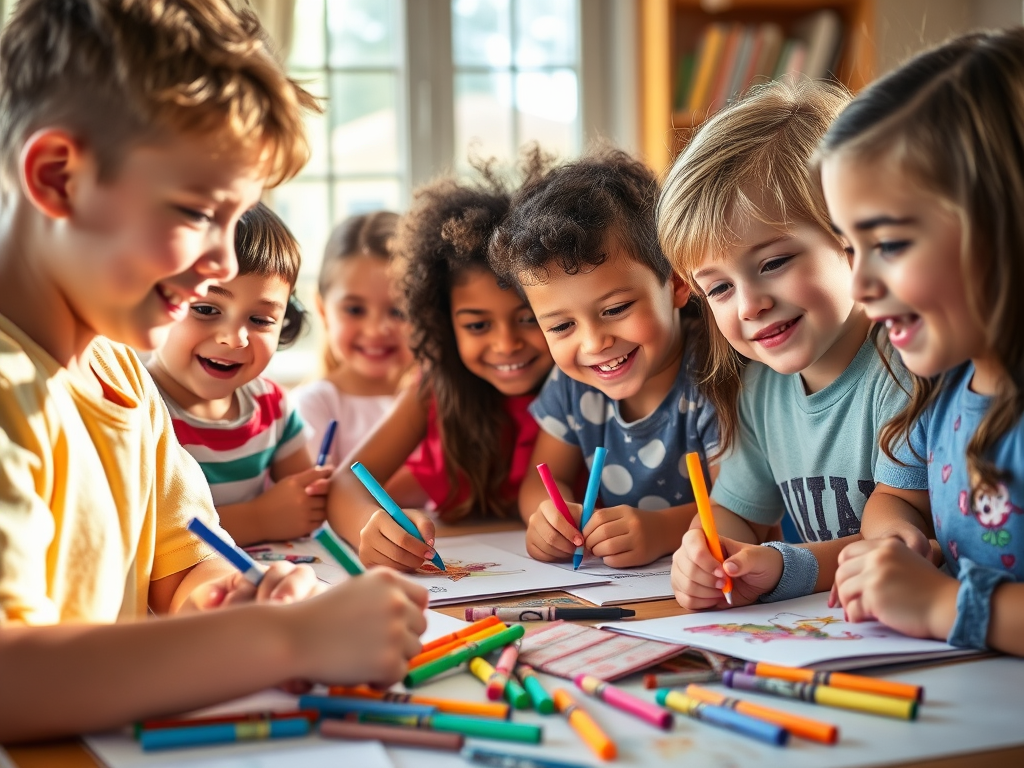
The contest is open to all students in grades K–8, including homeschoolers, and invites kids to design an original, hand-drawn bookmark showing what America means to them. Whether your child wants to highlight history, family heritage, cultural traditions, or even their hopes for the future, the theme is intentionally flexible so they can make it personal.

Here’s what parents need to know: entries must be completely original and created by hand (no digital or AI-generated artwork allowed), and kids must use the official bookmark template provided by the NEA. Each child can submit one design, and a parent or guardian must upload the final entry along with a simple acknowledgment form—teachers can’t submit on their behalf. Designs should also avoid things like logos, political messages, or personal information to be eligible.

The deadline is March 31, 2026, at 5:00 p.m. ET, so this is a great quick-turn project to squeeze in before spring gets too busy. Winners will be selected in three age groups (K–2, 3–5, and 6–8), and their bookmarks will actually be printed and shared at national events, including the Great American State Fair. Even more exciting, winners will be invited to Washington, D.C. with a parent for a special celebration.

What I love most about this challenge is how doable it is. There’s no long essay, no complicated rules—just a piece of paper, some crayons or markers, and your child’s perspective. It’s a small project that gives kids a chance to feel part of a once-in-a-generation moment, and honestly, those are the kinds of opportunities that stick.

So if you need a creative activity this week, this is your sign—print the template, set out the art supplies, and see what your kids come up with.

Reminder: Deadline is March 31, 2026.
Posted on Leave a comment

Why Freedom In The Arts And Artistic Expression Matters

By Chiara Luz Atoyebi

Throughout history, the arts have thrived most powerfully when artists are free to speak, challenge, and imagine without constraint. From ancient playwrights questioning authority in public forums, to Renaissance painters pushing against religious orthodoxy, to modern musicians and performers confronting social and political realities, artistic freedom has always been inseparable from cultural progress. When artists lose that freedom, society loses a vital mirror and a vital conscience. However, throughout time art has been and still is used to maintain the status quo while operating under the guise of creative expression. We may ask creative for who?


Art is not meant to be comfortable or purely transactional. It is meant to explore human complexity, to provoke empathy, and to ask difficult questions. Yet again and again, artists have found themselves navigating institutional, financial, or political pressures that threaten to silence or narrow their voices. History reminds us that when creative expression is constrained whether by censorship, rigid bureaucracy, or ideological agendas that the result is not stability, but stagnation.

The Washington National Opera

Opera, like all art forms, depends on risk: emotional, creative, and financial. When systems prioritize control or predictability over experimentation and trust in artists, the art itself suffers. The Washington National Opera’s choice to seek change and independence is not simply a logistical shift, but possibly a statement about preserving space for artistic voices to evolve on their own terms.

It’s also fair to note that sales and sponsorship had been declining for over a year. It’s hard to tell if this is a business decision or one due to creative differences–or both. For now the new location of the Washington National Opera is currently up in the air.

This moment is another chapter in a long history of art and freedom of expression. It reminds us that freedom in the arts is not guaranteed; it must be continually defended.
In protecting artistic freedom, we protect the human voice itself.

Posted on Leave a comment

Tell Good Stories

Tell good stories.

That’s the goal. That’s the mission.

Whether it’s retelling the greatest story ever told, exploring forgotten folklore, putting forth sacred art, or inspiring visual culture, we know that stories shape our vision.

Stories are all around us. We are a living example of the proclamation of ideas called “words made flesh.”  Ultimately, as storytellers, we have the ability to tell good stories.  Or we can  create  full-bodied, dynamic, thoughtfully crafted and historically balanced, shared narratives that  reinforce our place in the world and in our community. We have the power as universal storytellers and citizen authors to see what we want to. It’s a lot of responsibility. The truth is a lot of responsibility, but that’s what makes it compelling.

Stories are not limited to movies, magazines, and large media. I tell my daughter a bedtime in the oral tradition every night. I make her the center of the story, and it’s fun. Maybe she will carry on the tradition.

So, what will you create? What stories will you tell that haven’t been told? And if it’s a bedtime story, it’s OK to be the hero.

Posted on

Toyin Ojih Odutola: Exploring Relationships With The Power Of The Pen

Subscribe to continue reading

Subscribe to get access to the rest of this post and other subscriber-only content.

Posted on Leave a comment

Lorna Simpson: The Absence of And Fulfillment (C)olor

Written By: Chiara “Luz” Atoyebi

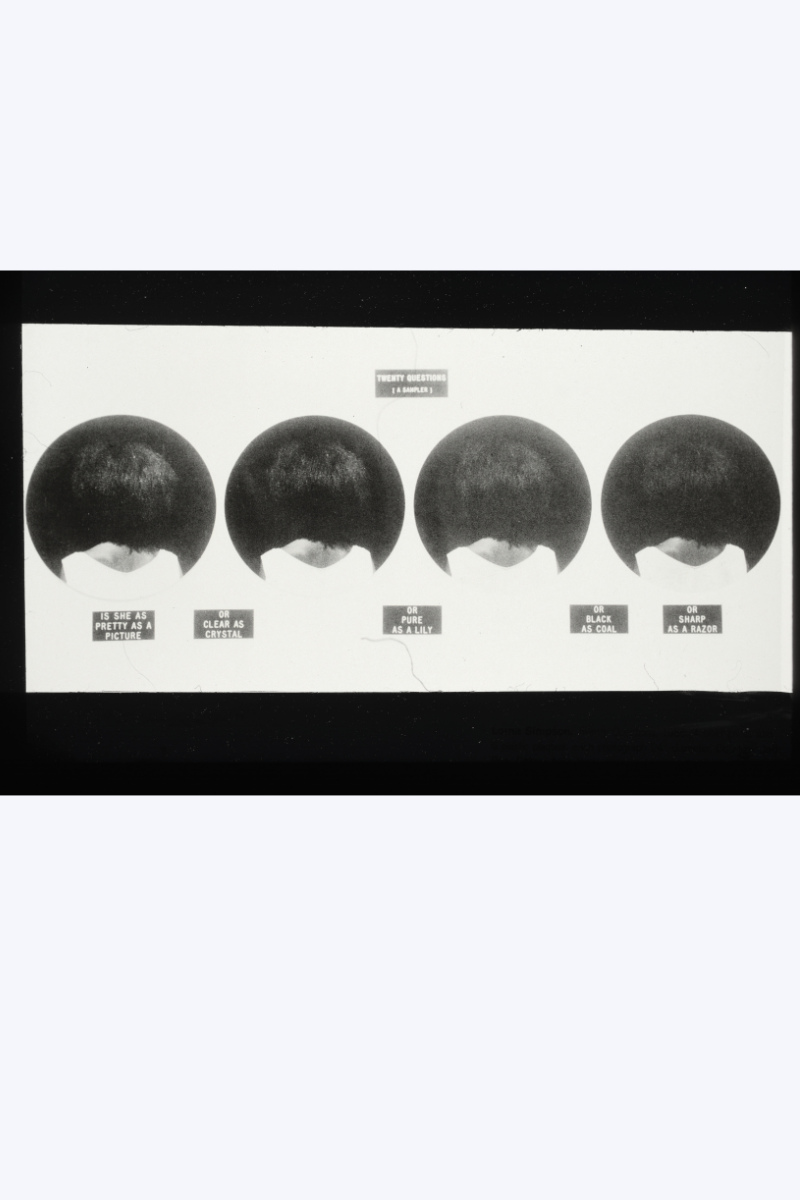
The 1980s will go down in history as a time that American’s were finding their true voice. Women, LGBTQ, communities of color, and women across the nation were demanding to be heard amidst the bullhorns of Reaganomics and conservative politics. The now-famous -pop art style of the ’80s that was signature to artists like Keith Haring, Andy Warhol, and Jean-Michel Basquiat depicted the various social issues of the time visually captivating images that utilized repetition as a technique or drew viewers in with their bold color palettes. These artworks and the artists themselves were making bold statements about the world we live in and made us ask questions. Somewhat on the outskirts of the (pop)-ular Pop Art movement were many African-American photographers making art that dealt with the obstacles of navigating race, gender, and sexuality in America. At the forefront of that effort was Brooklyn based artist Lorna Simpson. Simpson is a renowned multimedia artist and photographer whose work often explores themes of memory and representation, particularly in relation to identity, gender, race, and history. She gained prominence in the 1980s and 1990s with her photo-text installations, such as “Guarded Conditions” and “Square Deal,” which challenge viewers to think deeply about these issues. Simpson’s work frequently combines photography, film, video, painting, drawing, audio, and sculpture to create a multifaceted exploration of memory and history. She is known to juxtapose images with narrative text while encouraging viewers to look beyond surface appearances to consider the deeper implications of representation.

Simpson, Lorna. Twenty Questions (A Sampler) 1986. Photo in the Public Domain

Her work, similar to Baltimore based artist, Zoe Charlton ‘s work deals with debunking stereotypes concerning black men and women. Where Charlton is masterful with her pencil art, Simpson uses black and white photography to deconstruct the images of black women in order to show their many layers. In the absence of flash or color, the viewer focuses on the moment in which the subject exists with pretense.

In doing so, Simpson concludes there is nothing more “magical” about a black woman than in any other woman–at least upon first glance. Yet by honing in her in this way with out overly pronounced bosoms and backsides, she was able to draw attention to the sensuality in the mundane that is her body. She too, like every other woman—is a woman of many facets. One of the many ways the Simpson explores the body is through her work Memory and Representation.

The intimate portrayal created by the artist stands in stark contrast to other artists who aim to explore black women, their sexuality and their essence differently. For example, Kerry James Marshall’s untitled work Beach Towel displays a very vulnerable and seductive black woman on a beach towel in a backyard. Of course, Black women are also this representation as well, making it hard to over generalize and at times marginalize the body.

All of these images challenge the ongoing conversation of how African Diasporic women, and their images, show up in the world. 

Posted on Leave a comment

“What Is Ours?” A Group Exhibition presented by The Women’s Caucus for Art Washington, DC.

As many of you know this art journey has been my soul’s journey and serves as a well spring of healing. Especially when it is created among a sisterhood. Please join us for an evening of poetry and connection this September 8, 2022. The exhibition will be at the Sandy Spring Museum. There will be an open mic night and we encourage you to come through and speak your mind. Register: The Sandy Spring Museum. See you there!

Posted on Leave a comment

Civic Arts Presents An Inspirational Interview With Artist & Life Coach “MUSE”

An interview with Melissa “MUSE” Colon to liberate your mind

Melissa “MUSE” Colon is a certified life coach and artist who is also the creator of the popular Pep Talks Workshop. She is a newly minted mother of a month old daughter and in today’s interview she speaks with us about purpose, tribe, entrepreneurship, and the importance of community for women.

There are so many gems in this conversation–you won’t want to miss it. I definitely consider myself both a follower and friend of this very magical women.

*Before you click away from the page. Please be sure to scan the QR code or visit our link and give us some feedback on your creative life.

As always, I am here for you in the comments.

Peace be with you and enjoy,

Chiara

Posted on Leave a comment

Where Do You Go For Culture & Creativity

Calling all artists, writers, creatives, makers, dancers and patrons of the arts. We want to know where you go for culture and creativity. Please Scan the QR Code and take our survey. To learn more visit: The Arts and Humanities Council of Montgomery County. #dmv

Best, Chiara