Posted on Leave a comment

Lorna Simpson: The Absence of And Fulfillment (C)olor

Written By: Chiara “Luz” Atoyebi

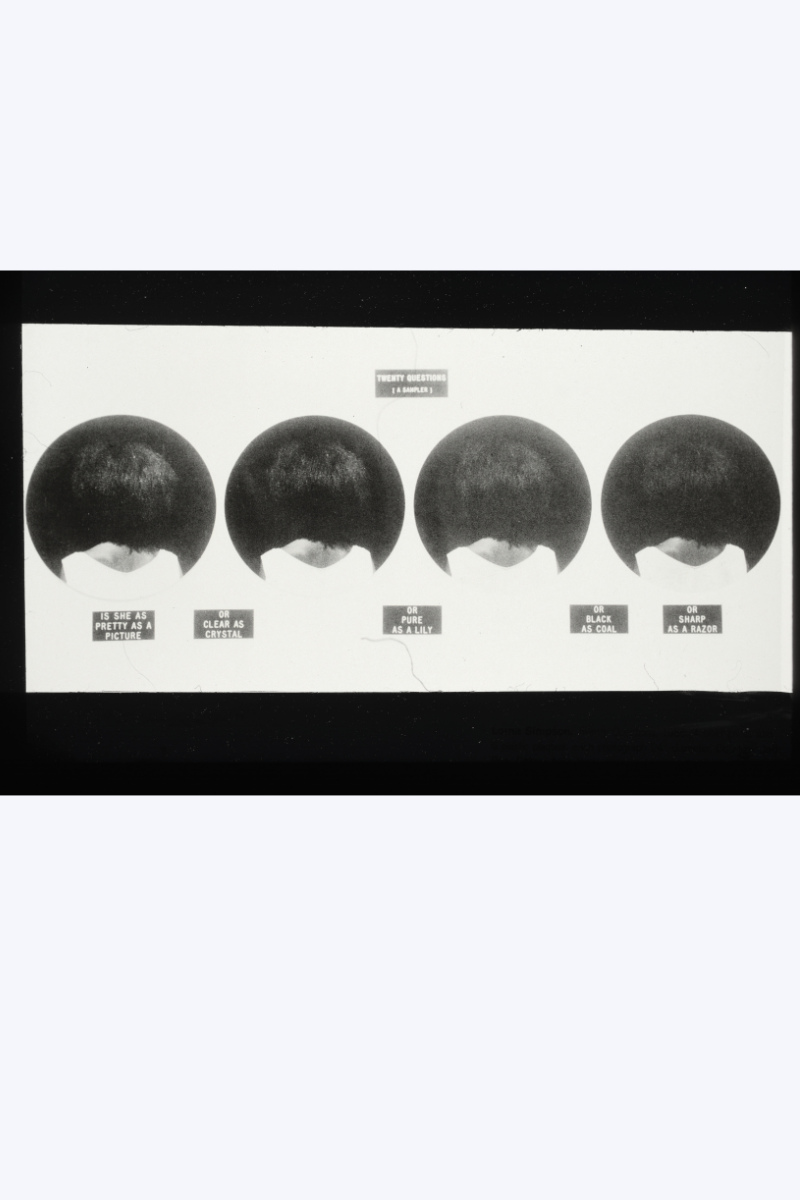
The 1980s will go down in history as a time that American’s were finding their true voice. Women, LGBTQ, communities of color, and women across the nation were demanding to be heard amidst the bullhorns of Reaganomics and conservative politics. The now-famous -pop art style of the ’80s that was signature to artists like Keith Haring, Andy Warhol, and Jean-Michel Basquiat depicted the various social issues of the time visually captivating images that utilized repetition as a technique or drew viewers in with their bold color palettes. These artworks and the artists themselves were making bold statements about the world we live in and made us ask questions. Somewhat on the outskirts of the (pop)-ular Pop Art movement were many African-American photographers making art that dealt with the obstacles of navigating race, gender, and sexuality in America. At the forefront of that effort was Brooklyn based artist Lorna Simpson. Simpson is a renowned multimedia artist and photographer whose work often explores themes of memory and representation, particularly in relation to identity, gender, race, and history. She gained prominence in the 1980s and 1990s with her photo-text installations, such as “Guarded Conditions” and “Square Deal,” which challenge viewers to think deeply about these issues. Simpson’s work frequently combines photography, film, video, painting, drawing, audio, and sculpture to create a multifaceted exploration of memory and history. She is known to juxtapose images with narrative text while encouraging viewers to look beyond surface appearances to consider the deeper implications of representation.

Simpson, Lorna. Twenty Questions (A Sampler) 1986. Photo in the Public Domain

Her work, similar to Baltimore based artist, Zoe Charlton ‘s work deals with debunking stereotypes concerning black men and women. Where Charlton is masterful with her pencil art, Simpson uses black and white photography to deconstruct the images of black women in order to show their many layers. In the absence of flash or color, the viewer focuses on the moment in which the subject exists with pretense.

In doing so, Simpson concludes there is nothing more “magical” about a black woman than in any other woman–at least upon first glance. Yet by honing in her in this way with out overly pronounced bosoms and backsides, she was able to draw attention to the sensuality in the mundane that is her body. She too, like every other woman—is a woman of many facets. One of the many ways the Simpson explores the body is through her work Memory and Representation.

The intimate portrayal created by the artist stands in stark contrast to other artists who aim to explore black women, their sexuality and their essence differently. For example, Kerry James Marshall’s untitled work Beach Towel displays a very vulnerable and seductive black woman on a beach towel in a backyard. Of course, Black women are also this representation as well, making it hard to over generalize and at times marginalize the body.

All of these images challenge the ongoing conversation of how African Diasporic women, and their images, show up in the world. 

Posted on Leave a comment

Black Radical Women Artists 1965-1985

I had the fortune of partaking in an intimate virtual lecture with Catherine Morris, curator, of the Elizabeth Sackler Center for Feminist Art locates the @brooklynmuseum. Lots of these wonderful artists featured in these exhibits you may learn about on my new site chiaratoyebi.com along with many nameless, faceless creators that add meaning and hold up a mirror to our societies. Their art pushes boundaries and moves forward the agendas for change we all are part of. These artists, especially women artists of color, domestically and globally need to be recognized and supported for the amazing work they do. Art is healing. In the words of artist and friend @imanasfari “art makes a home happy.” Nothing is more true than the latter statement. In times of crisis we must create. These books are about black women that demanded to be hurt. That struggled to bring their visions and voices to life and be heard when no one seemed to be listening. Curated by Rujeko Hockley and Catherine Morris together they created the amazing treasure trove of a sourcebook “ We wanted A Revolution. Black Radical Women 1965 to 1985.”

Posted on Leave a comment

When A Trumpet Sounds: Kara Walker, Examining Root Causes With Pencil and Paper

Kara Walker – Untitled, 1995. Ink and charcoal on paper. 
Suite of 14 works, 24 x 18 inches (61 x 45.7 cm) each courtesy Sikemma Jenkins & Co.

Kara Walker. 1995. Look Away! Look Away! Look Away! / The Battle of Atlanta, Being the Narrative of a Negress in the Flames of Desire / The End of Uncle Tom and the Grand Allegorical Tableau of Eva in Heaven. Sculpture and Installations. https://0-library-artstor-org.library.scad.edu/asset/LARRY_QUALLS_10310855292.

In Kara Walker’s Study for The End of Uncle Tom and the Grand Allegorical Tableau of Eva in Heaven (1995), she uses the relationships between master, slave, and the slave master’s wife to explore sexuality, race, and gender amidst the backdrop of America’s peculiar institution. In the untitled sketch, created in ink and charcoal, Walker presents what we can only presume to be the very beginnings of one of the many drawings that would later evolve into the silhouettes that made her famous. Walker’s work was heavily influenced by the racism she experienced as a child moving from California to Atlanta. Also, it was influenced by her reading of Uncle Tom’s Cabin[1].

The sketch is an important reference to problems that plague race relations in America today. The fetishization of black female sexuality, the ordained purity of white womanhood, and white male dominance.

In the sketch, we see a woman praying. We can assume that she is a wife who is both beautiful and pious. She is doing what any wife in the antebellum south would do when they are suspicious of the whereabouts of their husband and sexual prowess of his mistress.  Yet in this drawing, the object of affection is a child and the man old, white, and probably pious himself. There is a smile on the girls face that says that suggests her complicit nature and even enjoyment of the event about to take place. She feels that her role is just as important I not more than the wife’s. Nothing in the image suggests anything that is beloved even if it appears to be. That is what makes it unnerving.

In the Cult of True Womanhood 1860-1865 scholar, Barbara Weller writes,” a true woman was a true woman, wherever she was found. If anyone, male or female, dared to tamper with the complex of virtues which made up True Womanhood, he was damned immediately as an enemy of God, of civilization and of the Republic. It was a fearful obligation, a solemn responsibility, which the nineteenth-century American woman had-to uphold the pillars of the temple with her frail white hand.[2]

In today’s discourse this scene would look a lot like sex trafficking. However, this is a very real event that, at face value, tore apart established families. It harmed the psyche of an oppressed people and created many fatherless families. 

Although Walker’s motivations stemmed from the racism that she experienced as a child. She was underwent protests for her work from black artists. One artist in particular, Betye Saars, was very vocal. In the International Review of American Art she called out Walker’s work as being opportunist with a goal of being famous. Saars stated, “The trend today is to be as nasty as you want to be. There is no personal integrity.”[3]

The New York Times had a similar view calling Walker’s art “Shock Art.”[4]

However, in the picture sketched above Walker seems to have a true connection to her ancestry and the ability to explore the psychological landscape of slavery and its repercussions.

The girl with her master has no idea what is love or not love. She more than likely has not known anything other than what she has experienced. She plays a role. The wife plays the role she is cast in. She is to be idyllic. What culture tells her to be she knows no different. They are both victims of the peculiar institution desirous of freedom.

 In this picture, Walker leaves us wondering who is the woman crying for? We are privy to the vision of her prayer however, it is not clear if the tears are for herself, the girl, or the situation. There is an insight into Walker’s perception of suffering. This is a love triangle amidst the horrors of slavery.

Walker’s work is the very definition of identity politics. She repeatedly gives voice to the souls of black folk all laid bare on her canvas. If Kanye West thought that slavery was a “choice” he clearly has never experienced work by Kara Walker.

Walker’s work is messy, revealing, exaggerated and difficult to digest. It gives the work a surreal feeling because it is matter of fact. Yet, on any given day she shows us what happened. What happens and how turn a blind eye each day to our “normal.” If confession of sin is the gateway to freedom, we must be able to look closer at each character in the sketch to see their humanity and create an understanding I believe Kara Walker is aiming for.

[1]  Rebecca Peabody (2012) Kara Walker, on The End of Uncle Tom, Word & Image, 28:2, 181-192, DOI: 10.1080/02666286.2012.677622

[2] The Cult of True Womanhood 1860-1865,  Barbara Weller, This content downloaded from 132.174.254.81 on Sat, 02 May 2020 22:00:50 UTC All use subject to https://about.jstor.org/term 

[3] Abusive, Cartoonish, Obscene:How Kara Walker Painted Trump’s America. Retrievedn2 May 2020 https://www.huffpost.com/entry/kara-walker-trump-art_n_59b2d120e4b0dfaafcf7d240

[4] Julia Szabo, (1997) ‘Kara Walker’s Shock Art’ The New York Times retrieved  2 May 2020 https://timesmachine.nytimes.com/timesmachine/1997/03/23/074535.html?pageNumber=357