
By Haven Adisa
The other day, my daughter came home from school with tears in her eyes. Her classmates had told her, “There’s no Santa Claus.” She looked at me, searching for answers, and in that moment, I realized this was more than a question about a man in a red suit—it was about the magic and meaning of Christmas.
So, I sat her down and told her the truth: Santa Claus is real—but not in the way you think. He lives in the spirit of generosity, kindness, and joy that has been part of Christmas for centuries.
Christmas Didn’t Start Right Away
People often assume Christmas has been celebrated since the birth of Christ. In reality, it wasn’t an early Christian holiday. According to historical records, celebrations of Christ’s birth began around 200 AD, and by the 4th century, churches agreed on December 25 as the official date. Why that date? Some link it to the Roman festival Saturnalia, others to Jewish traditions. Over time, elements from pagan winter festivals—like gift-giving, greenery, and feasting—blended into Christmas.

Traditions That Shaped Christmas
- Nativity Scenes: St. Francis of Assisi introduced the first crèche in 1223, making the Nativity central to Christmas.
- Christmas Trees: Originating from pagan symbols of life, they became a sign of hope and eternity. Early gifts were hung on trees before moving under them.
- Holly & Yule Logs: Holly symbolized everlasting life and Christ’s crown of thorns; Yule logs came from old customs of sharing warmth.
- Santa Claus: Rooted in St. Nicholas, a 4th-century bishop known for secret acts of charity. Dutch settlers brought his tradition to America, evolving into the jolly Santa we know today.
Christmas in Nigeria: Vibrant and Joyful

In Nigeria, Christmas is a family-centered celebration filled with color and music:
- Family Reunions: Many travel to ancestral villages for big gatherings.
- Church Services: Worship and carols are central on Christmas Day.
- Festive Meals: Jollof rice, pounded yam, goat meat, and “small chops” like puff-puff and samosas.
- Fashion: Coordinated Ankara outfits—families compete for the most stylish look!
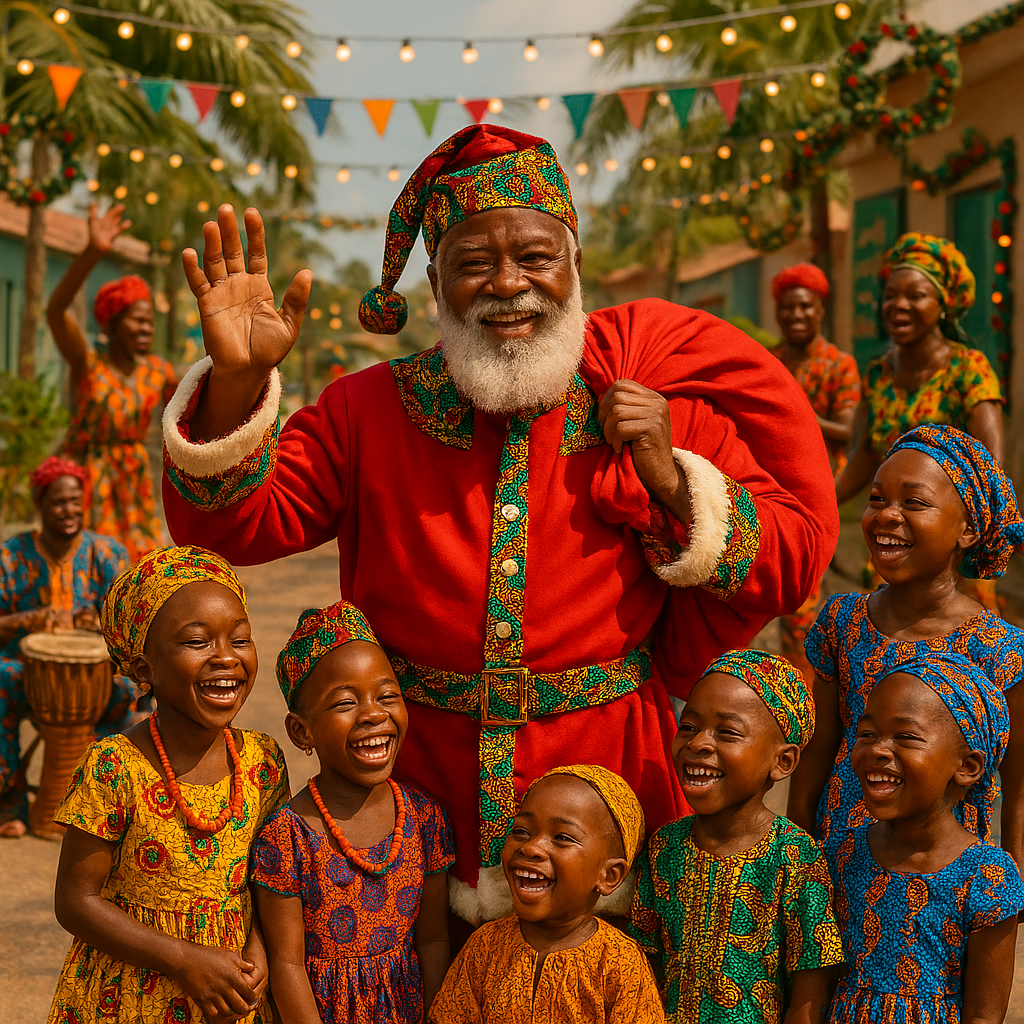
- Father Christmas: Children eagerly await gifts from Baba Christmas, often at parties or community events.
- Decorations: Homes, malls, and streets sparkle with lights and ornaments.
How Does This Compare to Western Traditions?
- Family: Both cultures value togetherness, but Nigeria emphasizes large village reunions.
- Food: Western tables feature turkey and pies; Nigerian feasts are spicy and diverse.
- Fashion: Cozy sweaters in the West vs. bold, elegant attire in Nigeria.
- Santa vs. Father Christmas: Sleigh and reindeer vs. dancing in vibrant prints.
- Decorations: Both love lights and trees, but Nigerian celebrations add music and color everywhere.
One thing I love to do is eat on Christmas. I love to make Jollof rice with a nice crunchy salad and then top it off with a sweet and delicious Puff-Puff. I inherited these recipes, but I will gladly pass them on. They’re like little yummy donuts and they’re great to leave Santa. Here is the recipe:
To make Puff Puff, follow these steps:

- Ingredients: You will need flour, sugar, yeast, warm water, salt, and oil for deep frying.
- Mixing: Combine flour, sugar, yeast, and salt in a bowl. Gradually add warm water and mix until a smooth batter forms.
- Rising: Cover the bowl and let it rise in a warm place for about 45 minutes to 1 hour until doubled in size.
- Frying: Heat oil in a deep pan and gently drop small portions of the batter into the oil. Fry until golden brown and puff
- Serving: Remove from oil and drain on paper towels. Serve warm, plain, or with sugar or dipping sauces.
- Enjoy your delicious Puff Puff!

Discover more from Chiara Atoyebi Media
Subscribe to get the latest posts sent to your email.


