
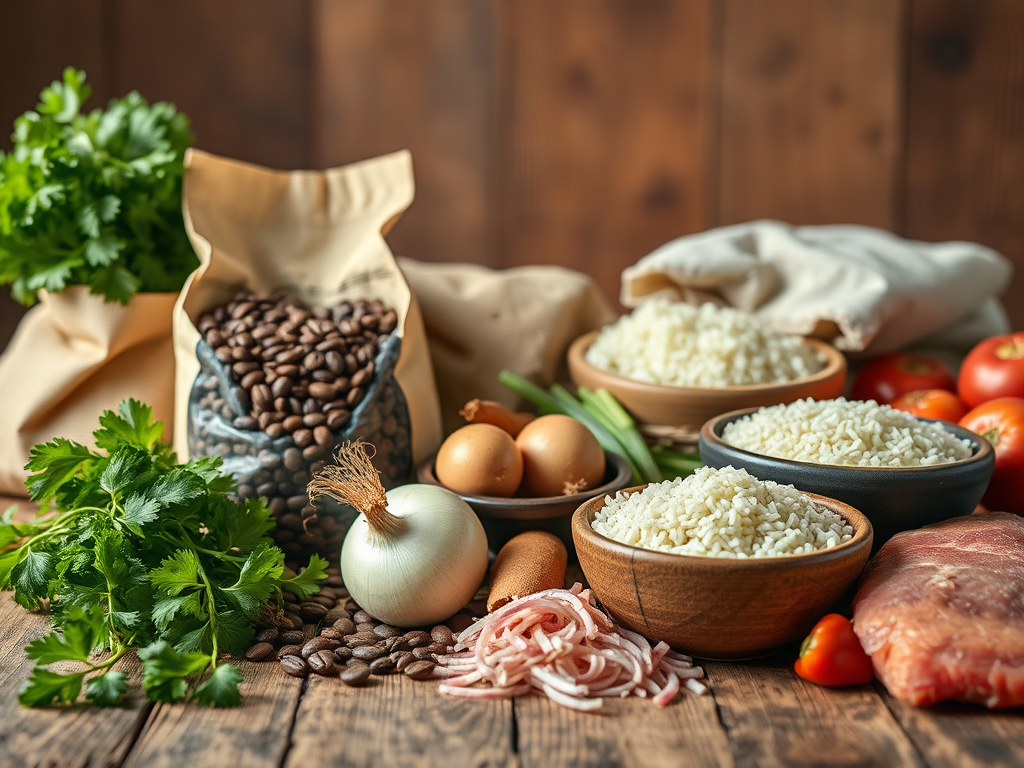


I will always have:
Cilantro
Coffee
Onions
Rice
Meat
I can work with those.
The end.
I will always have:
Cilantro
Coffee
Onions
Rice
Meat
I can work with those.
The end.


“You will know the truth, and the truth will set you free.” — John 8:32
There are moments in our lives where we seek out the truth. We need it. Even if we are the only ones to hold it. When you grab hold to it, it has the ability to break down barriers and walls. There is alot of rhetoric–but there is also a truth. In this moment we must be able to discern it. Let’s move forward with gratitude for the changes being made in this moment to right some of the wrongs in our lives. Let’s be thankful for tangible opportunities that our children can lay hold to in this moment. Let’s cultivate a heart of gratitude.
St. Bartholomew: Apostle of integrity and unwavering faith. His life reminds us that truth and courage endure beyond trials.
St. Bartholomew, one of the twelve apostles, is revered for his honesty and devotion. Described by Jesus as “a man without guile,” he symbolizes purity of heart and truthfulness. Tradition holds that he preached the Gospel in Asia and was martyred for his faith, often depicted with a flaying knife—the instrument of his death. His legacy inspires believers to live with integrity and courage.
Prayer:
Lord, help me to walk in Your truth today. Guard my heart from deception and give me courage to speak with integrity. May Your Word be my compass, and Your Spirit my strength. Amen.
Action Step:
Practice truth in love—choose one conversation today where you will speak with grace and honesty, even if it’s difficult.
Peace be with you always.

By Chiara Luz Atoyebi

The Chicago Home For the Friendless, Chicago Illinois, 1858. Image in the Public Domain
In the mid-19th century, Chicago was a city in transition—rapidly growing, bustling with commerce, and attracting immigrants and rural migrants seeking opportunity. Yet, beneath the promise of prosperity lay stark realities: poverty, homelessness, and social isolation. Industrialization and urbanization created a class of vulnerable individuals—particularly women—who lacked family support and financial security. It was in this climate that the Home for the Friendless was founded on March 18, 1858.
The term “friendless” was a poignant descriptor for those without family or social networks. The Home’s mission was clear: to provide shelter, care, and moral guidance to indigent women and children, many of whom were widows, unmarried mothers, or orphans. These women faced harsh judgment in Victorian society, where respectability was tied to marriage and domesticity. Without a husband or family, survival was precarious.
The Home for the Friendless offered more than a roof—it provided hope and dignity. Residents received food, clothing, and spiritual instruction. Children were placed in homes or trained for employment, while women learned practical skills to regain independence. This charitable work reflected the era’s ethos of benevolent reform, driven largely by women’s organizations and religious groups who believed in uplifting the “fallen” through moral and domestic education.
I wrote about the work of social reformers Jane Addams and Victoria Earle Matthews and their houses for women here.
By the 1870s, Chicago had become a symbol of American ambition. The Great Fire of 1871 had devastated the city, but reconstruction brought modern architecture and economic dynamism. Yet, the fire also deepened social divides. Thousands were left homeless, and charitable institutions like the Home for the Friendless became lifelines for those who had lost everything.
Victorian ideals dominated social life. Women were expected to embody purity and domestic virtue, but industrialization blurred these boundaries. Many women entered the workforce out of necessity, challenging traditional norms. At the same time, philanthropy became a socially acceptable outlet for women’s public engagement, allowing them to exercise influence while reinforcing domestic values.
It was within this cultural framework that the Home for the Friendless thrived—and innovated.

In 1874, the Home for the Friendless launched a bold fundraising initiative: a community cookbook titled “Tried and True Recipes. The Home Cook Book of Chicago.” Published by J.F. Waggoner, this volume compiled recipes contributed by women from Chicago and other towns. Its purpose was twofold: to raise money for the Home and to celebrate the culinary expertise of American women.
Why a cookbook? In Victorian America, cooking was more than sustenance—it was a marker of virtue and refinement. By producing a cookbook, the Home tapped into the domestic pride of middle-class households while creating a practical product that could circulate widely. The title “Tried and True” emphasized reliability, appealing to homemakers seeking tested recipes in an era before standardized measurements.
The book was a collective effort, reflecting the power of women’s networks. Contributors shared family recipes, regional specialties, and household tips. This collaborative spirit mirrored the Home’s mission: community support for those in need. Proceeds from sales funded shelter, food, and vocational training for residents, making the cookbook a tool of both culinary and social reform.
The Home Cook Book of Chicago was more than a charity project—it was a cultural milestone. It helped popularize the community cookbook model, which became a staple of American life. Churches, schools, and civic groups across the country adopted this format, blending recipes with local identity and philanthropy.
The book also contributed to the standardization of home cooking. By presenting tested recipes, it offered consistency in an era when oral tradition and handwritten notes dominated. Moreover, it preserved a snapshot of 19th-century foodways, from hearty breads to elaborate preserves, shaping the American palate for generations.
Funds from the cookbook supported programs that transformed lives. Indigent and unmarried women—often stigmatized as “fallen”—found refuge and purpose. The Home provided industrial training, teaching sewing, laundry, and cooking skills that enabled women to earn wages. For unmarried mothers, it offered a safe haven during pregnancy and assistance in placing children in adoptive homes.
This work was radical in its quiet way. At a time when social safety nets were nonexistent, the Home for the Friendless embodied the principle that charity could restore dignity. It also underscored the gendered nature of reform: women helping women, using domestic arts as instruments of empowerment.
The cookbook’s pages brimmed with dishes that defined Victorian kitchens. Here are a few that stand out:
A staple of Midwestern tables, corn bread symbolized thrift and abundance. Its simplicity made it accessible to all classes, while its versatility ensured a place in both humble and festive meals.
Before refrigeration, pickling was essential for preservation. Oysters, a delicacy, reflected aspirations of refinement even in inland cities like Chicago.
This spiced fruit cake, traditionally baked for civic gatherings, linked food to democracy. Its presence in the cookbook speaks to the communal spirit of the era.
Whole-wheat muffins championed by health reformers signaled the rise of nutritional awareness—a precursor to modern wellness trends.
From peaches to currants, these recipes showcased domestic ingenuity. Preserving fruit was both practical and symbolic of abundance, reinforcing ideals of household competence.
The story of the Home for the Friendless and its cookbook is a testament to resilience, creativity, and community. In a city rebuilding from disaster, amid shifting social norms, women harnessed the power of domestic culture to address urgent needs. Their efforts fed bodies and souls, leaving a legacy that endures in the pages of American culinary history.
The Home Cook Book of Chicago was more than a collection of recipes—it was a manifesto of care, a bridge between private kitchens and public good. Through corn bread and election cake, through pickled oysters and Graham gems, it told a story of women who turned flour and sugar into instruments of hope.


Subscribe to get access to the rest of this post and other subscriber-only content.

By Chiara Luz

AI Generated Image by the Author for The Feast of Immaculate Conception 2025
“Celebrating the Feast of the Immaculate Conception — a serene tribute to Mary, adorned with Turkish-inspired elegance and timeless grace.”
While many of my Marian histories, crafts, and news will be featured my website, The House of Maryam, I wanted to share the meaning of today’s feast to all. I like to shape my posts similarly to how you would find them at a Marian Basilica–filled with images, miracles and devotions.
Today is the Feast of the Immaculate Conception, celebrated on December 8, and honors the belief that Mary was conceived without original sin — a truth at the heart of Catholic faith. Declared a Holy Day of Obligation, it calls the faithful to pause and reflect during Advent, attending Mass in gratitude for God’s plan of salvation. Under this title, Mary is the Patroness of the United States, making this day especially meaningful for American Catholics. Though not a public holiday, its spiritual significance shines brightly, inviting us to embrace purity, grace, and hope.

This is my personal artwork and St. Francis altar. I will have images of Mary in my Woo Commerce shop for purchase this week.
All around the world, many people see Our Lady as the mother they never had or as an inspiration for living a good life. For anyone feeling uncertain, I encourage reaching out to her—like a mother with unwavering love and no judgment, her love can truly transform the heart. The journey itself is deeply personal, and that part is yours alone.
Peace be with you and your family.


Listen, mama’s got places to be—school drop-offs, work hustle, maybe even a hot date if the stars align. So, when it’s time for a new car, why not make it work double duty for you?
Over here we like to be practical because the bills don’t care about our emotions. Besides, for anyone who desires to be a smart businesswoman or even a responsible citizen, we must know about are laws– and how to benefit from them. The time is now.
Here’s the scoop: If your shiny new wheels were assembled in the U.S., you can snag a sweet tax break—up to $10,000 a year on auto loan interest. Yep, that’s real money back in your pocket for gas, groceries, or that little black dress.
Why Go American-Assembled?
These are some of the models that consistently rank at the very top for being assembled in the U.S. and having the highest percentage of U.S./Canadian parts:
| Rank (by Index) | Vehicle Name | Manufacturer/Parent Company | U.S. Assembly Location Examples |
| Top Tier | Tesla Model Y (SUV) | Tesla | Fremont, CA; Austin, TX |
| Top Tier | Honda Passport (SUV) | Honda Motor Co., Ltd. | Lincoln, AL |
| Top Tier | Tesla Model S (Sedan) | Tesla | Fremont, CA |
| Top Tier | Volkswagen ID.4 (Electric SUV) | Volkswagen | Chattanooga, TN |
| Top Tier | Honda Odyssey (Minivan) | Honda Motor Co., Ltd. | Lincoln, AL |
| Top Tier | Toyota Camry (Sedan) | Toyota | Georgetown, KY |
| Top Tier | Jeep Gladiator (Pickup Truck) | Stellantis | Toledo, OH |
The Rules (Quick & Easy):
Heads Up: High earners start losing the perk at $100K (single) or $200K (married).
Bottom line? Pick a U.S.-assembled car, claim your deduction, and keep that extra cash for the fun stuff.

Ok guys so one more time for the people in the back. Here are the rules:


If you logged onto this site a few years back, you will notice that it has gone through several iterations. Initially this website began as a way to bring awareness to pediatric brain tumors and to share how I used art as therapy for my grief journey. I still do. In 2015, my 3-year old daughter named Calais, was diagnosed with a rare tumor called ATRT. At the time she was a perfectly healthy and an extremely active child–cancer was something we never saw coming.
How we got off our path
When I took my highly active 3-year-old to a pediatrician’s visit, they wanted her weight to be slightly higher, and to have more protein because she was only drinking soy milk. I was told to add a protein drink like Pediasure if she isn’t drinking milk to make sure she was getting her protein and nutrients. Big mistake, it’s all sugar, and it’s the beast that fueled my fire for years after.
My upbringing did not prepare me to deal with medicine as a parent. My husband often looked to me, and I didn’t always trust my gut–until it was too late. I can’t say sugar causes cancer, but cancer cells feed off sugar. According to Cancer.gov, roughly 1.9 million people will be diagnosed with Cancer in the United States. Education is something we all can benefit from. When you have a belief in something you need a community to keep you on the straight and narrow and to see you through. It’s important to educate yourself on your bloodline as well as your nutrition. One size doesn’t fit all in this area.

Although Calais was technically my second child and 17 months younger than her older brother, I often felt like I was still new and inexperienced as a mom. Especially living in Washington, DC, with a California mindset. As progressive as the city was supposed to be, I often felt talked down to as a Black mother. I shouldn’t have to defend myself or my parenting or be interrogated about things that have nothing to do with the situation. These factors made it hard to parent in general, coupled with the crippling and irrational sense of guilt I felt at being limited in my capacity to help my kids. Surprisingly enough, I lost all of those insecurities during our daughter’s cancer fight. I was empowered and present during her life and death situation. The doctors learned to respect me and often sought after my opinion, which must have been coming from the other side. To give you insight to the situation, I was using medical terminology that was correct. All that is gone now, however, in hindsight I realize I was helping my children more than I understood. My daughter said I was a good mother as her final words.
1.9 million people will be diagnosed with Cancer in the United States. Education is something we all can benefit from.
Going through approximately a decade of challenges made me question alot of things. I always thought to myself, God wouldn’t double down on us, would he? Yes, He would, and it showed me that people deal with even more while having little to no resources.
My biggest regret has been having a level of knowledge that was ahead of its time and not always using it for myself. I was good for imparting it to others and not always able to apply it to myself when challenged by institutionalized mindsets. When you grow up around family members trained in the traditional medical system, you may receive a lot of pushback on ideas, treatments, and remedies that have no “scientific basis.” Today, many unproven folk practices are being recognized and investigated as treatments needed to cure illnesses. This is excellent news. Still, they all need funding in order to bring them to the masses and to allow for proper testing.
Get In Community
For me, a helpful group was Mocha Moms Inc. As a mother of color, you won’t find a better group of nationally organized, locally informed, and compassionate women who value family and children more.
During my daughter’s battle with ATRT, I went into overdrive making remedies and sending research papers to the oncologists to help her. Miracles were happening, and it was amazing. Our cancer journey took us from Washington, DC, to Philadelphia, and finally to San Francisco on a quest to discover a life-saving treatment. It was a constant emotional roller-coaster filled with countless heartbreaks and many triumphs. Eventually, she did leave us, but not without showing us a better way to live.
Brighter Days Ahead
When a parent loses a child, it can be hard to recover. I am grateful to God that I did, even though it took a minute. Thankfully, we have been given a second chance with our daughter Monarch. She is the only child I carried full term. I did pregnancy my way and remained primarily stress free. She is my veggie, yoga baby, whom I spent lots of time forest bathing and grounding with while pregnant. I even had her at advanced maternal age–so never stop believing.
Before my daughter’s death, I lived a high-stress life full of people pleasing. That is not the case today. We raise our children differently than we used to. Even as Black children, I want them to be free-thinking, have a close relationship with the environment, and radiate with love. Never underestimate the effects of stress on you, and how it transfers to your children. These things matter. They used to call me a hippie and a flower child. Now, Black hippies are everywhere, and I am committed to a life of sustainability to the best of my ability while educating others as well. Just maybe, you can will be inspired to become more concsious and live a better life, starting today.

“May your home be a safe haven amidst life’s ebbs and flows.”
-Chiara Atoyebi

This past weekend I took a brief trip to the Adirondacks and then over to Manhattan and stayed in a hotel down the street from where I lived in Midtown. As I walked through the neighborhood and reminisced on all the amazing restaurants and bars I frequented, I thought to myself, “you were one lucky woman living here!” And as much as I love it, it was a great experience, but I don’t think it could be my forever experience.
Years before I lived in the city, I imagined myself living a life similar to the one I wrote about in my book Broken Heels. Well, I touched on it, but definitely not enough. Thinking about it now, reminds me of how I need to finish book two, which takes place in San Francisco. New York and San Francisco are my favorite places to live for two reasons. I love the density and the anonymity I feel in New York City, and I also love the architecture, hills, and water signature of the Golden City. However, when I think about my dream home, I know I can’t live in a concrete jungle unless there is a lot of foliage around.
So What Is A Dream Home?
In many ways, I live in my dream home. It’s not my dream location because I am not in the mountains nor am I near any water, but, I am surrounded by trees, parks, and greenspaces–all of which I love.
About two years ago, I was thinking that I wanted to live in Atlanta. I would get this sprawling home with a basketball court outside, two kitchens, a large foyer that I could look down on from upstairs, balconies, a sauna, an inground pool, a large studio for me, and six bedrooms for family and friends. With the home being so large I wanted it to also feel cozy and accessible as well. Doesn’t that sound wonderful? I think so too. But, it would still be a house, not a dream house. So what is the difference?
In my dream house, I would have all of the things I mentioned and then some. Plus, it would have to be in a warm location. Either, on a coast or in the Caribbean, so I can live in the hills and overlook the water. With a location like that, you don’t need much else. At least I don’t think so.
In my most recent thoughts about a dream home, I’ve thought about raising my youngest by the water. When I lived on the island of Saipan, I watched my students surfing, scuba diving, and studying marine life. The water was so natural to them that I hoped that when I started to have kids, I would raise them in this way. Technically it’s not too late, what do you think? Where is your dream home and when would you like to make your dream a reality?
At the end of the day, my true dream home is filled with peace, love, and laughter surrounded by a beautiful aesthetic–and that could be almost anywhere.

By Chiara Luz

In a world where wealth is concentrated at the very top, the massive charitable efforts of figures like Jeff Bezos and MacKenzie Scott often spark a fierce debate: Are these acts of genuine goodwill and societal progress, or merely a sophisticated form of influence and tax avoidance?
The recent $102.5 million grant from the Bezos Day 1 Families Fund to homelessness charities provides the perfect lens to examine this duality.

Photo in The Public Domain Courtesy of Wiki Commons
Critics argue that this type of mega-donation, while offering immediate relief, is a distraction from the root causes of economic inequality. The tax advantages gained by donors—effectively subsidized by the public—mean the government misses out on revenue that could be used for long-term public programs. Furthermore, critics worry that by funding their own foundations, billionaires wield undemocratic power to set the national agenda, deciding which issues are solved and how. This transforms public needs into private priorities.
On the other hand, the tangible, immediate good achieved by these grants is undeniable. When large funds are deployed swiftly and strategically—as with the Day 1 Fund’s focus on moving families into permanent housing—they can create solutions at a scale and speed that bureaucracy and traditional fundraising simply cannot match. This money provides critical operational stability to local non-profits, allowing them to focus on service delivery instead of constant fundraising.
We can acknowledge the valid structural criticisms—the need for tax reform and a fairer system—while still celebrating the unconditional power of the gift itself. The truth is that some problems have been ongoing and it affects all of us. I don’t want the moment to be missed that would allow real help to come to those who have been asking even if it’s not the way we initially envisioned it.
Ultimately, those who accumulate extraordinary wealth cannot take it with them. When that wealth is distributed, especially in the form of “no strings attached” grants that allow experienced charities to execute their missions freely, it becomes a powerful mechanism for societal repayment.
Instead of waiting decades for systemic reform, immediate, massive, and strategic grants act as a form of penance to society. Why do I say penance? Nothing in life comes for free, and while capitalism might be a necessary evil in a democracy, it leaves casualties behind. Some of that harm can be addressed by channeling profits back into the communities that helped build and sustain those entities. This rapid injection of capital provides a life-saving lifeline to those in need right now. While we must continue to advocate for a more equitable system, we should champion giving that empowers grassroots organizations and directly solves crises like family homelessness.
A well-used dollar today is worth more than a promised dollar tomorrow. The true goodwill lies in ensuring that capital, regardless of its origin, is put to work immediately, effectively, and without undue control, giving hope and housing to those who need it most.
What are your thoughts? How do massive, immediate grants like this impact the day-to-day operations of local homeless service providers?


I admire people of conviction. People who watch the trends come and go and remain steady. I admire people who are wise and can pass on wisdom to others. I admire people who find the silver lining no matter what is happening all around them. I admire people with lived experience who come out of the trenches with glowing faces.
In life some people have an abundance of those people around them. Maybe they were born into circumstances where they didn’t have to do so much in order to get ahead or to stay alive. Maybe they weren’t constantly looking over their shoulder in a dog- eat-dog situation. Good for them, peace is the biggest leg up anyone can have in life. That’s why I admire people who, despite their circumstances, choose to lead and become the change in the lives of others.
I also admire people who can walk away from a thing. They may even come back at a later date. But strong people are not tied down to things so much. My personal belief is that we do all things unto the cause of love and for the glory.
In doing so, everything else comes into right standing.
In this life so many people want to take you off your square, but there are more that want to see you win. I like to call them hidden in the fog. We get one life, and I hope the choice is to do it right.
By Chiara Luz

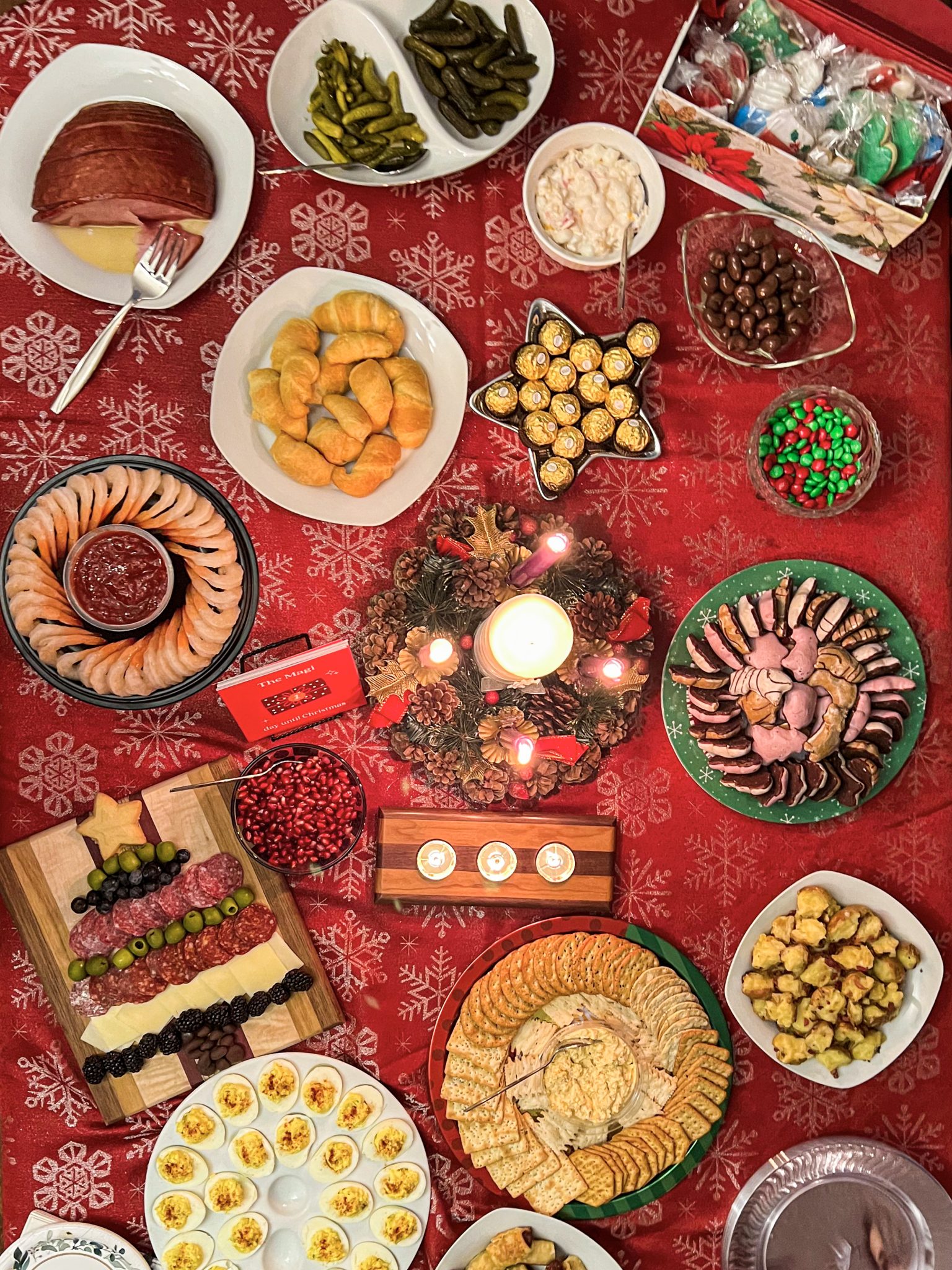
The holidays are all about joy and togetherness—but sometimes things can get a little not so traditional on the traditional holiday, especially when family dynamics and co-parenting are in the mix. But don’t forget to breathe, you’ve got options. With a little creativity, you can keep the season merry while honoring your traditions.
My Story
Growing up, Christmas Eve dinner was the centerpiece of the holiday in my family—a night of warmth, laughter, and anticipation. After my mom remarried we didn’t keep it going. Dad was from the south, so regular Christmas dinner it was! But in Puerto Rico the Caribbean and many cultures throughout the globe, NocheBuena is a cherished tradition. Admittedly we just focused on a nice ham, rice and peans and things like that and even attended church. However, across the globe this is a really big deal. Here’s how different cultures make December 24th unforgettable:
Families gather late at night for a festive feast, often followed by Misa de Gallo (midnight mass).
Signature dishes: Roasted pork (lechón), tamales, bacalao, romeritos, and sweet treats like buñuelos. Drinks include ponche and coquito.
Known for the Feast of the Seven Fishes, Italian families abstain from meat and enjoy a lavish seafood dinner.
Signature dishes: Baccalà (salted cod), calamari, clams, and pasta with seafood.
A symbolic meal with 12 meatless dishes, starting when the first star appears. Families share oplatek wafers and blessings before dinner.
Signature dishes: Pierogi, beet soup (barszcz), carp, and poppy seed desserts.
A grand late-night feast featuring luxurious dishes.
Signature dishes: Oysters, foie gras, roasted meats, and bûche de Noël (Yule log cake).
Families gather for a traditional supper steeped in Catholic tradition.
Signature dishes: Salted cod (bacalhau), boiled potatoes, and seasonal sweets.

In Sweden, Norway, and Denmark, Christmas Eve dinner includes a smorgasbord of hearty dishes.
Signature dishes: Pickled herring, ham, meatballs, and rice pudding.
A vibrant celebration after midnight mass, filled with family and festive cheer.
Signature dishes: Lechon (roast pig), queso de bola, ham, and sweet desserts.
Why Christmas Eve?
For many Catholic and Orthodox traditions, Christmas Eve marks the vigil before Christ’s birth, making it a spiritually significant time for family gatherings and feasting.
Tip: If you celebrate Christmas Eve dinner, share your favorite dish or tradition in the comments! What makes this night special for you?

Pineapple-Glazed Christmas Ham (Hamon de Bola)
Dulce de Noche Buena (Colombian Dessert Platter)
Coquito (Puerto Rican Coconut Eggnog)

By Haven Adisa

The dream of owning a home is elusive for many—but not for this Cleveland mother, who gets the surprise of a lifetime.
“Throwback to a story that still warms the heart…”
Sometimes the most inspiring moments deserve to be revisited. This Cleveland mother’s journey reminds us that kindness never goes out of style—and that the dream of homeownership can change lives in ways we’ll never forget.
For countless families, the dream of homeownership feels like a distant horizon—something hoped for but rarely within reach. Yet, every so often, life delivers a moment so extraordinary that it reminds us of the power of kindness and the beauty of second chances.
Homeownership isn’t just about having a roof overhead. It’s about stability, security, and the promise of new beginnings. It’s about children having a place to grow, laugh, and dream. And in this case, it’s about a community coming together to make the impossible possible.
In a world often overshadowed by division and hardship, stories like this shine like beacons of hope. They remind us that generosity still exists, that strangers can become heroes, and that sometimes, the greatest surprises come when we least expect them.
So, if you’ve ever doubted the goodness in people, let this story restore your faith. Because when kindness meets opportunity, lives are transformed—and dreams come true.
Keep Believing In Your Dreams Because You never know who’s watching.
In a world where shortcuts are tempting, doing the right thing—even when no one notices—can lead to unexpected rewards. Life has a way of honoring quiet integrity. Just ask the TSA workers who showed up, did their jobs with excellence, and were surprised with bonus checks—bringing them one step closer to dreams like owning a home.
My wish is that the gift and responsibility of homeownership can be made possible for many. For too many people who have waited for generations to get a leg up–it is time that by hook, crook, or the kindness of strangers that families can experience the American dream.
“Now our struggle is for genuine equality, which means economic equality. For we know now that it isn’t enough to integrate lunch counters. What does it profit a man to be able to eat at an integrated lunch counter if he doesn’t have enough money to buy a hamburger?”
Dr. Martin Luther King Jr., speaking to sanitation workers in Memphis, March 18, 1968
Homeownership is a true gateway to equity and a step forward for generational wealth and legacy for families. Sometimes, the seeds we plant in secret bloom into blessings beyond imagination.
If you’re inspired by stories of generosity and new beginnings, here are some incredible organizations and programs in Maryland working to make homeownership possible for more families:
Builds and preserves affordable homes in Montgomery and Prince George’s Counties. Families contribute “sweat equity” and receive affordable mortgages, creating stability and community.
🔗 Learn more
A nonprofit developer offering HUD-approved homeownership counseling, foreclosure prevention, and affordable housing development in Prince George’s and Montgomery Counties.
🔗 Learn more
Advocates for expanding affordable housing opportunities through education and collaboration with local partners.
🔗 https://mdahc.org
Focuses on affordable housing development and rehabilitation for low-income families across Central Maryland.
🔗 https://habitatchesapeake.org
Statewide program offering 30-year fixed-rate mortgages, down payment assistance, and special options like SmartBuy 3.0 (helps pay off student debt) and HomeAbility (for buyers with disabilities).
🔗 https://mmp.maryland.gov
Tip: Many of these organizations also offer financial education, credit counseling, and community support—key steps toward building generational wealth and stability.
“Do you believe homeownership is still the American dream? Why or why not?”
Share this story and inspire someone today—because kindness creates ripples.

By Chiara Luz

This past weekend I picked up a gingerbread house from Costco. It was too sweet of a deal to pass up at only $13.99. A little girl who was with her mom saw it in my cart and said, “A gingerbread house, Mom—no fair!” Her mother started to head over to the aisle after I told her the price.
I had fun putting it together with my daughter. There were some gingerbread people in the front of the house that seem to have gone missing (hmm) — I wonder how that happened! But I love making traditions with my family. I actually did not grow up putting together a gingerbread house, but a friend from my kid’s Catholic school kept giving me a kit and I finally got into it. If you are looking for a fun, no-stress activity, this is it. Plus, the icing is yummy.
Gingerbread dates back to medieval Europe, where it was a luxury treat made with honey and exotic spices. The first recorded English recipe appeared in 1390 in The Forme of Cury, written by the cooks of King Richard II.

A page from late 14th-century manuscript in the John Rylands Library, Manchester[a]
The idea of building houses from gingerbread started in 16th-century Germany, inspired by the Brothers Grimm fairy tale Hansel and Gretel. Side note: as a child my mom used to read me these very scary Grimm’s fairy tales as a kid. I think they liked to scare kids in the 80s. But anyway, German bakers turned this into an art form, and immigrants later brought the tradition to America. Today, decorating gingerbread houses is a festive way to combine creativity, sweetness, and family fun.
This medieval version was more like a spiced honey candy than a cookie:
Ingredients:
Instructions:
This treat was served at feasts and cut into diamonds—sweet, chewy, and spiced, a far cry from today’s molasses-based cookies!
So if you’re looking for a cozy holiday tradition, grab a kit, gather your loved ones, and make your own sweet memories.

By Haven Adisa
The other day, my daughter came home from school with tears in her eyes. Her classmates had told her, “There’s no Santa Claus.” She looked at me, searching for answers, and in that moment, I realized this was more than a question about a man in a red suit—it was about the magic and meaning of Christmas.
So, I sat her down and told her the truth: Santa Claus is real—but not in the way you think. He lives in the spirit of generosity, kindness, and joy that has been part of Christmas for centuries.
People often assume Christmas has been celebrated since the birth of Christ. In reality, it wasn’t an early Christian holiday. According to historical records, celebrations of Christ’s birth began around 200 AD, and by the 4th century, churches agreed on December 25 as the official date. Why that date? Some link it to the Roman festival Saturnalia, others to Jewish traditions. Over time, elements from pagan winter festivals—like gift-giving, greenery, and feasting—blended into Christmas.


In Nigeria, Christmas is a family-centered celebration filled with color and music:
One thing I love to do is eat on Christmas. I love to make Jollof rice with a nice crunchy salad and then top it off with a sweet and delicious Puff-Puff. I inherited these recipes, but I will gladly pass them on. They’re like little yummy donuts and they’re great to leave Santa. Here is the recipe:
To make Puff Puff, follow these steps:


 | Chiara "Luz" Atoyebi on Nicole. |
 | Albert E. Dogbe; a 2… on Nicole. |
 | Charli Renee on The Advice I Needed Back Then |
| Chiara "Luz" Atoyebi on St. Martin de Porres |
 | Enlarge My Heart in… on St. Martin de Porres |


