Posted on Leave a comment

Is buying refurbished electronics better for the planet than buying brand new ones?             

According to the United Nations Environment Programme (UNEP), the world produces some 50 million tons of electronic waste each year, and the figure is increasing. Meanwhile, only 20 percent of this electronic waste is disposed of properly. The remaining 80 percent is either sent to landfills, incinerated or illegally traded, resulting in a host of environmental problems including groundwater pollution, reduced air quality and the depletion of virgin natural resources to replace discarded items. As a result, buying refurbished electronics is a step in the right direction.

The U.S. Environmental Protection Agency (EPA) reports that buying refurbished electronics can significantly reduce the environmental impact of electronic waste. The EPA estimates that for every million smartphones that are refurbished and reused, approximately 35,000 pounds of copper, 772 pounds of silver, 75 pounds of gold and 33 pounds of palladium can be recovered. This is a considerable number of valuable resources that can be conserved by buying refurbished electronics.

Refurbishing electronics not only conserve resources but also helps reduce greenhouse gas emissions by as much as 50 percent, according to the EPA. This is because the production of new electronics requires a lot of energy, and greenhouse gas emissions are generated during the manufacturing process. “Most of the pollution that’s made actually is in the manufacturing of the device, not the use,” says Lucas Gutterman of the non-profit public interest group, U.S. PIRG. “So buying refurbished and using things for as long as we possibly can, really helps protect the environment.”

Buying refurbished is also good for the pocketbook, given that they cost less. But is the savings worth it? Refurbished items sold by reputable retailers undergo tests and inspections to ensure that they meet the same quality standards as new items. According to the Consumer Technology Association (CTA), a trade association for the consumer electronics industry, buyers should look for refurbished electronics that come with a warranty that assures that the item has been thoroughly vetted and is of high quality.

“Some credit card companies will extend coverage on refurbished goods, too, as long as they come with a preexisting warranty,” notes Consumer Reports’ Yael Grauer. Another smart consumer tip is to always check the return policy on a refurbished item before hitting the “buy” button. “It might take you a little while to notice poor performance and defects in a refurbished product, so it helps to have at least one month to decide whether you want to keep it,” adds Grauer.

Apple, Dell, Amazon, Walmart and BestBuy are among the large companies that sell many refurbished electronics with limited warranties and a return policy. Dozens of other smaller resellers (e.g., Refurb.io, Gazelle, TechForLess, RefurbMe, etc.) also specialize in refurbished products and typically offer similar if not better terms for consumers. “Buying refurbished products positively impacts the environment by boosting the circular economy, lowering the replacement cycle, reducing carbon dioxide (CO2) emissions, avoiding additional e-waste, and reducing energy and fuel consumption,” says Simo Elalj of RefurbMe. “You do this by giving a new life to a pre-owned device.”

*Note: This EarthMonth Earth Talk is taking over my website in order to educate my readers on climate change and our environment. Get up to speed with this epic series. 

Text

Description automatically generated

CONTACTS: U.S. PIRG, pirg.org; Consumer Technology Association, cta.tech; Refurb.io, ca.refurb.io; Gazelle, gazelle.com; TechForLess, techforless.com; RefurbMe, refurb.me.

EarthTalk® is produced by Roddy Scheer & Doug Moss for the 501(c)3 nonprofit EarthTalk. See more at https://emagazine.com. To donate, visit https://earthtalk.org. Send questions to: question@earthtalk.org.

Posted on 1 Comment

EarthTalkQ&A:How Can We Harness The Power of AI To Fight Climate Change?                                    

Photo by Nicholas Doherty on Unsplash

No doubt, artificial intelligence (AI) has the potential to play a significant role in addressing the challenges posed by climate change. One way that planners are already utilizing AI is for so-called predictive modeling about the potential impacts of climate change on different regions and ecosystems to help identify areas that are most vulnerable and prioritize mitigation and adaptation efforts. AI algorithms’ ability to process decades of historical weather and climate data and crunch the numbers make it far superior at predicting the future than a few humans could ever be. (But at least we still need to be here to program the AI and interpret the results.)

Another way AI is already playing a role in reducing emissions is by helping optimize energy use and other systems in buildings, transportation systems and industrial processes. To wit, optimized manufacturing processes have led to reductions in greenhouse gas emissions at individual factories and other industrial facilities by as much as 40 percent. Direct carbon emissions from the manufacturing sector account for almost one-quarter of all U.S. greenhouse gas output; finding ways to trim back emissions therein could mean significant reductions in our overall national carbon footprint.

The ability of AI software to continuously optimize industrial processes means that the companies that employ such technology can reap a whole host of benefits beyond greenhouse gas emissions reductions, including increased yields, reduced waste, faster design iteration and less energy consumption—all which result in lower costs and higher profits. Meanwhile, AI is also in use to help industrial facilities still burning fossil fuels to monitor and optimize carbon capture and storage systems to make our dirtiest facilities do less damage.

AI is also optimizing our capture and storage of energy from renewable sources. Hydroelectric systems are using AI tools to optimize water levels according to seasonal needs and other factors. Wind farms and solar arrays are employing AI systems to improve their efficiency and reliability which in turn makes them easier to scale as market demand dictates.

And yet another recent application of AI in the fight against climate change is monitoring and tracking deforestation by analysis of satellite imagery; this kind of climate surveillance can help detect and prevent illegal logging—and the loss of critical carbon sinks—in real time. Conservation groups like Global Forest Watch, Conservation International and World Resources Institute have pioneered various uses of AI to analyze satellite and/or drone imagery to map and monitor forests “on the fly” so to speak.

While the climate crisis is more dire than ever these days, environmental advocates and others are keeping their fingers crossed that we can realize the potential power of AI to rein in emissions in time before things get outright cataclysmic.

*Note: This EarthMonth Earth Talk is taking over my website in order to educate my readers on climate change and our environment. Get up to speed with this epic series. 

Text

Description automatically generated

CONTACTS: AI Is Essential for Solving the Climate Crisis, bcg.com/publications/2022/how-ai-can-help-climate-change; World Resources Institute, wri.org; Conservation International, conservation.org; Global Forest Watch, globalforestwatch.org/.EarthTalk® is produced by Roddy Scheer & Doug Moss for the 501(c)3 nonprofit EarthTalk. See more at https://emagazine.com. To donate, visit https://earthtalk.org. Send questions to: question@earthtalk.org

Posted on Leave a comment

EartTalk Q&A: Have Scientists Been Able To Definitively Prove Links Between Global Warming and More Extreme Weather Phenomena In Recent Years, Or Is This Still Just A Theory?

Caption: Skeptics say you can’t prove anything, but climatologists beg to differ when it comes to proving links between extreme weather and climate change. Credit: George Desipris, Pexels.

The question of whether science has been able to prove, let alone prove definitively, the connection between climate change and extreme weather is a very tricky one. This is because science is always reluctant to deal in certainty. “You can never have 100 percent proof of anything. There will always be doubt,” reports Jack Fraser, an Oxford-trained astrophysics Ph.D. at the Wellcome Sanger Institute. “Proof can only exist when there is no doubt, and there is always doubt. You could be a brain in a vat, living in a crazy simulation. You could be hallucinating everything. You cannot prove anything.” 

Despite this embedded doubt in all things scientific, researchers have opened up a new branch of science called ‘Extreme Event Attribution’ in an attempt to work out the extent of man-made climate change’s culpability. To discern this, scientists begin by setting criteria for what made the event extreme. They then turn to historical climate records and make comparisons with other similar events, checking them against the same criteria. They are looking for a change in the intensity or frequency of a certain extreme event. 

If they find a change, they then work out what caused it. To do this, they use models. There are many different types of models; one example is creating two virtual worlds with exactly the same conditions, except one is pumped full of greenhouse gasses. These simulations then create thousands of weather scenarios allowing a direct comparison between the polluted world and the non-polluted world. The difference between the two suggests man-made climate change’s culpability in certain weather events. 

Although new, this form of science has already gone as far as science permits into proving the role of climate change in certain extreme weather events. “The vast majority of extreme weather events reviewed by researchers since 2011 – 70 percent – were shown to be more likely to occur, or were made more severe, because of global warming,” Eric Roston and Brian Sullivan report in The Washington Post.

Take the floods in Pakistan in 2020, for instance. The World Weather Attribution scientists say that their “evidence suggests that climate change played an important role in the event, although our analysis doesn’t allow us to quantify how big the role was.” And Frederike Otto, a climatologist from Imperial College London, said that “the fingerprints of global warming [were] evident” in the disaster. 

Extreme Event Attribution is a particular science that works on a case-by-case basis, but the trend is clear. Seventy percent of extreme weather events were made more likely or more damaging by man-made issues. Definitive proof will never be offered by science, but most studies point in the same direction: towards global warming.  

CONTACTS: NASA Vital Signs: Sea Level, climate.nasa.gov/vital-signs/sea-level/; “There’s No Such Thing As Proof In The Scientific World – There’s Only Evidence,” forbes.com/sites/quora/2017/12/14/theres-no-such-thing-as-proof-in-the-scientific-world-theres-only-evidence/; “How Science Links Global Warming To Extreme Weather,” washingtonpost.com/business/energy/how-science-links-global-warming-to-extreme-weather/2022/07/18/80b19e1a-06ca-11ed-80b6-43f2bfcc6662_story.html

*Note: This EarthMonth Earth Talk is taking over my website in order to educate my readers on climate change and our environment. Get up to speed with this epic series. 

Text

Description automatically generated

EarthTalk® is produced by Roddy Scheer & Doug Moss for the 501(c)3 nonprofit EarthTalk. See more at https://emagazine.com. To donate, visit https://earthtalk.org. Send questions to: question@earthtalk.org.

Posted on Leave a comment

EarthTalk Q&A: I’ve heard that gas stoves are bad for indoor air quality, but what about gas furnaces and other gas-powered appliances typically found in homes?

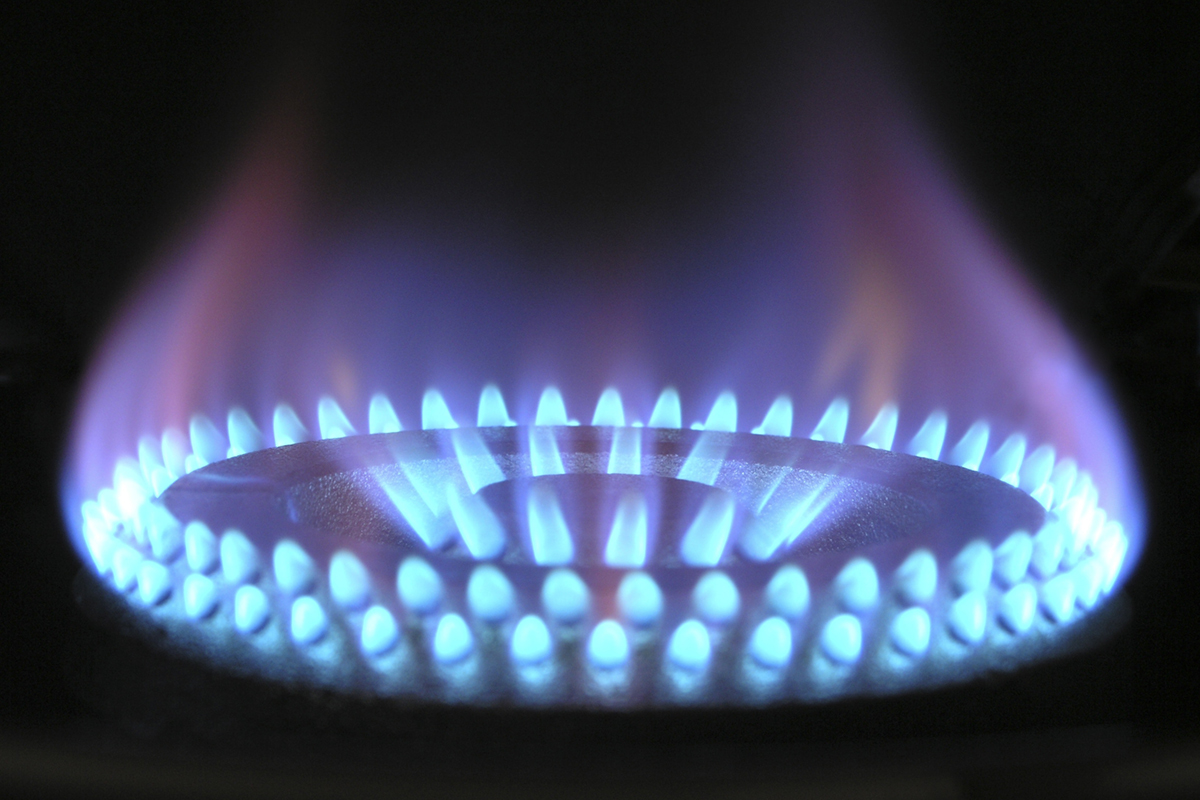
Recent revelations about the negative effect cooking with gas can have on indoor air quality have given rise to new concerns about other gas-powered appliances. Credit: Pexels.

Natural gas is almost as ubiquitous an energy source in American households as electricity. Indeed, 48 percent of U.S. homes stay warm with gas-powered furnaces while 38 percent do their cooking with gas. But recent revelations about the negative effect cooking with gas can have on indoor air pollution has given rise to new concerns about other types of gas-powered appliances inside our homes as well.

Gas cooktops may be the biggest offender given how much pollution they throw off when we use them, but gas-powered ovens, water heaters, clothes dryers and fireplaces are also worthy of concern. Gas-powered appliances emit carbon monoxide (CO), a colorless, odorless gas that, when inhaled, can cause headaches, dizziness, nausea—even death in high concentrations. Modern furnaces and appliances have safety features to prevent dangerous levels from building up, but they can still emit small amounts of CO.

Another concern with gas-powered appliances is the emission of nitrogen dioxide (NO2). NO2 is a reddish-brown gas that can irritate the eyes, nose and throat. It can also exacerbate respiratory conditions such as asthma and bronchitis. Gas stoves are the primary source of indoor NO2, but gas furnaces and other gas-powered appliances can also produce it. Gas-powered appliances also emit particulate matter (PM), another type of indoor air pollution. PM is a mixture of tiny particles that can be inhaled deep into the lungs. Exposure to PM can cause respiratory and cardiovascular problems, particularly in vulnerable populations such as children, the elderly and those with pre-existing health conditions.

To minimize the negative effects of gas-powered appliances on indoor air quality, it is important to properly maintain and ventilate them. Regular maintenance, such as cleaning and replacing filters, can help ensure that appliances are running efficiently and emitting fewer pollutants. Additionally, proper ventilation can help remove pollutants from the air. Ventilation can be achieved by opening windows or using exhaust fans that vent to the outside.

Another option for reducing indoor air pollution from gas-powered appliances is to switch to electric varieties instead. Electric stoves and furnaces do not produce CO or NO2, and they emit far less PM than gas appliances. While electric appliances may have higher upfront costs, they can be more cost-effective over time due to lower operating costs and reduced maintenance needs.

If you are designing a new home from scratch, it’s a no-brainer these days to choose appliances powered by electricity not gas. But most of us don’t have that luxury, and it’s not easy to decide if it’s worth the expense and hassle of switching out an old gas-powered appliance with a shiny new electric one. The bottom line is “if it ain’t broke, don’t fix it” as swapping out an old one for a new one generates more pollution overall thanks to the lifecycle costs of manufacturing. But if your old appliance has reached the end of its useful life anyway, changing to an electric one may well be the best move.

*Note: This EarthMonth Earth Talk is taking over my website in order to educate my readers on climate change and our environment. Get up to speed with this epic series.

CONTACTS: Gas stoves can generate unsafe levels of indoor air pollution, vox.com/energy-and-environment/2020/5/7/21247602/gas-stove-cooking-indoor-air-pollution-health-risks; Gas stoves pose health risks. Are gas furnaces and other appliances safe to use? /yaleclimateconnections.org/2023/03/gas-stoves-pose-health-risks-are-gas-furnaces-and-other-appliances-safe-to-use/.EarthTalk® is produced by Roddy Scheer & Doug Moss for the 501(c)3 nonprofit EarthTalk. See more at https://emagazine.com. To donate, visit https://earthtalk.org. Send questions to: question@earthtalk.org

Posted on Leave a comment

Earth Talk Q&A: Are the famous Joshua trees of the California desert really going extinct? What can we do to preserve them?

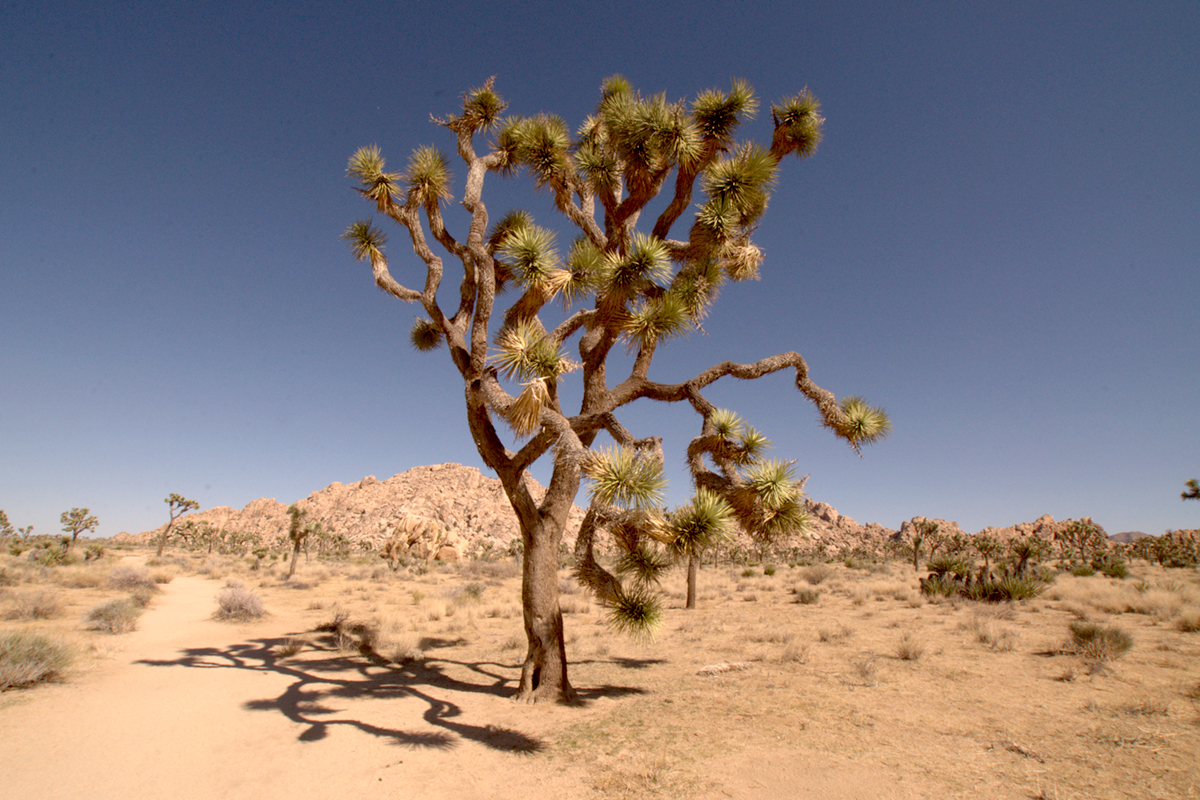
Boy Scout Trail, Joshua Tree National Park, California, US

The Joshua tree is an iconic species of the Mojave Desert that stretches across parts of southeastern California, Nevada, Arizona, and Utah. Known for its resilience in an unforgiving desert climate, the Joshua tree is unique in its unusual anatomy and adaptable ecology, but its future looks bleak in the face of increasing global warming.

Indeed, increasing temperatures and decreasing precipitation thanks to climate change have shifted the suitable habitat for a variety of flora and fauna around the world, including the Joshua tree. Biologists fear that little of the Joshua tree’s historical range will be suitable for it within a century. By 2100, climate models show that Joshua Tree National Park will lose the majority of its suitable habitat for its namesake species. The increasing severity and frequency of forest fires pose a threat to the future of the trees as well. Because Joshua trees did not evolve with fire, they are not adapted to its effects, making it difficult for the population to bounce back after such a disturbance. As temperatures increase, biologists predict that the suitable range for Joshua trees will move northward. However, this northward range is not guaranteed to be viable, as the Yucca moth that pollinates Joshua trees does not live up there.

Given the threat to Joshua trees, several entities have embarked on campaigns to try to save the iconic tree. The National Park Service recently embarked on a campaign to protect the tree’s remaining habitat in Joshua Tree National Park, Mojave National Preserve and Death Valley National Park. Meanwhile, researchers and conservationists launched the Joshua Tree Genome Project in 2020 to collect and monitor data from both professional and citizen scientists in an effort to map and monitor existing populations. Project organizers hope to use the data to inform conservation planning by identifying Joshua tree populations best situated to benefit from conservation protections. Yet another effort to help Joshua trees comes from the Mojave Desert Land Trust, which recently launched a planting program to restore lost habitat for the trees across the Mojave.

Public education about the importance of saving threatened species is also key to saving Joshua trees. To wit, the non-profit Joshua Tree National Park Association is working to educate the public about the importance of Joshua trees and the threats they face through free educational programs and resources for visitors to Joshua Tree National Park.

Yet while Joshua trees were granted temporary protection under the state of California’s endangered species laws, they are as yet unprotected at the federal level. As such, the non-profit Center for Biological Diversity has petitioned the U.S. Fish and Wildlife Service to protect the Joshua tree under the Endangered Species Act.

CONTACTS: Joshua Tree Genome Project, joshuatreegenome.org; Saving Iconic Joshua Trees, chicagobotanic.org/blog/plant_science_conservation/saving_iconic_joshua_trees; California Commission Deadlocks on Protecting Western Joshua Trees as Threatened Species, biologicaldiversity.org/w/news/press-releases/california-commission-deadlocks-on-protecting-western-joshua-trees-as-threatened-species-2022-06-16/.

*Note: This Earth Month I am proud to feature the Earth Talk Q&A from the Editors of E-The Environmental Magazine*

EarthTalk® is produced by Roddy Scheer & Doug Moss for the 501(c)3 nonprofit EarthTalk. See more at https://emagazine.com. To donate, visit https://earthtalk.org. Send questions to: question@earthtalk.org.

Posted on Leave a comment

EarthTalk Q&A: What exactly is permaculture and how is it good for the environment?                                                            

Community planners have turned a desolate patch of desert onto a thriving organic farm at Habiba in Egypt by applying the principles of permaculture. Credit: Habiba Community.

A buzzword in sustainability circles, permaculture—historically combining “permanent” and “agriculture”—describes ecologically-conscious farming to create sustainable ecosystems for future generations, using methods such as conservation tillage, proper drainage, and polyculture (growing more than one crop species in the same space, at the same time). The Australian organization Permaculture Visions notes that “natural energies… [and nature’s eight] reliable patterns that collect, store and move resources around” make it possible for humanity to use less energy to create comfortable living.”

More recently, the word combines “permanent” and “culture” to describe sustainable land use in general, especially in ways that prioritize the knowledge of indigenous peoples. The podcast Green Dreamer has highlighted numerous indigenous voices offering ways to reframe the discussion of nature, permaculture and humanity’s potential responses to the climate crisis. The publication Tenth Acre Farm describes its aim as “working with nature to be low maintenance and highly productive.”

Simply put, permaculture is a method of cultivation that uses multiple tools to minimize human impact on the environment by mimicking the zero-waste feedback loops of naturally-existing systems. Much of permaculture is guided by three ethics and several major principles that help us to be good eco-stewards and support ourselves with native species, while disturbing the least amount of land. It introduces the idea of human responsibility in maintaining ecosystems, encourages greater consideration of the impact of human activities on the environment, and reduces waste associated with production intended only for sale.

The Habiba Organic Farm in Egypt puts these principles into practice, converting a former desert settlement, where crops are difficult to grow, to arable land on which many desert-viable plants have been cultivated. Similarly, in India, coconut trees, neem trees and legumes were planted to diversify areas that had been subject to slash-and-burn agriculture for 20 years. Among most current permaculture programs, resilience (especially to growing threats of climate change), cooperation and educational/volunteering opportunities are key elements that define the project and connect it to the permaculture ethos.

Designing irrigation that allows water to seep slowly into soil across a large area prevents soil erosion and nutrient leaching. Similarly, composting and reusing “waste” products reduces pollution and improves soil quality. Readers interested in beginning their own permaculture projects (even home gardens) can start by observing their own land to determine land patterns, plant native species, collect rainwater and runoff, and carefully compost their home “waste” (vegetable peels, coffee grounds, eggshells, etc.). “Permaculture site design follows a multi-step process, which starts with observing the landscape through a specific set of both passive and active observations… [and using maps to] think through many possible scenarios and outcomes before [committing] to certain strategies or concepts”, as Tenth Acre Farm puts it.

In a more general sense, permaculture can be incorporated into people’s daily lives in simple ways that identify activities which drain lots of energy and redirecting that energy into productive activities.

CONTACTS: Permaculture Visions, permaculturevisions.com; Green Dreamer, greendreamer.com; Habiba Organic Farm, habibacommunity.com.

EarthTalk® is produced by Roddy Scheer & Doug Moss for the 501(c)3 nonprofit EarthTalk. See more at https://emagazine.com. To donate, visit https://earthtalk.org. Send questions to: question@earthtalk.org.
*Note: This Earth Month I am proud to feature the Earth Talk Q&A from the Editors of E-The Environmental Magazine*

Posted on 3 Comments

My Lovely Food Montage of 2022 Highlights

Continue reading My Lovely Food Montage of 2022 Highlights

Posted on Leave a comment

Can We Admit That “So Tell Me About Yourself? And “What Do You Do?” Are Some Of The Most Banal Interview Questions In Our Repertoire To Date? Let’s Change That.

“I do a lot of things and I my mind is a vast ocean, what exactly would you like to know?”

Chiara Atoyebi
Photo by Christina @ wocintechchat.com on Unsplash

The other day, I was in an interview, and everything was going well. There was a natural banter linking our commonalities like, “I like to wake up early and exercise. You do too? Great!” or “Oh wait, I like black coffee as well. No way!”

“Yes!”

But I knew the conversation would eventually delve into the dreaded exploration of of—me. How do I feel, and how do I think I can bring a program to life?


Let me start by saying that interviewing well is a skill. I like to think of it as a long form of elevator pitch. While the elevator pitch is used for entrepreneurs and creators like me, it still is the same principle when interviewing.

“So Chiara, tell us about yourself?”

Almost immediately, I could feel my fingers tremble in my lap. My mind immediately says, isn’t that what we were doing when discussing my morning ritual? What more can I say?

It’s not like there was nothing I could say, but the reality is that the question is so general, and it leaves a lot open to interpretation, not only for the person answering the question, but for the person asking. Depending on when you are being asked, you may be tempted to divulge your passion for reading and Korean dramas when they really want to know how you can increase profit margins and bond with your colleagues.

In a way, stepping out of a natural repoire with anyone and directing them to have a conversation that can veer into the inauthentic positioning of “tell me about yourself.”

Legit Tips and Tricks From Dad

Hearing that question always brings my mind back to when my dad was coaching me on my first interview. Although I can’t divulge all of his tips (dad wanted me to use everything in the arsenal), I can confidently say that they still ring true today. His winning formula primarily centered around being self-effacing and ready to support members of an organization. I’m sure many people follow a similar plan of action, and you can’t go wrong with that.

Being able to” tell about yourself” requires being self-aware and finding an interesting way to talk about yourself that doesn’t make your eye twitch. (you know this can happen if you’re nervous!)

So, is the key to acing this question anticipating what the interviewer wants to hear based on how well you’ve researched their company? Or is it simply providing honest answers?

According to a 2022 study from Zippia on interview statistics, the average corporate jon attracts 250 applicants and only four to six individuals get called for the interview. Roughly 33% of interviewers decided if they want to hire a candidate within the first 90- seconds of an interview.


I always think you can’t go wrong with an honest answer. It’s easier to have meaningful responses and to pull from a deeper well of experiences and information when you’re being yourself.


But, if you are looking for some standard tips and tricks for answering this age-old question, here you go:

Focus on your strengths: Talk about your skills and abilities that make you a good fit for the job. Use specific examples to showcase your strengths and how they relate to the position you are applying for.

Share your experiences: Talk about your past experiences and how they have prepared you for this job. Discuss how you have learned and grown from these experiences.

Be honest about your weaknesses: It’s okay to talk about areas where you may struggle or need to improve. Be honest about these weaknesses, but also discuss how you are working to overcome them.

Show your passion: Discuss what motivates you and why you are interested in this particular job. Showing your passion for the position can demonstrate your commitment and enthusiasm.

Be yourself: Don’t try to be someone you’re not during the interview. Instead, be true to who you are and let your personality shine through. Authenticity is key to building a strong connection with the interviewer and showcasing your unique qualities.

If you feel your have more tips or comments. Leave me a message below. Thanks!

Posted on 3 Comments

The Hardest Goodbye I had To Say Was To My Five-Year Old

If I was any different than I am now, I honestly don’t remembfer. In my opinion if you met me within that last three years, it’s the better version, and we can go from there.

February 22 would have been my daughter’s 11th birthday. I only just now thought of it in terms of years passing. I also realized that this month was ok. I am doing quite well in a way that feels authentic. I am not putting on an affectation to present myself as something; I actively count my blessings. I’ve probably been here before. (Actually, I’m sure I have.)
It’s kind of like anticipating getting off the train, but there are a few more stops to go–but you want to be there already.

Going out, being with friends, moving about the world, and taking risks has been the best medicine. I had moments of being irritable that I immediately attributed to the fact that my daughter’s birthday was passing. But I count my blessings because I have not only felt my memory returning, but I’ve also felt grounded and even emotionally generous. All of this growth signifies that my changes are sticking.

Have you ever wondered about the heaven in the sky?

Have you ever wondered where do we go when we die? I never truly pondered this question because I’d always taken what was told to me at church at face value. I simply believed that all souls go to heaven after purgatory and ultimately we all worship at the footstool of the big throne in the sky. It wasn’t until I’d spent time at hospices and dealt with the reality of my own child’s passing that I began to inquire and encounter something that felt like it moved beyond fiction. It would during times of deep comtemplation, many of which I wrote about two years ago, that

NO ONE EVER REALLY DIES

Losing my daughter to a brain tumor was difficult. It was a sobering goodbye. More importantly, it made a person like me, who has been a lifelong Believer, leading by example, understand that I am human. Even though it is hard to understand, I really know what it’s like to be chosen because through suffering and complete surrender is where you will get the gift. Oftentimes, that’s when you are still enough and alone and broken enough to receive the keys to your real freedom: True Love. Love is power. There is no force more powerful.

A few hours before she took her last breath, I turned up her oxygen and imagined that she would have to keep breathing if the air was flowing through her lungs, but that was just one last effort to hold her. But my heart was ok with it all. I cherished every moment and took advantage of every resource to make memories, which also gave me peace. Although she was the one doing the heavy lifting with her diagnosis, she turned me into a warrior

It was just her and me, and it was also peaceful. If that means anything to anyone who may read this–your loved one begins to go before you see it. If you are lucky, you will be able to feel the “spirit,” or what I believe is a holy, benevolent, and peaceful spirit, fill the room. When this happens, you can see what it means when people say, “you come in to the world alone, and you go out alone.” Not only is it powerful to witness, but, it will give you a different perspective on life–you become fearless.

WOMAN LOST AND RUNS AWAY TO FORGET HER PAST

In reality I didn’t run, at least not physically, but I absolutely was not fully present. My memory, like my emotions, would go in waves. It took lots of painting to understand that I was grieving although I felt good. That I was more truamatized over watching the suffering and dealing with the emotional rollercoaster of cancer. The pain of feeling helpless and the pressure to be strong for others but even stronger for myself.

Not only did I learn that I am calm under pressure but I had the ability to carry others on my back during tragedy. I learned that when you surrender to your human limitations you access an unseen power. Like Maya Angelou describes our eyes open with a new clarity. For me, the eyes of my understanding first opened to compassion for me and others which is why I largely felt immense gratitude and hypersensitivity for years. It was through making papercrafts, collages, paintings and ceramics that I have learned what the root cause of so many things are for me.

The Otherside of This

Shortly after my daughter Calais passed, I had an intense desire to see where she went. I wanted heaven to be proven to me. I wanted to be shown the place where she went if it was real.

But I feel that through meditation and sheer spiritual pleading, I was shown the cosmos, and I could feel the energy. Although I could only go so far up, I felt this connection to stardust and the galaxy, and then this feeling of love washed over me, although I never saw my daughter out there physically. Yet when we talk about it from the “dust we come and the dust we return,” I feel they are referencing the cosmos.
And each day that I am painting and sewing, I tap into that energy. This practice also helps me write.

Ascending Into The Forever

When my daughter began to wind down and transition, she talked a lot about the moon. Then she saw her grandparents in her room. Finally, she said that Santa was coming and the last time she saw him he was with Mrs. Claus, and she said they had a present for me. All of this explaining to me and watching her gently ascend allowed me to feel so much peace. It was goodbye, yes, and it’s still beyond my comprehension. Yet, it never felt final because I saw her in my dreams. It felt like more of ellipses because she sent me her twin (my daughter Monarch).

So when you try to explain the inexplicable, it’s ok to know that sometimes you can’t. Knowing that you don’t have all the answers and that life can be senseless –signals the beginnings of true understanding.


Although it can be difficult, I learned from volunteering at a hospice and watching my grandparents transition that it is way more beautiful where they are going. They will tell you that if they see it. Although they are not with you in their flesh, they are probably right there with you, and you can feel them. So, even though my goodbye has been ongoing, in many ways, it still feels like she never left.

Posted on Leave a comment

“Slow Down, It’s Ok To Be A Kid” And Other Words of Wisdom I Would Tell My 16-year old Self

“This is how you smile to someone you don’t like too much; this is how you smile to someone you don’t like at all; this is how you smile to someone you like completely.”

Jamaica Kincaid, Girl

I discovered this long-lost photo in the shed behind a house we had been renting out, mixed in with torn-out pages and several notebooks and sealed envelopes, all from various moments of writing my morning pages.
I always think of my daughter when I look at pictures like these, many of which I haven’t thought about in years. She is the spitting image of me in many ways and a constant, yet beautiful, reminder of how fast time flies.


Outside of moving around almost every two years and attending four high schools in for years, I largely enjoyed high school. I never wanted to go back, and I never reminisced on it–but I wish I would have appreciated it more. I wish that I would have appreciated what it meant to be a child. But, I also feel I was raised to be responsible and not to make the same mistakes my mother did. For example, getting pregnant at twenty-one or at all! I didn’t smile alot until I left my highschool in Atlanta and moved to Korea. Korea was the place I felt I blossomed, and it changed the way I viewed life.

As amazing as Atlanta was, my family life during that time was going through alot of changes. I was beginning to see cracks in our foundation and even what it looked like to have two partners going for different goals. I think those were the moments in my life that shaped my ideas on family, traditions and what is truly important in life. I don’t often complain because financially everything was great. However, finances, common interests and even basic compatibility doesn’t make a perfect union–it’s all about values and vision. At least that is what I internalized things to mean. Also, my natural affinity towards helping and fixing situations caused me to believe that through perfection and high achieving I could not only be seen, but find ways to make everyone happy. I am sure alot of kids feel that way. Yet what they don’t know is that, adults are adults, and kids are kids. Children have limited capabilities and although they may be treated like an adult, they are not. We do this often in the Black community. We make little men and women out of our kids and skip over the one time in life they will have to be carefree.

I beliveve that the latter is the natural order of things. When we rob our kids of this natural step, I feel the result is many adults existing in a state of arrested development. They are often non committal, confused, self-focused and searching for things outside of themselves.

“We do this often in the Black community. We make little men and women out of our kids and skip over the one time in life they will have to be carefree.”

I feel like I came out of the womb an old soul. I was always thinking, planning and strategizing about things internally and was unable to share them with anyone. The girls and boys in my circle were not interested. That’s why at some point I began to identlfy with the Beneatha Younger character from A Raisin In The Sun. At the time, I felt she embodied the feeling of wanting to express your mind but being seen as an object. But, I think I was also comfortable in my “role.”

Moving to Korea and Ending My First Engagement

Free wedding rings

I remember when my mom said that we were moving to Korea right after I’d had the most epic year of being on the homecoming court and co-captain of the cheerleading squad it was horrible. My mother delivered the news with no compassion accep to say that when she was a child she had to move around and I just needed to deal with it. When I went back to tell my friends, they all got together to come up with ways that I could stay back. We racked our brains about who’d ever done this before and how I could stay back. I don’t remember who said it, but someone said “you don’t have to move away if your married?” I thought to myself, “yes, then I would be an adult. I could also emancipate myself like Drew Barrymore’s character in Irreconcilable Differences!” Someone must have passed the message on to my boyfriend who must have picked up some extra shifts from Piggly Wiggly because he someone proposed with a whole diamond. I’ll never forget it, because it came from Helzberg Diamonds and he spent all of his money.

That night I marched into my mom’s room to tell her I wasn’t going because I was engaged and getting married and I was going to live with Alicia and her mom. My mom sat in the bed barely looking up, so that’s when I showed her my ring.

“What is that?” she laughed.

“I told you, I’m getting married.” By that time my dad walked in ready to co-sign whatever she said. My mom rolled her yes.

“Thats a promise ring and you’re still leaving.”

Over the next few months before I left I cried almost daily. Ultimately she was right. I went on to have a unique experience that changed me. I had the best year ever. I worked with dignitaries, officials, Korean businessman, and celebrities through my job at the Dragon Hill Lodge. I did not get married, and I don’t even know where that sweet young man is, or who he became. I forgot about it quickly–because although I felt like I was an adult, I was a teen.

Now as a mother, I allow my kids to be kids. I also raise them similarly to the way I was raised because looking back, my mom, was the best mom for me. Like I am for my daughter.

Posted on 1 Comment

That One Christmas We Asked For Nothing And Got Everything

“Watching everyone relax in the environment I strive everyday to make cozy was the best gift I ever recieved.”

Chiara Atoyebi

The Christmas season in my house is always fun. I make it cozy, memorable, and filled with wonderful smells. My son got comfortable with his virtual school routine this year, and my daughter started hers, so they were used to finding their happiness indoors. In the spirit of generosity, I gave up one of the many spaces I claim in my house so my husband could move his office upstairs with the rest of the family—so we were comfortable. This past Christmas, the kids only asked for one thing a piece. They both only wanted a Sonic toy. I only wanted some fabric since I’m sewing as much as possible in my free time. The goal was to sew these dresses for myself, but I was having issues with my machine, and it was giving me so many problems that I needed help to keep up with my plans. Because of my machine, I had a low expectation that I would finish any projects before Christmas, and this year we were hosting family at our house, and I was hoping to wow everyone with my designs.

Well, needless to say, I was in for a huge surprise when I was given a huge box of dresses from my husband as an early Christmas gift. I almost protested because I wanted to make them myself, but they were so beautiful that I couldn’t say no. I appreciated the attentiveness with the gift because the dresses all have my required length (I like them long), and they ranged from casual to after-five attire. This Christmas, my children, who always get a lot of things, got so much that they were not expecting. But, the best gift for them was opening all their presents with their aunts, cousins, and other family members in one place instead of traveling from house to house. I know the grandparents appreciated it as well. This Christmas, we took care of the food, the extended family took care of the gifts, and we all sat piled up in the family room watching movies, eating, and falling asleep over and over again. Watching everyone relax in my environment, where I strive each day to make it cozy, was the best gift I ever received.

Posted on Leave a comment

How To Write A Standout Recommendation Letter For Someone Who You May Not Fully Remember

Writing a recommendation is an honor for both the writer and the recipient. In this video, I give a few quick tips on organization, efficiency, and creating a quick template for highlighting your former intern, student, or employee’s character traits. Overall, you want to always end on a positive note and keep a warm business professional tone throughout the letter. I also have some funny storytelling but at minute 10 we get into the meat of it.

Drop your best tips in the comments for me.

Posted on Leave a comment

Top 3 Academic Apps To Help Elevate Your Writing

link.medium.com/ftkXni5gUwb

#academicapps #academic #ai #tech

Posted on Leave a comment

Digital Transformations How Women Are Forming Networks In The Metaverse And Shaping The Cultural Landscape

link.medium.com/wPH0SoYhPwb

#nft #digitalart #womenartists #metaverse