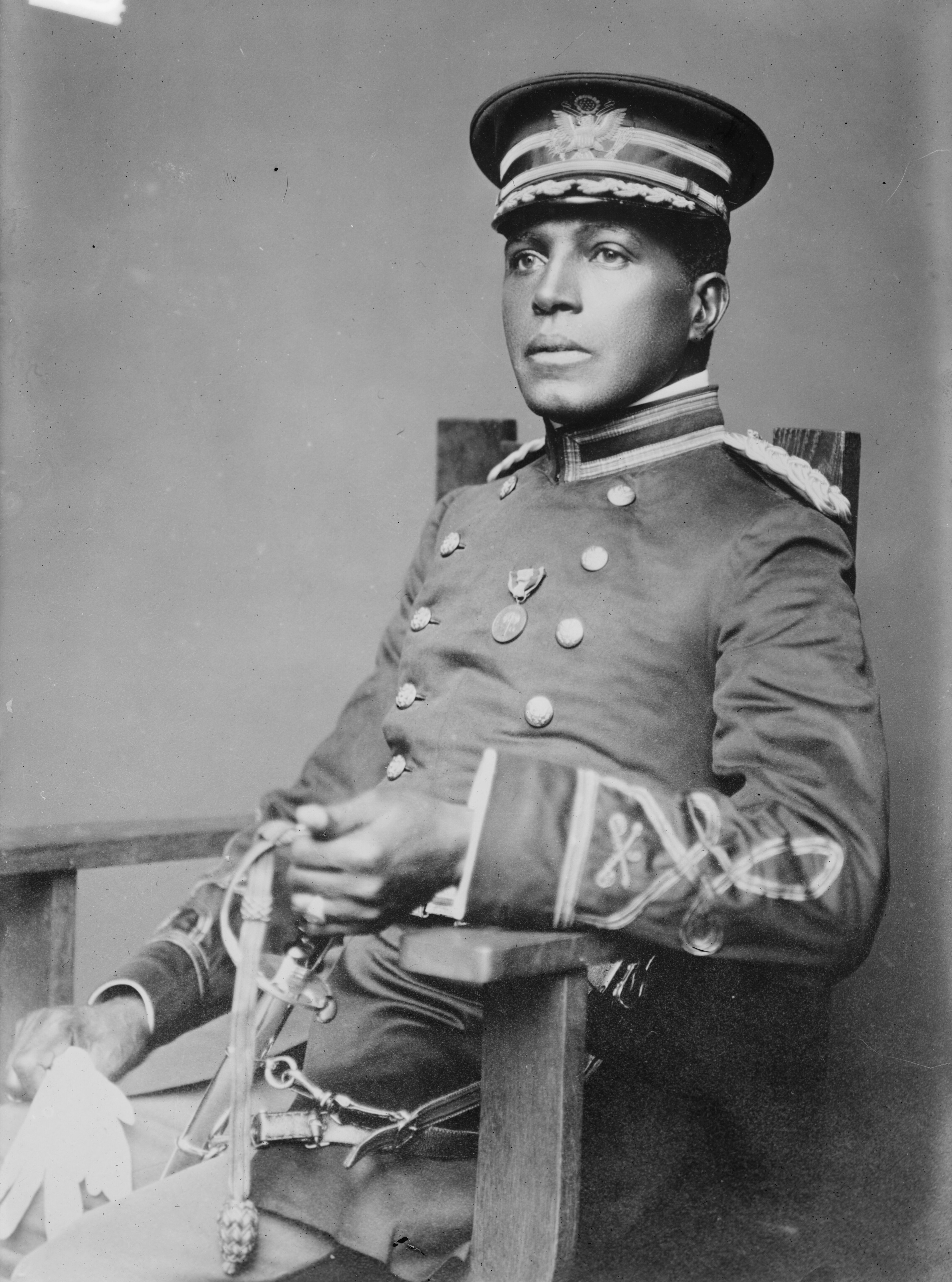
Colonel Charles Young United States Army image in the Public Domain
“The life of Charles Young was a triumph of tragedy.”
-W.E.B. Dubois
Colonel Charles Young (1864–1922) was one of the most accomplished military leaders of his generation and a pioneering figure in African American military history. Born in Kentucky to formerly enslaved parents, he rose from Reconstruction-era beginnings to become the third African American graduate of West Point (1889) and eventually the first African American Colonel in the United States Army.
Young served with distinction in the 9th and 10th Cavalry and the25th Infantry, the famed Buffalo Soldier regiments. His early career included years on the Western frontier, followed by a professorship at Wilberforce University, where he taught multiple languages and forged a lifelong friendship with W.E.B. Du Bois. You can view one of the letters here.
During the Spanish-American War, Young commanded troops in Cuba and the Philippines, including participation in the charge up San Juan Hill. In 1903, he became the first African American superintendent of a U.S. National Park, overseeing Sequoia and General Grant National Parks.
He continued to break barriers, leading the 10th Cavalry during the 1916 campaign against Pancho Villa and later serving as U.S. military attaché to Liberia. Despite being initially declared medically unfit for World War I service, Young famously rode 500 miles on horseback from Ohio to Washington, D.C. to prove his fitness and was reinstated.
Young died in 1922 while on assignment in Lagos, Nigeria. He was honored with military funerals in both Lagos and the United States, and was reinterred at Arlington National Cemetery in 1923, where Du Bois delivered his eulogy.
When it comes to African Americans taking control of their lives in any way that appears to reflect autonomy it becomes threatening. People coloring outside of the lines, going off of the beaten path, attempting to live outside of “groupthink” can appear suspect. However, a visionary’s job is to see what is coming and therefore it takes a few discerning individuals to be able to follow the signs of them that believe.
I have been on my spiritual path since the age of twelve. It began to shift into high gear at 13 and every five years thereafter. This last five years has been quite mind blowing in terms of intel and has caused me to finally answer the call by incorporating the wisdom of various interreligious elders with similar experiences as mine.
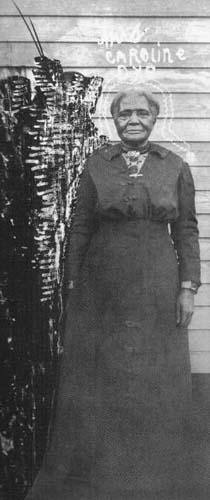
Pictured above is Aunt Caroline Dye. She was a 19th century healer, hoodoo woman, rental property investor, soothsayer, rootworker and conjuror from Arkansas. She was more like a prophet than a fortune teller and she used playing cards to keep her concentration straight. I have mentioned before in my writings, that it was a woman like this, and La Madama, that appeared in my home with a cleaning item ( a broom) pointing to cards on a shelf for me. At the time, I denied them. I was scared. Also, I felt it went against my beliefs. But as I studied the narratives of enslaved people in Puerto Rico, the Caribbean, the Sea Islands of America, Virginia, and the Carolinas–my people–we were the medicine women. We were the people with the answers. The people you don’t touch, even to this day. The day I touched my playing cards for myself, the sky looked brighter.
Since then, I have come into a oneness of self. I didn’t need to be “taught,” everything simply came to me. That’s the spirit of my heritage I am most proud of and a large part of what continues to change my countenance. I also believe that we need to be open spiritually and grounded in morality in order to discern and perceive resources and opportunities correctly. If not, we will continue to spin the wheel as we have always done. The salt of the Earth has produced many fruits but has eaten none and it’s time that has changed.
I love to travel and live in other countries. But there is no place like home. There is no place like America. As Americans, we are in the best place for opportunity. We are in the ripest season to rewrite and reshare all of the international dishes and cuisines at the table of opportunity and narrative history. The opportunity is here and the harvest is here. But, many of us are looking at the food and we can’t eat it. We can’t pick it up. We need to be reeducated and things need to be paced out. But first we have to clear our blocks and break our binds–daily. Every single day. That is why forgiveness is instant but healing takes time.
Although this work is not easy it is not necessarily arduous and you can have a good time doing it with family, culture and traditions. Remember these quotes by Mary Church Terrell and John F. Kennedy Jr.: “Lifting As We Climb” and “One person can make a difference, everyone should try.” Yes, that’s how I see it sometimes.
The Conjure Woman, by Charles W. Chestnutt is an interesting read. One that could almost echo todays societal voices.
The ancestors don’t desire for me to be as earthy as they were, but they do want me to help people as they did. Aunt Caroline drew people from all races to her seeking her wisdom and council. Many from over 400 miles away. I already get requests. Many more formal than I did in the past, and I like to imagine Aunt Caroline and many others watching over me.
Daily writing prompt
What aspects of your cultural heritage are you most proud of or interested in?
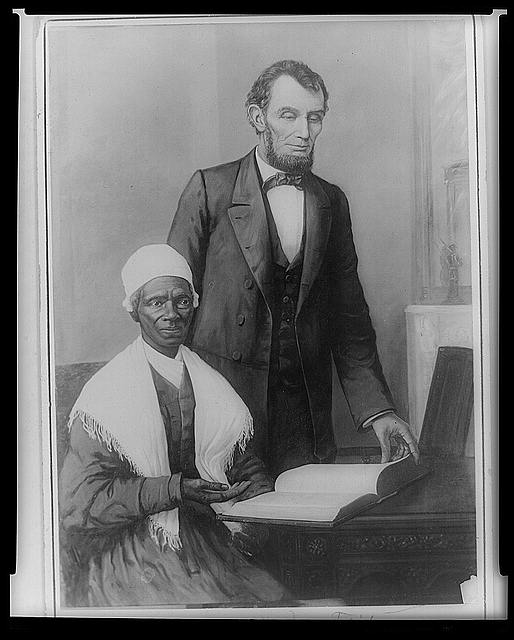
A. Lincoln showing Sojourner Truth the Bible presented by colored people of Baltimore, Executive Mansion, Washington, D.C. ca. 1893. Photograph.
“My name was Isabella; but when I left the house of bondage, I left everything behind. I wa’n’t goin’ to keep nothin’ of Egypt on me, an’ so I went to the Lord an’ asked Him to give me a new name. And the Lord gave me Sojourner, because I was to travel up an’ down the land, showing the people their sins, an’ bein’ a sign unto them. Afterwards I told the Lord I wanted another name, ‘cause everybody else had two names; and the Lord gave me Truth, because I was to declare the truth to the people.” (Harriet Beecher Stowe, “Sojourner Truth, the Libyan Sibyl,” Atlantic Monthly Apr. 1863, 478)
Sojourner Truth, also known as Isabella Baumfree, died on November 26, 2022. Her death had me thinking about the first time I heard her famous speech, “Aint I A Woman.” The interesting thing about history and conversations surrounding memory–is the grey area within the interpretation. For me, nothing can be interpreted fully without taking into account an individual’s sense of self and the psychological perspectives of the community at that time.
Historians have compared and proven the validity of different versions of Truth’s famous speech. Although there was no speech transcript during the convention, her remarks were recounted by abolitionists of the time. Truthfully, how they accurately created two full and different speeches from memory is impressive to me. Perhaps they took notes? Admittedly, something feels incomplete surrounding the information, and I will have to continue my research of the convention.
However, my initial interpretation of the speech was that she spoke on behalf of her race and on aspects of her womanhood. The reality is that Baumfree was an African woman born into slavery and treated as if she was not a woman in the same way her White counterparts. I often wondered if her laments made subtle jabs at the system and the women around her.
If the injustices of the past mirror the civil unrest and racial sentiments of today, it is understandable that Truth would convey her true feelings at the convention to some degree. In fact, this was a woman bold enough to run away from her enslavement.
Truth coming to the podium and stating Ain’t I Woman, would be a logical question placed towards people that had to be convinced of her humanity and womanhood. Moreover, it would all make logical sense considering the period of The Cult of True Womanhood (1820-1860) which raised White womanhood to virtue and purity, while subjugating Black womanhood to licentious stereotypes.
What if Truth’s baiting with the phrase Ain’t I A Woman, was her way of waking people up to her plight and the Truth of their own.
Woman’s Rights Convention, Akron, Ohio, May 28 and 29, 1851
According to the official transcript of the Ohio Women’s Convention at Akron, that took place in 1851 it was recorded that Sojourner Truth commented on education. The purpose of this convention and several others like it, came on the heels of the 1848 Seneca Falls Convention, which fought for women’s social, religious and civil rights. Elizabeth Cady Stanton opened the convention with these words:
“We are assembled to protest against a form of government, existing without the consent of the governed—to declare our right to be free as man is free, to be represented in the government which we are taxed to support, to have such disgraceful laws as give man the power to chastise and imprison his wife, to take the wages which she earns, the property which she inherits, and, in case of separation, the children of her love.” –Elizabeth Cady Stanton, Seneca Falls Convention 1848
Stanton, Elizabeth Cady. Elizabeth Cady Stanton Papers: Miscellany, -1946; Biographical data. – 1946, 1840. Manuscript/Mixed Material.
The need to fight for women’s rights were agreed upon by all women. The only question was who would obtain the rights first. Looking at history and reading the thoughts of the women in attendance at the time, you understand the importance of accepting all people today. If not, you subject them to inhumanity.
You can read the transcript from the convention on the Library of Congress website here. It’ s very interesting and delivers a litany of obvious reasons and examples of a woman’s right to equality, her wages, and her inherited property.
From The Sojourner Truth Project, you can compare the two speeches for yourself. Given the times, what do you think Sojourner meant? Which speech feels true to you?
Marius Robinson’s transcription: Published June 21, 1851 in the The Anti-Slavery Bugle
The oldest account of Truth’s speech that provides more than a passing mention of it was published by Marius Robinson on June 21, 1851 in the Salem Anti‐Slavery Bugle, a few weeks after the speech was given. This version was not the first published account of the Akron speech, but rather the first attempt to convey what Sojourner Truth said in full.
May I say a few words? I want to say a few words about this matter.
I am a woman’s rights.
(a) I have as much muscle as any man, and can do as much work as any man.
(b) I have plowed and reaped and husked and chopped and mowed, and can any man do more than that?
I have heard much about the sexes being equal; I can carry as much as any man, and can (c) eat as much too, if (d) I can get it.
I am as strong as any man that is now.
As for intellect, all I can say is, (e) if women have a pint and man a quart – why can’t she have her little pint full?
You need not be afraid to give us our rights for fear we will take too much, for we cant take more than our pint’ll hold.
The poor men seem to be all in confusion, and dont know what to do.
Why children, if you have woman’s rights, give it to her and you will feel better.
You will have your own rights, and they wont be so much trouble.
I cant read, but I can hear.
I have heard the bible and have learned that Eve caused man to sin.
Well if woman upset the world, do give her a chance to set it right side up again.
The Lady has spoken about Jesus, how he never spurned woman from him, and she was right.
When Lazarus died, Mary and Martha came to him with faith and love and besought him to raise their brother.
And Jesus wept – and Lazarus came forth.
And how came Jesus into the world?
(f) Through God who created him and woman who bore him.
(g)Man, where is your part?
But the women are coming up blessed be God and a few of the men are coming up with them.
But man is in a tight place, the poor slave is on him, woman is coming on him, and he is surely between-a hawk and a buzzard.
Frances Gage’s inacurate version: 23 April 1863 issue of the New York Independent
The most common yet inaccurate rendering of Truth’s speech—the one that introduced the famous phrase “Ar’n’t I a woman?”—was constructed by Frances Dana Gage, nearly twelve years after the speech was given by Sojourner at the Akron conference. Gage’s version first appeared in the New York Independent on April 23, 1863.
Well, chillen, whar dar’s so much racket dar must be som’ting out o’kilter.
I tink dat, ’twixt de niggers of de South and de women at de Norf, all a-talking ’bout rights, de white men will be in a fix pretty soon.
But what’s all this here talking ’bout?
Dat man ober dar say dat women needs to be helped into carriages, and lifted over ditches, and to have de best place eberywhar.
Nobody eber helps me into carriages or ober mud-puddles, or gives me any best place.
-And ar’n’t I a woman?
Look at me.
(a) Look at my arm.
(b) I have plowed and planted and gathered into barns, and no man could head me.
-and ar’n’t I a woman?
I could work as much as (c) eat as much as a man, (when (d) I could get it,) and bear de lash as well
-and ar’n’t I a woman?
I have borne thirteen chillen, and seen ’em mos’ all sold off into slavery, and when I cried out with a mother’s grief, none but Jesus heard
-and ar’n’t I a woman?
Den dey talks ’bout dis ting in de head.
What dis dey call it?
Dat’s it, honey.
What’s dat got to do with women’s rights or niggers’ rights?
(e) If my cup won’t hold but a pint and yourn holds a quart, wouldn’t ye be mean not to let me have a little half-measure full?
Den dat little man in black dar, he say women can’t have as much rights as man ’cause Christ wa’n’t a woman.
Whar did your Christ come from?
Whar did your Christ come from?
(f) From God and a woman.
(g)Man had nothing to do with him.
If de fust woman God ever made was strong enough to turn de world upside down all her one lone, all dese togeder ought to be able to turn it back and git it right side up again, and now dey is asking to, de men better let ’em.
Bleeged to ye for hearin’ on me, and now ole Sojourner ha’n’t got nothin’ more to say.
Mary Elliot Curator at the Smithsonian National Museum of African American History
On November 18th the Smithsonian National Museum of African American History and Culture launched a comprehensive interactive digital platform, the Searchable Museum. This is a visually engaging and dynamic platform that is intuitive for users. Upon the very first click, viewers are immersed within a labyrinth of information uniquely chronicling the trajectory of the African American lived experience beginning in the 1400s.
The Searchable Museum is This is an opportunity for all of us to truly understand the distinct connectivity of Black people across the Diaspora. On a daily basis, there is no shortage of racist innuendo that we are faced with and forced to reconcile and unpack for cultural outliers. However, it is with the reclaiming of African American culture and establishing new traditions do Black people themselves conduct their own healing. I know this has been true for myself. Sharing this platform, which is graciously funded by the Bloomberg Philanthropies, is a great start.
The way in which we save a generation, and create a vision for the future, is to first engulf Black people in their culture. It is not my belief that the Black experience begins and ends with race and its construction. Nor should it be yours. This is a design forced on Africans globally; as they were systematically excavated and exploited for their skills, knowledge, wisdom, and expertise.
“Visitors to the exhibition are greeted by an introductory video, before entering four discrete parts, each split into chapters containing artworks, artifacts, multimedia, and historical material that explore how a global economy was built on the back of an inhuman trade. These assets — from 3D models to videos to audio podcasts — were gathered from the NMAAHC’s existing digital collection or were created especially for the platform.”
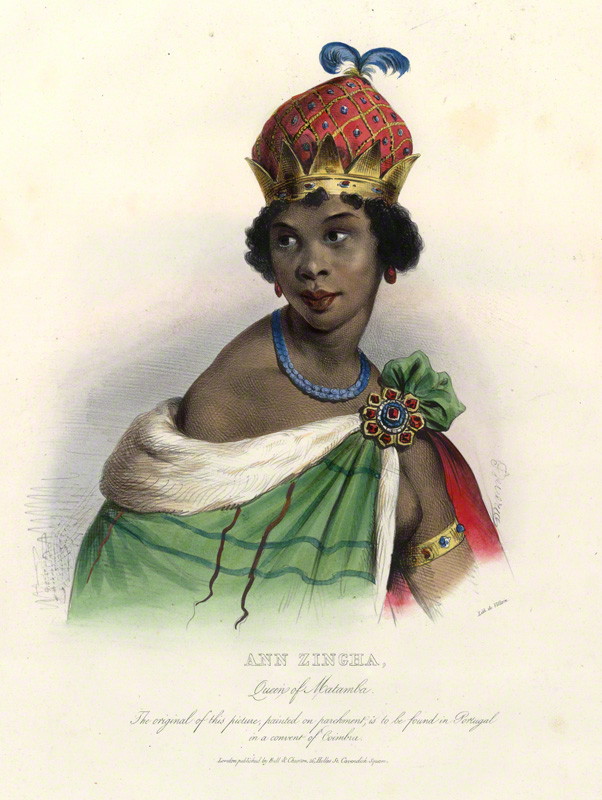
by Achille DevÈria, printed by FranÁois Le Villain, published by Edward Bull, published by Edward Churton, after Unknown artist, hand-coloured lithograph, 1830s
Over the past year, I have explored the research cultivated by scholars and historians from the Association of African American Life and History (ASALH) and the Smithsonian National Museum of African American History and Culture in order to contextualize the experience of my ancestors and better understand their and my affinity towards certain things. The searchable museum provides an opportunity for you to virtually walk through a slave cabin from Edisto Island in South Carolina. You can also see a photograph of a smiling family that is also enslaved. That image was very powerful to me. The photograph does not display a family that is happy and satisfied with their condition. Yet, we get to witness a family. A family that has found its joy, and maintained its dignity, in the midst of chaos and uncertainty.
When you encounter the Searchable Museum, remember that this is from the African American experience. What is even more compelling is that there were free African Americans living and working during this time. They were often set apart and did not socialize with the enslaved population. Imagine if you will, how that would look today. Notice any similarities?
Some people were travelling all across the world and living lives that most Black people were not privy to at that time, much like we may find even today. However, one of the key differences is that the signs for discrimination were more overt. The “keep out” signs were front and center.
“In a Cotton Field of South Carolina.” Photo by Okinawa Soba (CC)
Why is this important?
The African American experience did not begin with being captured in Africa and it does not end with Martin Luther King Jr. It is rooted in a culture of different tribes that forced to become one. They did not speak English, nor did they speak the language of the African they were chained too at times. Yet, they learned. They observed. They communicated. Freedom was always on the agenda and therefore, they waited. The contribution of white Americans at the time were not solely as slave holders. We know this because that was reserved for the wealthy class.
We also bear witness to the pervasive tension between religion and government and the fight for human rights on free soil. We learn how the immorality of slavery chipped away at the American conscious mobilizing people to risk their lives to fight against it. We also discover the government sanctioned violence and oppressive laws designed to keep the profitable industry of slavery intact. In as much as I am inspired and fueled by the stories of resilience and fortitude—I’ve experienced deep sorrow for the victims of harrowing violence from uncompromising hands of racism.
The ongoing efforts of our cultural institutions and everyday citizens committed to progressing notions of humanity and dignity surrounding Black people keeps me encouraged. It lets me know that those lives lost were not in vain.
I believe that simply learning this history and culture provides the spiritual obeisance needed to balance the scales. We can never fully know. But we can be compassionate.
I love sharing culture with my students all over the world. I typically start with food, and we also share music. I find that my students love to learn and want to hear more. The sharing of our culture helps to move the conversation from appropriation to appreciation. For example, the way my Nana does things in the Midwest is different than how Big Momma does it down South. How did your grandmother do things? As you can see, it is all a culture we can share. It also reflects how intimately connected all of our histories are and validates that there are many perspectives.
This is a special time in history where we technology can be leveraged to this degree in order to share information on a broad scale. There is a lot to unpack, and history is still being made. I plan to engage a lot with the searchable museum. There is a robust catalogue of images that most people have never seen before and this is just the tip of the iceberg.
Hopefully you will be inspired to document and digitize your own histories and leave an imprint of your legacy for all those who will come after you.